Extractor Fan Health Diagnostic Tool
What is the primary issue you've noticed?
Diagnostic Result
Severity: LowГлавные выводы (Key Takeaways)
- Most residential fans last between 5 to 10 years depending on the motor type.
- Dust buildup is the primary killer, causing motors to overheat and burn out.
- Loud grinding or humming sounds usually mean the bearings are gone.
- Replacing a motor is often a waste; swapping the whole unit is usually cheaper and safer.
- Regular cleaning can double the life of your ventilation system.
The Anatomy of Fan Decay
To understand why these units fail, you have to look at what's happening inside. An extractor fan is a mechanical ventilation device designed to remove moisture, steam, and odors from indoor spaces. At its core, it relies on an Electric Motor that spins a blade. Over time, the physical parts experience friction. The bearings-tiny metal balls or sleeves that allow the shaft to spin smoothly-slowly lose their lubrication. When that happens, the motor has to work harder to move the same amount of air, which generates more heat and eventually leads to a total electrical failure.
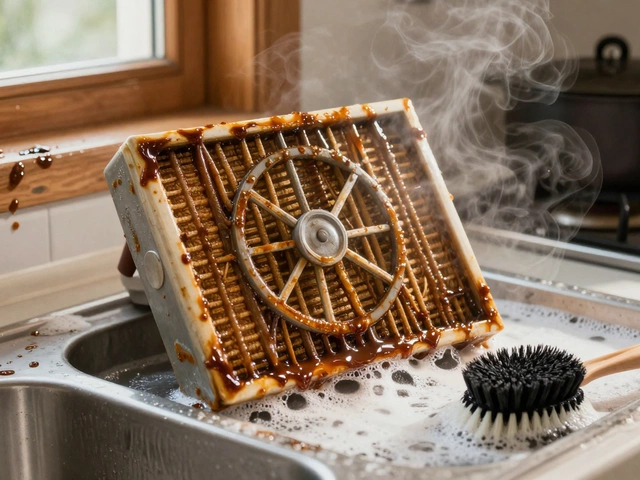
Then there's the environment. In a kitchen, you're dealing with airborne grease. In a bathroom, it's humidity and lint. These particles act like a blanket over the motor, trapping heat. When a motor can't breathe, the internal windings degrade. If you notice your fan taking longer to reach full speed, you're seeing the early stages of mechanical wear.
Identifying the Warning Signs
You don't have to be a technician to tell when a fan is on its way out. There are a few tell-tale signs that the hardware is failing. First, listen to the sound. A healthy fan has a consistent, white-noise hum. If you hear a rhythmic clicking, a loud drone, or a screeching sound, your bearings are likely worn out. This is a physical failure; no amount of cleaning the plastic cover will fix a warped shaft.
Another big red flag is the "slow start." If you flip the switch and the fan takes five or ten seconds to actually start spinning, the capacitor is likely failing. The Capacitor is an electrical component that provides the initial surge of energy needed to start the motor. Once that degrades, the motor struggles to break static friction, which puts immense strain on the rest of the system.
Finally, check the airflow. Hold a single square of toilet paper up to the grille. If it doesn't snap tight against the plastic, the fan is spinning but not moving air. This usually happens when the Impeller (the actual fan blade) has become so clogged with dust that it's lost its aerodynamic shape, or the motor is spinning too slowly to create a vacuum.
| Symptom | Likely Cause | Severity | Action Needed |
|---|---|---|---|
| Grinding/Screeching | Worn Bearings | High | Replacement |
| Weak Suction | Dust/Grease buildup | Medium | Deep Clean |
| Delayed Start | Failed Capacitor | Medium | Component Repair |
| Intermittent Power | Wiring Corrosion | High | Electrician Check |
Lifespan Factors: What Makes Them Last?
Not all fans are created equal. If you have a cheap plastic unit from a big-box store, you're looking at a shorter lifespan. Higher-end models often use Brushless DC Motors. Unlike traditional AC motors, these don't have brushes that physically wear down over time, which means they can last significantly longer and run quieter.
The installation also plays a huge role. If your fan is vented directly into the attic or a wall cavity instead of through an external duct, it's fighting against a wall of humid air. This increases the "static pressure," meaning the motor has to push harder to move air. This extra effort wears the motor out years faster than a properly vented system. A fan that is struggling against a blocked duct is essentially running a marathon every time you take a shower.
Then there's the usage habit. Some people leave their fans running 24/7. While some timers are designed for this, most standard residential fans aren't rated for continuous operation. Running a fan for 24 hours straight creates a heat soak in the motor windings that permanently lowers the efficiency of the unit.
Repair vs. Replace: The Honest Truth
When a fan starts acting up, the first instinct is to try and fix it. But here is the reality of modern appliance repair: extractor fan wear and tear usually reaches a point where repair is a bad investment. Why? Because the cost of a new, energy-efficient unit is often less than the cost of a technician's visit and the parts.
If the issue is just a clogged motor, you can try using a vacuum or compressed air to clear the debris. If the blade is wobbly, you might be able to tighten the mounting screws. However, if the motor is humming but not spinning, or if it's smelling like burnt plastic, the insulation on the copper windings has failed. You cannot "fix" a burnt motor; you can only replace it.
Moreover, newer fans are drastically better. Many now come with humidity sensors that turn the fan on automatically when they detect moisture. Upgrading to a unit with a higher CFM (Cubic Feet per Minute) rating means the fan can clear the room faster and spend less time running, which paradoxically makes the new fan last longer than the old, weak one.
Maintenance Routine to Stop the Fade
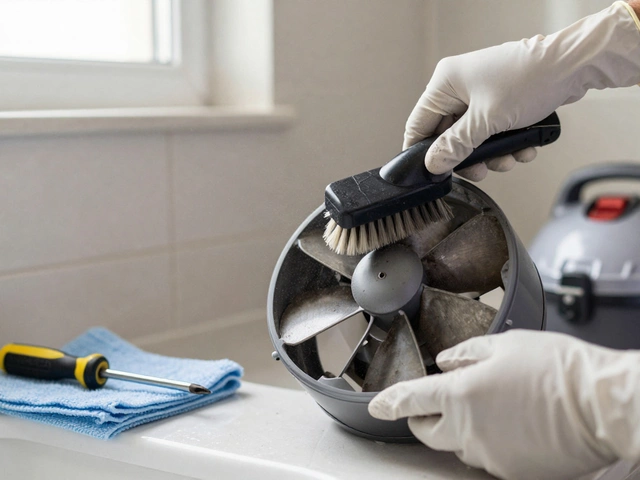
You can definitely push back the date of failure with a little effort. The biggest enemy is the "dust blanket." Every three to six months, pop the plastic cover off. You'll likely find a thick layer of grey lint clinging to the blades. This adds weight to the impeller, which unbalances the motor and puts uneven pressure on the bearings.
- Turn off the power at the wall switch.
- Pull the cover down gently to release the springs.
- Use a vacuum with a brush attachment to suck out the dust from the blades and the housing.
- Wipe the plastic cover with warm soapy water.
- Check that the vent flap (the backdraft damper) is moving freely and isn't stuck shut by paint or debris.
If you're feeling adventurous, you can check the mounting brackets. Over years of vibration, these can loosen, causing the fan to rattle. A quick tighten of a few screws can stop the noise and prevent the motor from shaking itself off its axis.
How long should a bathroom extractor fan last?
On average, a decent quality extractor fan lasts between 5 and 10 years. Cheaper models may fail after 3 years, while high-end brushless DC models can go well beyond a decade if maintained properly.
Why is my extractor fan making a loud rattling noise?
Rattling usually indicates one of three things: the fan blades are unbalanced due to dust buildup, the mounting screws have shaken loose, or the internal bearings have worn down and the motor shaft is wobbling.
Can you oil an extractor fan motor?
Most modern residential fans use sealed sleeve bearings that aren't designed to be oiled. Attempting to spray lubricant into the motor often attracts more dust, which can lead to an electrical short or a complete jam.
Does a slow-spinning fan still remove moisture?
Hardly. Ventilation relies on creating a pressure difference. If the fan is spinning significantly slower than its rated speed, it won't move enough cubic feet of air to effectively clear steam, which can lead to mold growth on your ceilings.
Is it dangerous to run a noisy extractor fan?
Generally, it's not an immediate danger, but a motor that is overheating due to friction or a failing capacitor can eventually burn out. If you smell burning or see sparks, turn it off immediately at the breaker.
Next Steps and Troubleshooting
If you've followed the cleaning guide and your fan is still struggling, it's time to make a decision. For renters, this is a maintenance request for the landlord-don't try to fix the wiring yourself. For homeowners, if the fan is over seven years old, the most logical move is a full replacement.
When shopping for a replacement, look for the CFM rating to ensure it's powerful enough for your room size. If your bathroom is large or has poor natural ventilation, go for a unit with a higher capacity. Consider adding a humidity sensor switch; it removes the human error of forgetting to turn the fan on, ensuring your walls stay dry and your new fan operates only when necessary, which extends its overall life.