Refrigerator Health Calculator
How to use this tool
Enter your refrigerator's age and select symptoms you're experiencing. The tool will calculate whether repair or replacement is the best option.
Results
Your fridge is one of the hardest-working appliances in your home. It runs 24/7, barely ever gets a break, and you barely notice it-until it starts acting up. When your fridge begins to fail, it doesn’t always scream for help. Sometimes it just gets quieter, colder in spots, or starts eating your electricity bill. If you’re wondering whether it’s time to replace your fridge or if a quick fix will do, here are the real signs that your refrigerator is going bad.
Your food is spoiling faster than usual
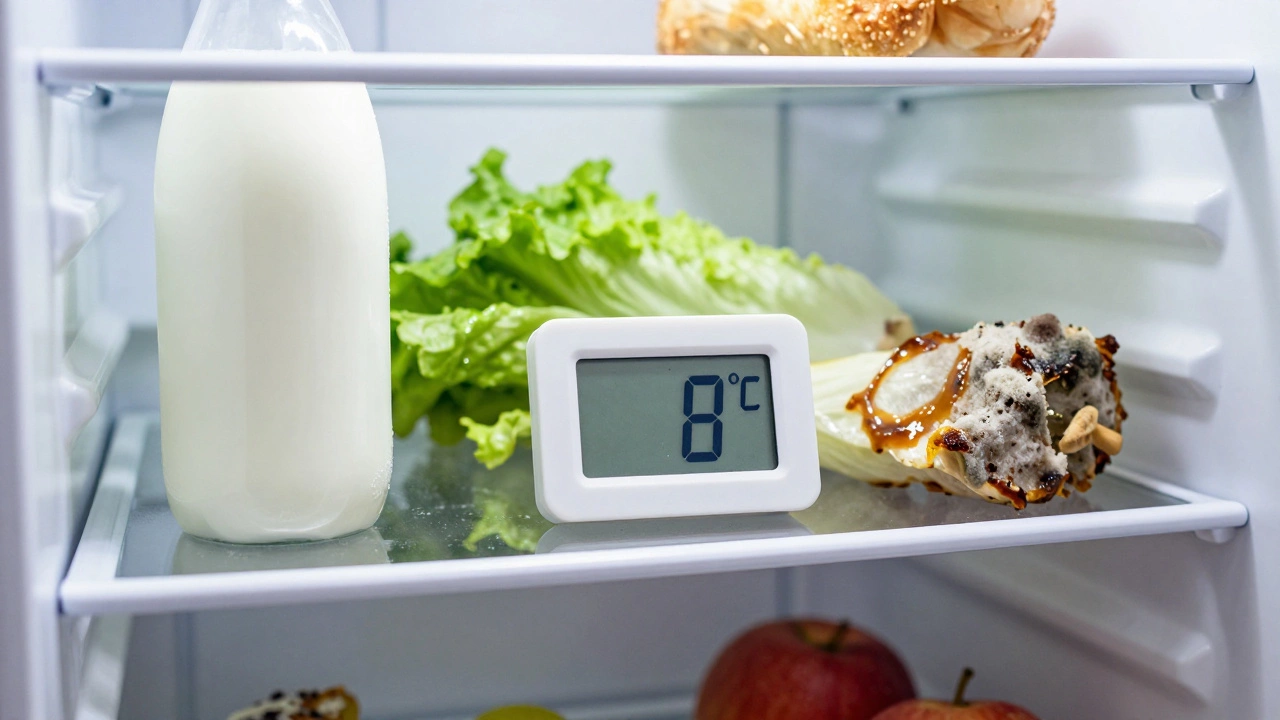
This is the most obvious clue. If milk sours in three days, lettuce turns slimy in a week, or leftovers go moldy before the expiration date, your fridge isn’t holding temperature like it should. A healthy fridge should stay at or below 4°C (39°F). If it’s hovering at 8°C or higher, bacteria grow fast. Use a standalone fridge thermometer. Place it in the center of the middle shelf. If it reads above 5°C for more than a day, something’s wrong. It could be a faulty thermostat, a dirty condenser coil, or a failing compressor. But if you’ve cleaned the coils and checked the door seal and it’s still warm, you’re looking at major trouble.
The back or bottom of the fridge is hotter than normal
It’s normal for the back of a fridge to feel warm-it’s where the condenser releases heat. But if you can’t touch it without pulling your hand back, that’s a red flag. A fridge that’s running too hot is working too hard. This often means the compressor is struggling. Dust buildup on the coils is the usual culprit, but if you’ve cleaned them and the heat hasn’t dropped, the compressor might be failing. Compressors don’t usually just die suddenly-they get louder, run longer, and overheat before giving out. If your fridge is over 8 years old and the back is burning hot, replacement is likely cheaper than repair.
You hear strange noises
Every fridge hums. That’s normal. But if you start hearing loud buzzing, grinding, or knocking sounds, especially when the compressor kicks on, something’s broken. A failing compressor can make a low, continuous groan. A bad condenser fan might buzz like a hornet trapped in the wall. A rattling sound from the back could mean the fan blade is cracked or loose. These aren’t just annoying-they’re warnings. A fridge that sounds like a broken washing machine isn’t far from giving up entirely. Noise like this often means the motor bearings are worn or the compressor is seizing. Replacing those parts can cost as much as a new fridge, especially if it’s older than 10 years.
Condensation or frost inside the fridge
Moisture on the walls? Ice building up in the back? That’s not normal. A little condensation on the door frame? Fine. Thick frost inside the freezer compartment? Not fine. This usually points to a broken door seal. But if the seal looks okay and the frost keeps coming back, the defrost system is failing. The defrost timer or heater isn’t melting ice buildup, so it just keeps growing. Eventually, it blocks airflow, and your fridge stops cooling properly. You might notice the freezer works fine, but the fridge side is warm. That’s a classic sign. Fixing the defrost system can cost $200-$400. If your fridge is older than 12 years, it’s rarely worth it.
The fridge runs constantly
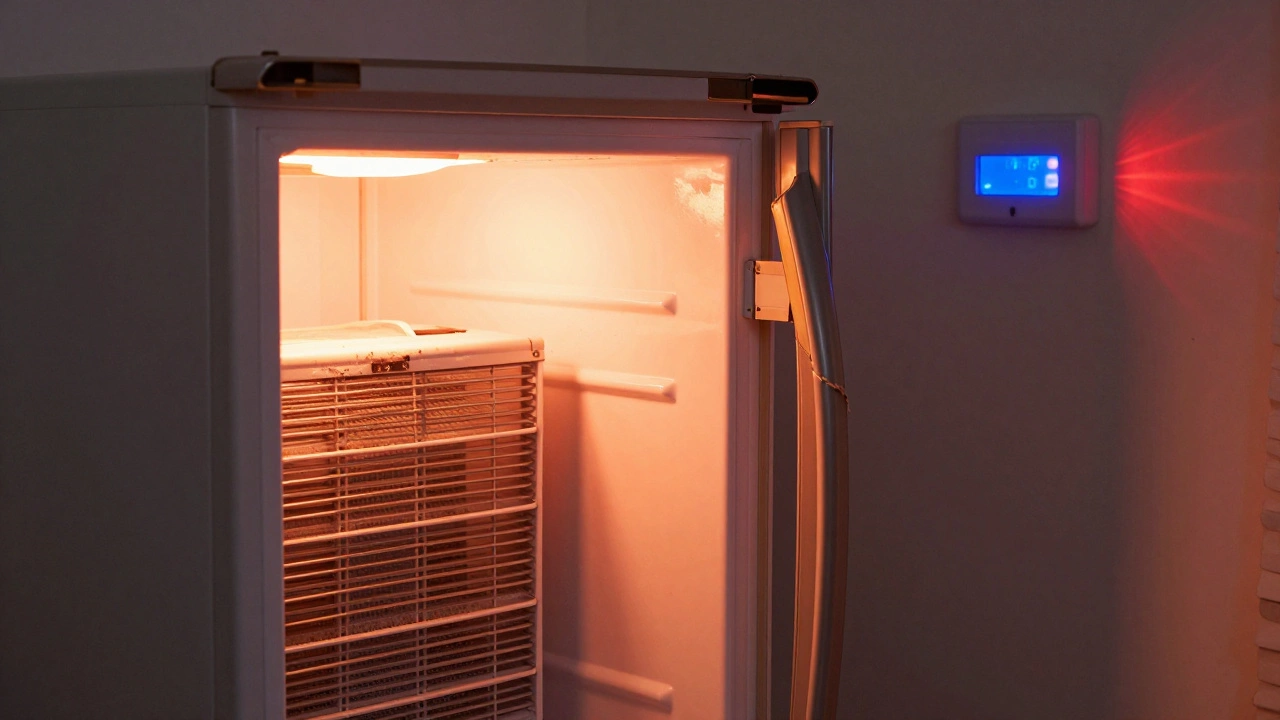
Modern fridges cycle on and off every 15-30 minutes. If yours runs nonstop-even at night-you’ve got a problem. The compressor is trying to cool but can’t reach the set temperature. This could be a dirty coil, a bad thermostat, or a leak in the refrigerant. But if you’ve checked the coils and the door seal, and the fridge still runs all the time, refrigerant leaks are likely. Refrigerant doesn’t just disappear. If it’s low, there’s a leak. And once it’s gone, the compressor overheats and burns out. Repairing a refrigerant leak is tricky, expensive, and often not covered by warranties. In New Zealand, refrigerant handling is strictly regulated. A qualified technician will tell you if the system is recoverable. More often than not, they’ll say: replace it.
Your energy bill spiked for no reason
Did your electricity bill jump 20-30% this month? And you didn’t change habits? Your fridge might be the culprit. An older fridge can use 1,000 kWh per year. A new Energy Star model uses 400-500 kWh. That’s $150-$200 saved annually. If your fridge is over 15 years old and your bill keeps climbing, you’re paying to keep an antique running. Even if it still cools, it’s costing you money. Most fridges lose efficiency after 10-12 years. You can track usage with a plug-in energy monitor. Plug your fridge in, leave it for a week. If it’s using more than 2 kWh per day, it’s time to think about upgrading.
The door seal is cracked, stiff, or doesn’t close right
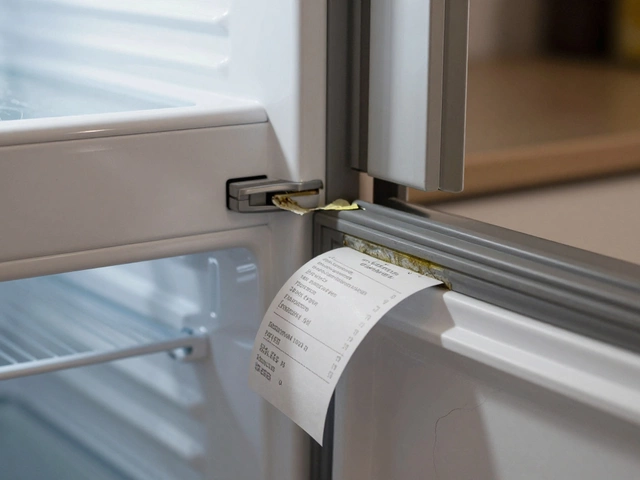
Check the gasket-the rubber seal around the door. Run your finger along it. If it’s brittle, cracked, or doesn’t snap shut when you close the door, cold air is leaking out. You can test it: put a piece of paper between the door and the frame. Close the door. Try to pull it out. If it slides out easily, the seal is bad. Replacing the gasket costs $30-$80. But if the seal is failing and the fridge is over 10 years old, the problem is deeper. The door might be warped from heat or age, or the hinges are worn. A bad seal means the fridge works harder, which stresses the compressor. Fix the seal, sure. But if you’re replacing it, consider replacing the whole unit.
It’s been over 12 years
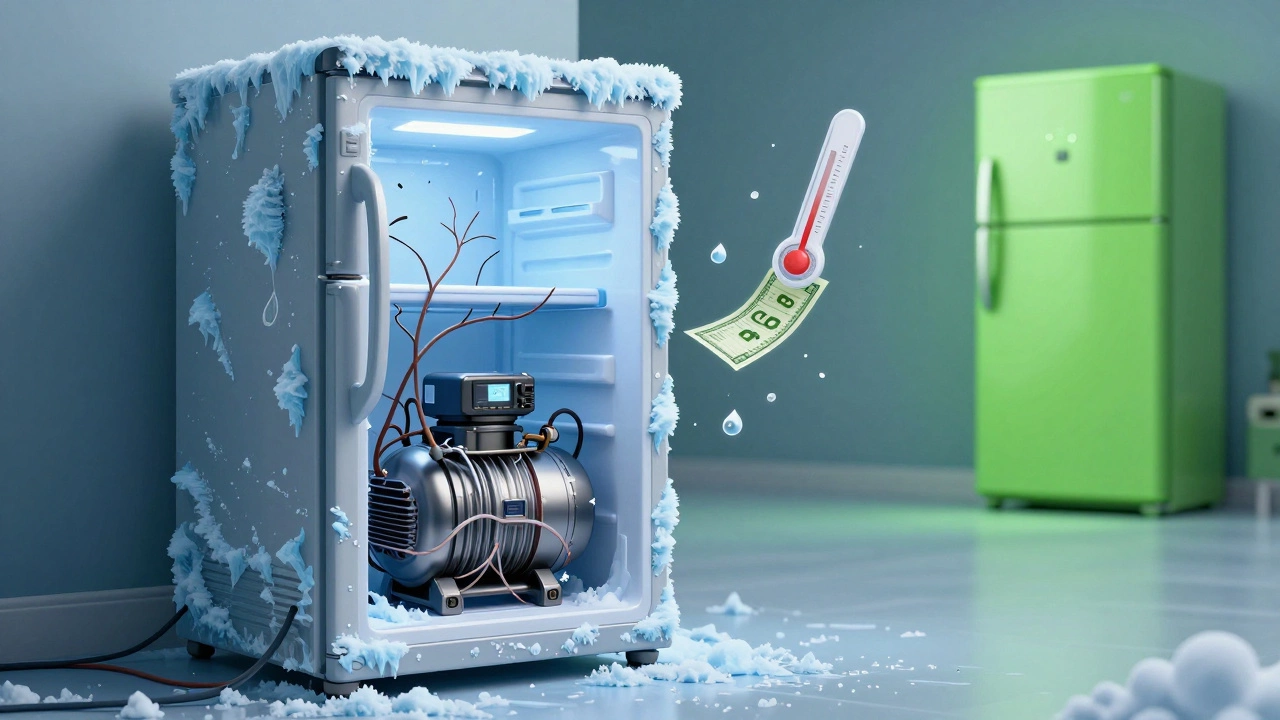
Most refrigerators last between 10 and 15 years. That’s the average. If yours is 16, 18, or 20 years old and still working, you’re lucky. But luck doesn’t last. Parts for older models are harder to find. Technicians won’t stock them. And when they do, the cost of repair is often 60-70% of a new fridge’s price. New fridges are quieter, more efficient, and come with better warranties. They also have features like humidity-controlled drawers, door alarms, and smart diagnostics. If your fridge is pushing 12 years, start budgeting for a replacement. Don’t wait for it to die in the middle of summer.
What to do next
Don’t panic if your fridge shows one or two of these signs. Sometimes, it’s just a dirty coil or a loose door hinge. Clean the coils with a brush. Test the door seal. Make sure it’s not jammed by boxes or food. Check the temperature with a thermometer. If it’s still not cooling after that, call a technician. But if your fridge is over 10 years old and has two or more of these issues-especially noise, heat, or constant running-it’s time to replace it.
When shopping for a new fridge, look for Energy Star ratings, size that fits your space, and features you actually use. Don’t buy the biggest one just because it’s on sale. A fridge that’s too big for your kitchen wastes energy. And avoid models with ice makers and water dispensers if you don’t use them-they add complexity and more things that can break.
| Sign | What It Likely Means | Repair Possible? | Replace Instead? |
|---|---|---|---|
| Food spoils quickly | Temperature too high | Yes, if thermostat or coil issue | Yes, if over 10 years old |
| Back is very hot | Compressor overworking | Maybe, if coils cleaned | Yes, if noise or age |
| Loud or strange noises | Failing compressor or fan | Unlikely | Yes |
| Excess frost or condensation | Defrost system failure | Yes, $200-$400 | Yes, if over 12 years |
| Runs nonstop | Refrigerant leak | Costly, often not worth it | Yes |
| Energy bill spiked | Inefficient operation | Only if cleaning helps | Yes, if over 12 years |
| Door seal damaged | Air leakage | Yes, $30-$80 | Yes, if other issues exist |
When to call a pro
If you’re not sure, don’t guess. A certified technician can check refrigerant levels, test the compressor, and scan for error codes on modern fridges. In New Zealand, look for technicians with Refrigerant Handling Certificates. They’re legally required to handle gas systems. Don’t let someone without it touch your fridge-it’s dangerous and illegal. A diagnostic fee is usually $80-$120. If they say it’s repairable, ask for a written quote. If the quote is more than half the cost of a new fridge, walk away.
What you can do today
- Unplug the fridge and clean the coils at the back or bottom.
- Test the door seal with a dollar bill.
- Place a thermometer inside and check the temperature after 6 hours.
- Check your last three power bills for sudden spikes.
- If your fridge is over 10 years old and shows two or more warning signs, start researching replacements.
How long should a refrigerator last?
Most refrigerators last between 10 and 15 years. Higher-end models with better compressors may last up to 20, but efficiency drops sharply after 12 years. After that, repairs cost more than replacement, and energy use climbs. If yours is 12+ years old and showing signs of trouble, replacement is usually the smarter choice.
Can I fix a fridge that’s not cooling myself?
You can try cleaning the condenser coils, checking the door seal, and ensuring the vents aren’t blocked. If the fridge still doesn’t cool after that, don’t attempt refrigerant repairs or compressor work. Those require certification and special tools. Trying to fix them yourself can be dangerous and void your warranty.
Is it worth repairing a 15-year-old fridge?
Almost never. A 15-year-old fridge uses twice as much energy as a new one. Parts are scarce, and labor costs often exceed 70% of a new unit’s price. Even if a repair works, you’re risking another failure soon. New fridges are quieter, more reliable, and come with 1-2 year warranties. The long-term savings make replacement the better choice.
Why does my fridge make a loud humming noise?
A loud, continuous hum usually means the compressor is working harder than it should. This can be caused by dirty coils, a failing fan, or low refrigerant. If the noise is new and loud, it’s often a sign the compressor is wearing out. If it’s been noisy for years, it might just be aging. But if it’s changed recently-especially if paired with poor cooling-it’s a red flag.
Should I replace my fridge before it dies?
Yes, if it’s over 10 years old and showing multiple warning signs. Waiting until it fails can leave you without cooling during hot weather. It also means you’ll have to buy on the spot, often at higher prices. Start looking 6-12 months before you think you need to. That way, you can shop around, compare models, and catch sales.