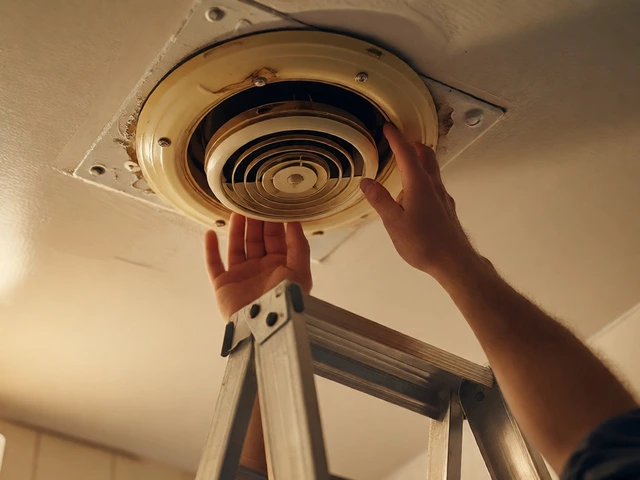
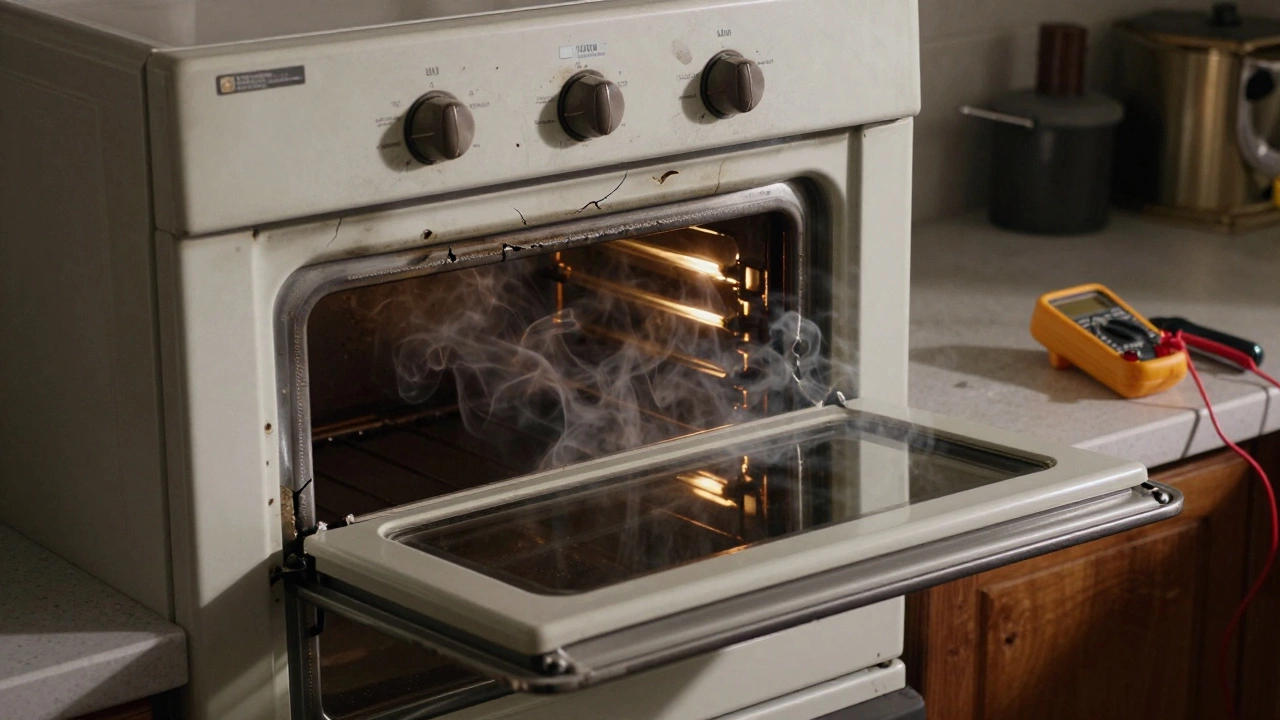
You walk into the kitchen, turn on the oven, and nothing happens. Or worse - it heats unevenly, smells like burning plastic, or throws error codes you don’t understand. Now you’re stuck: fix it or buy new? It’s not just about money. It’s about time, safety, and whether your old oven is worth saving.
How much does oven repair usually cost?
Most oven repairs fall between $150 and $400, depending on what’s broken and where you live. A faulty heating element? That’s $100-$200, including parts and labor. A broken thermostat or control board? That’s $200-$350. If the issue is with the door seal or igniter, you’re looking at $120-$180.
These prices don’t include emergency service fees, which can add $50-$100 if you call after hours. And if the technician has to order a rare part - say, for a discontinued model - you could wait two weeks and pay $50 extra for expedited shipping.
Here’s the catch: if your oven is over 10 years old, the repair might only buy you another 1-2 years. Older ovens use parts that are harder to find, and even if you fix it now, another component is likely to fail soon.
How much does a new oven cost?
A basic electric or gas oven ranges from $500 to $1,200. Mid-range models with convection, self-cleaning, and smart features cost $1,200-$2,500. High-end built-in ovens with steam cooking and Wi-Fi control can go for $3,000-$7,000.
But that’s just the appliance. Installation adds another $100-$300. If you need new wiring, gas lines, or cabinetry changes, that could push the total to $1,000 or more. You’re also looking at a 1-3 week wait for delivery and scheduling the install.
On the bright side, new ovens come with a 1-year warranty. Some brands offer 5-year coverage on the heating element. You also get better energy efficiency - newer models use 15-25% less power than those made before 2015.
When repair makes financial sense
Repairing is the smart move if:
- Your oven is under 8 years old
- The repair cost is less than half the price of a new one
- The issue is a common, simple fix (like a broken element or thermostat)
- You’re happy with the oven’s performance overall
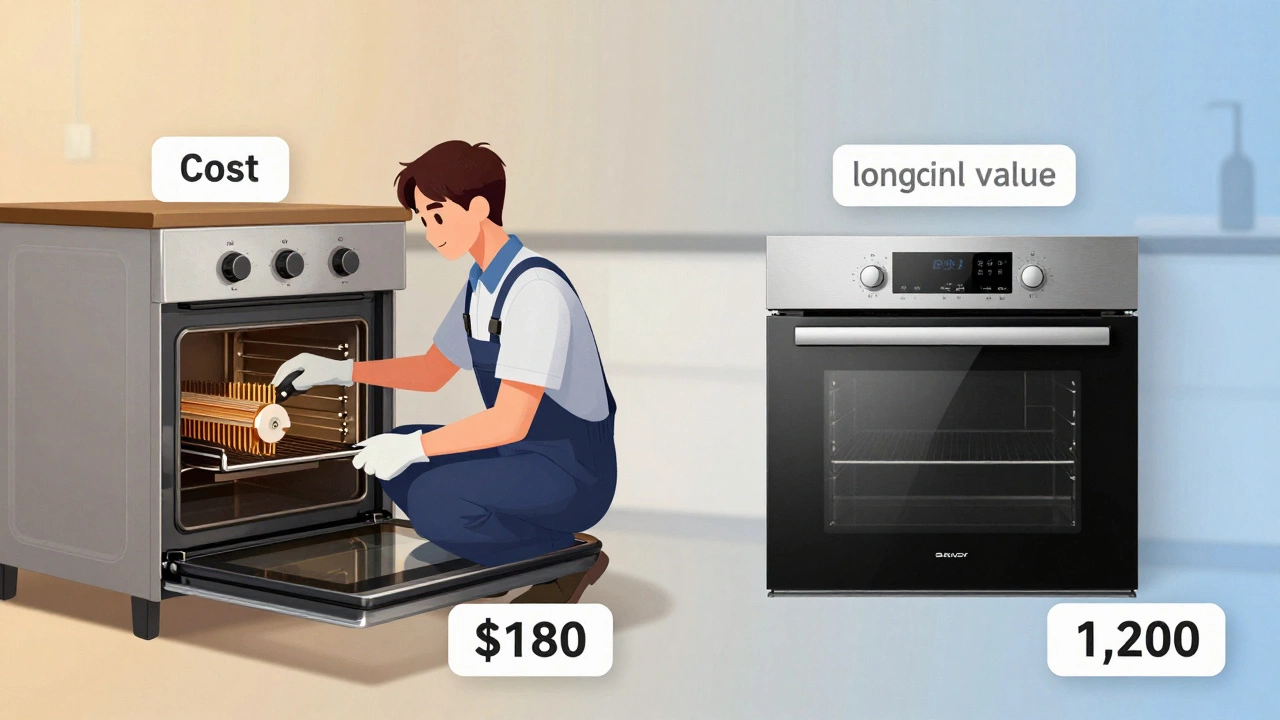
For example: if your $900 oven has a broken heating element that costs $180 to replace, you’re spending 20% of the oven’s value to get it back to 95% of its original function. That’s a good trade.
Also, if your oven has a unique feature you can’t find in a new model - like a specific rack layout, dual fuel setup, or custom color - repair might be worth it just to keep what you have.
When replacement is the better choice
Replace your oven if:
- The repair cost is more than 50% of a new oven’s price
- Your oven is 10+ years old
- You’ve had two or more major repairs in the last 2 years
- The oven is inefficient - your energy bills have jumped 20%+ since you bought it
- It’s unsafe (smells like gas, sparks, or won’t turn off)
Let’s say your 12-year-old oven needs a new control board costing $320. A comparable new oven costs $1,100. Even though $320 is less than half of $1,100, you’re spending a lot to keep a machine that’s already had multiple issues. And that control board? It’s the brain of the oven. If it failed once, it’s more likely to fail again.
Plus, older ovens often lack modern safety features. New models shut off automatically if they overheat, detect gas leaks, or sense when the door is left open. If you have kids or elderly family members using the oven, this matters.
Energy savings: The hidden math
Most people forget to factor in electricity or gas bills. An oven from 2010 uses about 2.3 kWh per hour at 350°F. A 2025 model uses 1.7 kWh. That’s 26% less energy.
If you bake 5 hours a week, that’s 260 hours a year. At $0.15 per kWh, your old oven costs $89.70/year to run. The new one? $66.30. You save $23.40 a year.
That doesn’t sound like much - until you realize: over 10 years, you save $234. Add that to your repair cost savings, and suddenly replacing a $1,200 oven with a $320 repair feels less appealing.
What about extended warranties or home protection plans?
Some home warranty companies cover oven repairs for $50-$75 per service call. That’s great - if your oven is still under coverage. But most plans exclude pre-existing conditions. If your oven was already acting up when you signed up, they’ll deny the claim.
Also, many plans cap repairs at $500-$750. If your control board costs $400 to fix, you’re left with only $100-$350 for other issues. That’s not enough to cover a full replacement if something else breaks.
Don’t assume a warranty means you should always repair. Use it as a tool - not a reason to keep a dying appliance.
What’s the lifespan of an oven?
Most ovens last 13-15 years with normal use. Gas ovens tend to last longer than electric ones - about 15-18 years - because they have fewer electronic components.
But lifespan isn’t just about age. It’s about how you treat it. Constantly spilling food, using harsh cleaners, ignoring smoke or strange noises, or running it empty for long periods cuts its life in half.
If your oven is 10 years old and you’ve never cleaned the interior or checked the door seal, you’re already running on borrowed time.

How to decide: A simple decision tree
Ask yourself these questions in order:
- Is the oven dangerous? (Smells like gas, sparks, won’t shut off) → Replace immediately.
- Is it over 10 years old? → If yes, go to next question. If no, skip to #3.
- Is the repair cost more than half the price of a new oven? → If yes, replace. If no, continue.
- Have you had two or more repairs in the last 2 years? → If yes, replace. If no, repair.
- Do you care about energy savings and modern features? → If yes, replace. If no, repair.
Answer “yes” to any of the first two? Replace. Answer “yes” to the last two? Repair. It’s not complicated - just often ignored.
What to do if you’re still unsure
Call a technician. Not the one who sells ovens - the one who just fixes them. Ask: “If this was your oven, would you fix it or replace it?”
Most honest repair pros will tell you the truth. If they hesitate, or say “it depends,” ask them to write down the part number and estimated lifespan of the replacement part. If they can’t, that’s a red flag.
Also, check your oven’s model number online. Look up how common the failure is. If 1,200 people on Reddit say their same model had the same broken part - that’s not a fluke. That’s a design flaw. Replace it.
Final tip: Don’t wait for it to die
Waiting until your oven stops working completely means you’ll be scrambling during holidays, or when you need to cook for guests. A broken oven in November is way more stressful than replacing it in July.
If you’re hovering around the decision line - say, your oven is 9 years old and the repair costs $250 - take a week to think about it. Track how often you use it. Note the weird smells or slow heating. Write down what you’d want in a new one.
Chances are, you’ll realize you’ve been wishing for a new oven for months. You just didn’t want to admit it.