Oven Repair vs Replacement Calculator
Is your 10-year-old oven worth fixing?
Calculate whether repair or replacement makes financial and practical sense based on your specific situation.
Recommendation
Energy Savings Potential
Safety Check
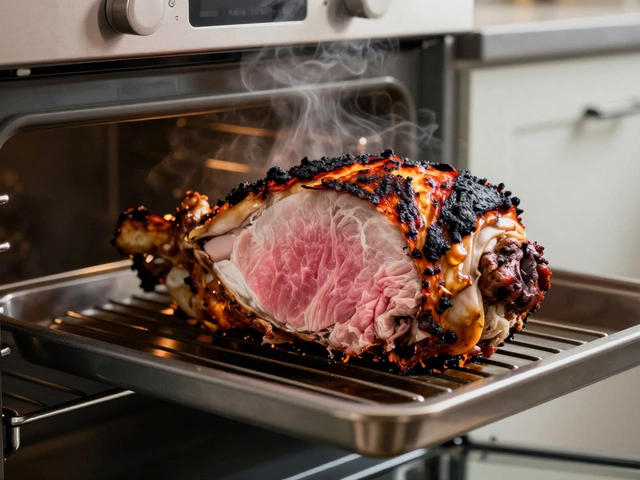
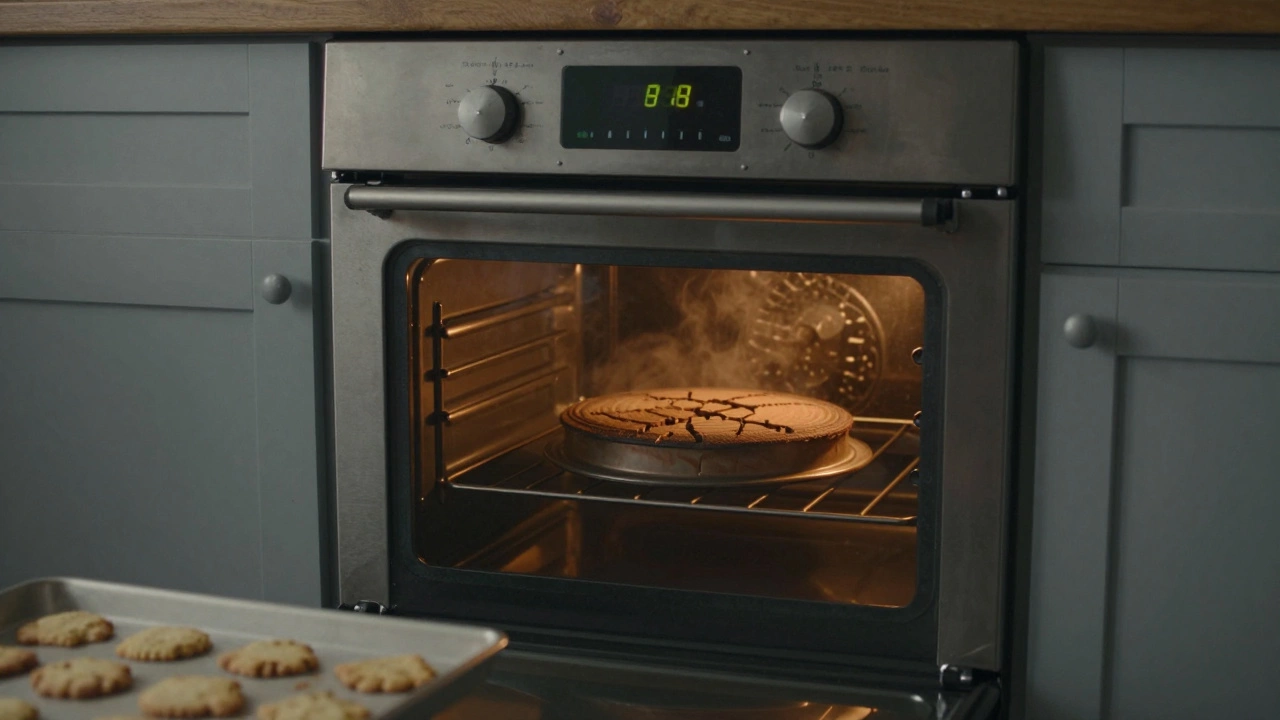
You turn on your oven to bake cookies, and it takes forever to heat up. Or maybe it doesn’t heat up at all. The display flickers. A strange smell comes out when you use it. You look at the age - 10 years - and wonder: is it worth fixing a 10-year-old oven? It’s not just about money. It’s about time, safety, and whether you’re throwing good money after bad.
How long do ovens really last?
Most ovens last between 10 and 15 years. That’s the average. But that doesn’t mean yours is dead at 10. Some last 20 years with light use and decent care. Others die at 8 because they were cheaply made or constantly overloaded. The key isn’t just age - it’s condition.
Manufacturers design ovens to handle about 10,000 hours of use. If you cook daily, that’s roughly 10 years. If you only bake on weekends? You might have another five years left. But if the heating element is cracked, the thermostat is off by 50 degrees, or the door seal is falling apart, age doesn’t matter - performance does.
What’s the cost to repair vs. replace?
In New Zealand, a basic oven repair - like replacing a heating element or thermostat - usually costs between $150 and $300. Labor runs $80-$120 an hour, and parts for standard models are affordable. A new mid-range oven? That’s $800 to $1,500. Even a basic built-in starts at $600.
Here’s the math: if your oven is 10 years old and needs a $250 repair, you’re spending 25% of the price of a new one to get another 1-3 years out of it. That’s not terrible - if the rest of the oven works fine. But if you’re replacing three parts in two years? You’re already past the point of no return.
Also, newer ovens are more energy efficient. A 10-year-old model might use 20-30% more electricity than a new one with an A+ rating. Over five years, that adds up to $150-$250 in extra power bills. Add that to repair costs, and the break-even point shifts fast.
What repairs are worth it? What’s a waste?
Not all repairs are created equal. Some fixes make sense. Others are just throwing cash into a sinking ship.
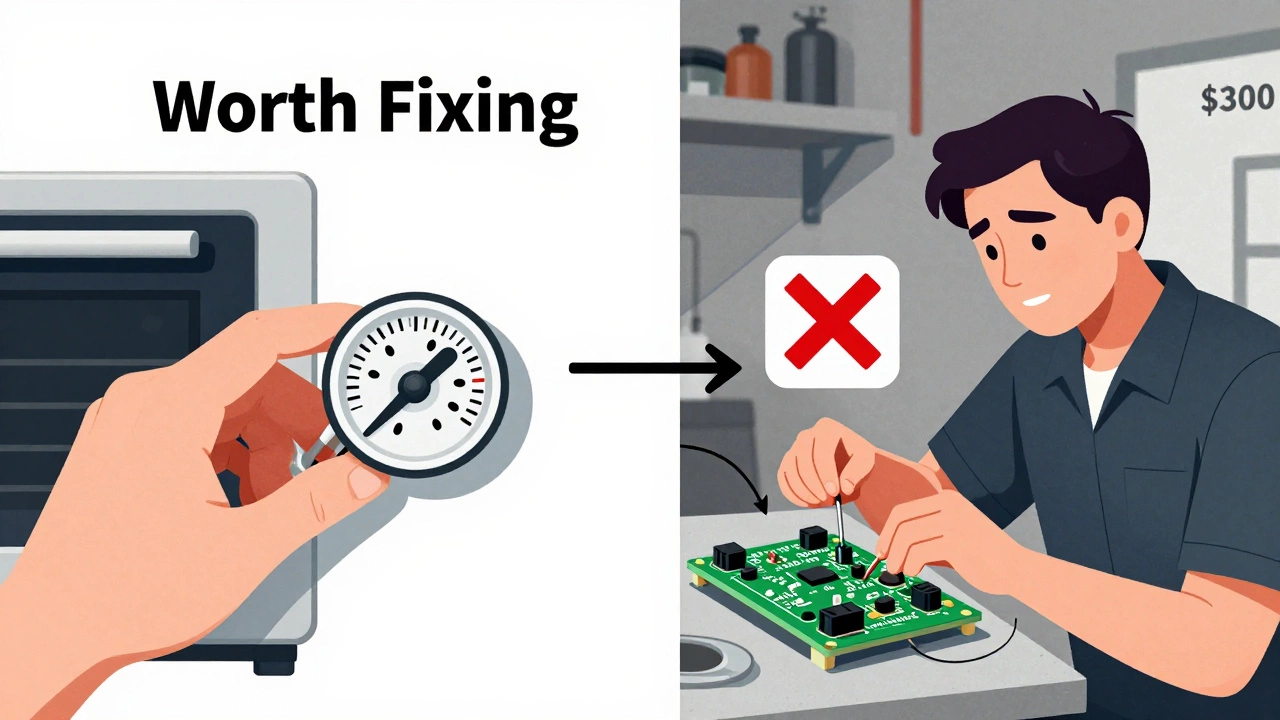
- Worth fixing: Heating element, thermostat, oven light, door seal, control panel buttons. These are simple, cheap, and common failures. Replacing a broken element costs $60-$120 and takes under an hour.
- Not worth fixing: Control board (especially if it’s a branded model no longer made), fan motor in convection ovens (if it’s noisy and failing), or anything involving the internal wiring harness. These parts are expensive ($300+), hard to source, and often signal bigger system failure.
One real-world example: A homeowner in Porirua had a 12-year-old Smeg oven that stopped heating. The repair quote was $320 for a new control board. The same board wasn’t available anymore - the manufacturer had discontinued it. They found a used one online for $180, but no one would guarantee it would last. They bought a new Bosch for $1,100. It paid for itself in energy savings within 18 months.
Is your oven safe?
Safety isn’t just about fire risk. Old ovens can leak gas (if gas-powered), develop faulty grounding, or have insulation that’s crumbling. If you smell gas when the oven is off, or if the exterior gets hot to the touch, stop using it. That’s not a repair job - that’s a hazard.
Also, older models don’t have modern safety features like auto-shutoff, child locks, or overheat protection. If you’ve got kids or elderly people in the house, that’s not just a convenience - it’s a risk.
Even if the oven still works, a cracked door seal can let heat escape and raise your kitchen temperature by 5-8°C. That’s uncomfortable in summer and wastes energy.
Will a new oven fit your space?
Before you rush to buy, check the dimensions. Many older homes have built-in ovens with non-standard sizes. A 10-year-old oven might be 60cm wide, but today’s standard is 60cm or 70cm. If your cabinet cutout is 58cm, you’ll need to redo the cabinetry - which adds $500-$1,000 to the cost.
Also, check the power supply. Older homes sometimes have 10-amp circuits. New ovens need 15-20 amps. If your wiring can’t handle it, an electrician will need to upgrade the circuit - another $300-$600. That’s money you didn’t plan for.
Measure your space. Take a photo of the back panel. Note the voltage and amperage label on the oven. If you’re replacing, bring those details to the store. Don’t assume it’ll fit.
What’s the resale value of your old oven?
None. Not a dollar. Even if it works, no one’s buying a 10-year-old oven secondhand. You can’t list it on Trade Me and expect anyone to pay $50. It’s not worth the effort. But if you’re replacing it, you might be able to get your old one removed for free. Some retailers offer haul-away services when you buy a new one. Ask before you pay.
Some councils offer free e-waste pickup for appliances. Wellington City Council allows you to book a free collection for old ovens - no charge, no fuss. Check your local council’s website. It’s better than leaving it by the curb.
When to walk away
Here’s a simple rule: If the repair cost is more than 50% of the price of a new oven, and your oven is older than 8 years, replace it. That’s the tipping point.
Also walk away if:
- You’ve had two or more repairs in the last two years
- The oven takes longer than 20 minutes to preheat
- Food cooks unevenly - one side burns, the other’s raw
- The display is glitchy or unresponsive
- You’re tired of waiting for it to work
That last one matters more than you think. Living with a broken appliance is stressful. You plan meals around it. You avoid baking. You feel guilty using it. That emotional cost isn’t on the invoice - but it’s real.
What to look for in a new oven
If you’re replacing, here’s what to prioritize:
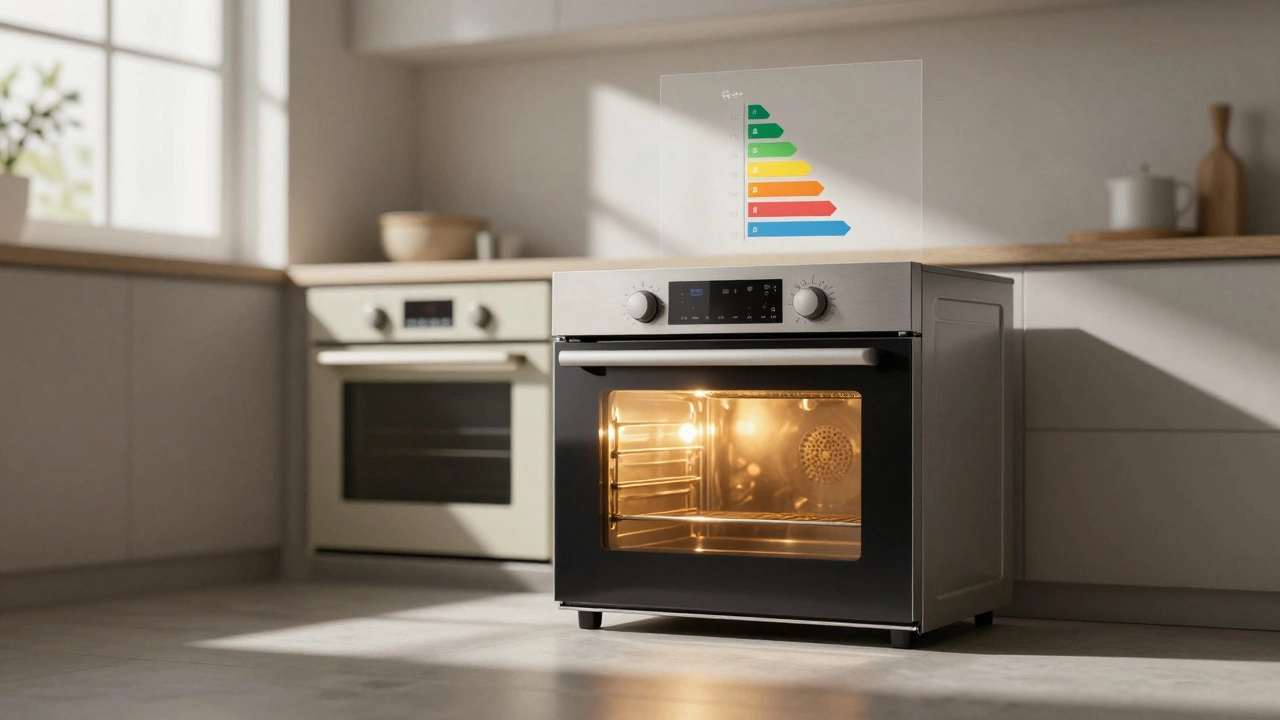
- Energy rating: Look for A+++ or A++. Even a one-grade jump saves 15-20% on power bills.
- Convection: Fans circulate heat. Bakes more evenly. Cuts cooking time by 15-20%.
- Self-cleaning: Pyrolytic cleaning burns off grease. Saves hours of scrubbing.
- Warranty: At least 2 years. Some brands offer 5 years on parts.
- Smart features: Not essential, but useful. Remote start, temperature probes, and recipe guides help if you cook often.
Brands like Bosch, Siemens, and Miele are reliable but pricey. Brand like Fisher & Paykel, Smeg, or Hotpoint offer good value for the price. Avoid no-name brands - their parts are impossible to find after three years.
Final call: Fix or replace?
Here’s your decision tree:
- Is the oven over 10 years old? → Yes → Keep going
- Is the repair cost more than $250? → Yes → Replace
- Has it had two or more repairs in the last two years? → Yes → Replace
- Is it heating unevenly or taking too long? → Yes → Replace
- Are you annoyed by it? → Yes → Replace
If you answered yes to two or more of those, replace it. Don’t wait for it to die completely. You’ll end up in a rush, paying more, and getting stuck with a low-quality replacement.
Fixing a 10-year-old oven is fine - if it’s a simple fix and you’re not in a hurry. But if you’re spending hundreds on parts that might fail again, or if you’re just waiting for the next breakdown - it’s time to let go. A new oven isn’t just a replacement. It’s an upgrade in safety, efficiency, and peace of mind.
Is it cheaper to repair or replace a 10-year-old oven?
It depends. If the repair costs less than $250 and the oven still works well otherwise, fixing it saves money short-term. But if the repair is over $300, or you’ve had multiple repairs in the last two years, replacement is cheaper over time. New ovens use 20-30% less energy, so you’ll save on power bills too.
How long should a modern oven last?
A good-quality modern oven lasts 12 to 15 years with normal use. High-end models with better parts can last 20 years. Cheaper models may only last 8-10. Look for brands with good repair part availability - that’s a sign of longevity.
Can I fix my oven myself?
Simple fixes like replacing a light bulb or oven door seal are DIY-friendly. Replacing a heating element or thermostat is doable if you’re comfortable with basic tools and wiring. But never touch the control board, gas lines, or internal wiring unless you’re qualified. A mistake can cause a fire or electrocution.
Do I need to upgrade my kitchen wiring for a new oven?
Maybe. Older homes often have 10-amp circuits. Most new ovens need 15-20 amps. Check the label on your current oven and the new one. If the new one draws more power, you’ll need an electrician to upgrade the circuit. It costs $300-$600, but it’s safer than overloading your wiring.
Where can I recycle my old oven in Wellington?
Wellington City Council offers free e-waste pickup for old appliances. Book online through their website. Some retailers also offer free removal when you buy a new oven. Don’t leave it on the curb - it’s illegal and harmful to the environment.