Drain Water Heater: Common Issues, Fixes, and When to Replace
When you hear drain water heater, the process of flushing out sediment and rust from the bottom of a tank-style water heater to maintain efficiency and prevent damage. Also known as water heater flushing, it’s one of the simplest maintenance tasks that can add years to your unit’s life. Most people don’t realize their water heater even has a drain valve—until it starts leaking, making strange noises, or stops giving hot water altogether.
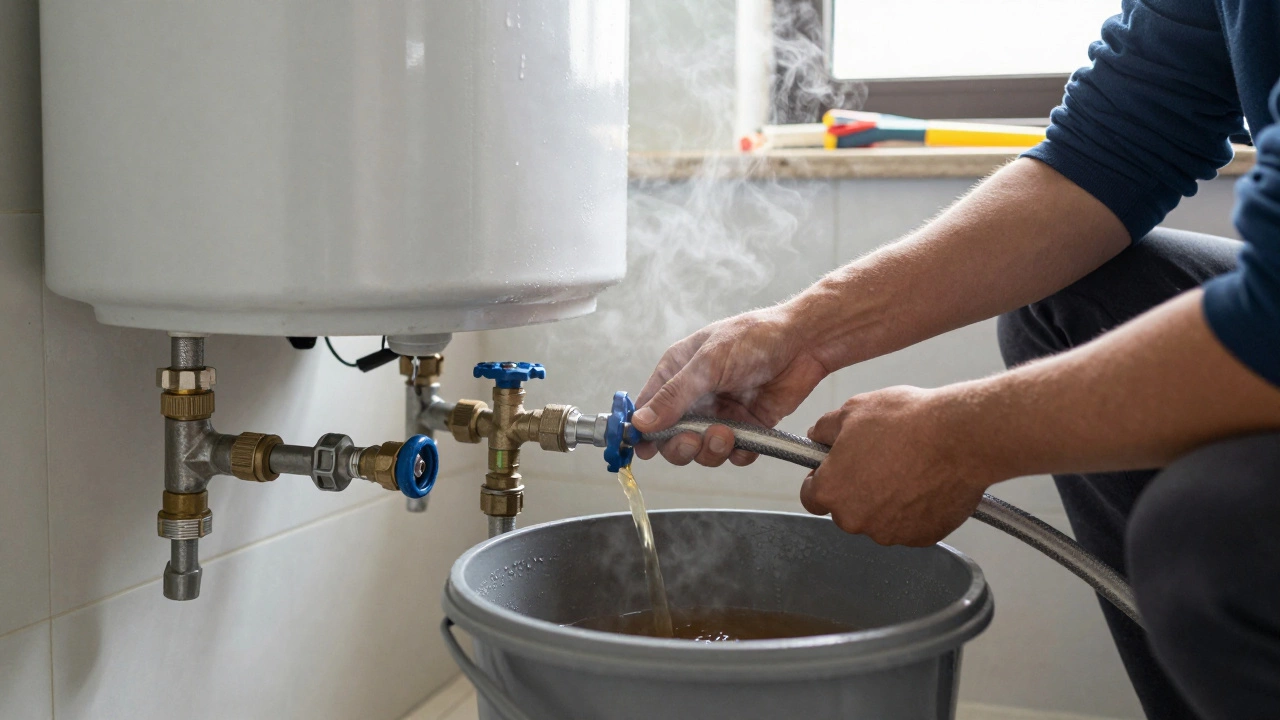
The real problem behind a clogged drain isn’t the valve itself—it’s the sediment buildup, minerals like calcium and magnesium that settle at the bottom of the tank over time. Every time your heater runs, hot water pulls these particles down. After a few years, they harden into a thick sludge. That sludge doesn’t just reduce heating efficiency—it can eat through the tank lining, cause rust leaks, or block the drain valve completely. If your water heater drain, the valve at the bottom of the tank used to empty water for maintenance or replacement won’t open, it’s not broken—it’s buried. You can usually clear it with a bucket, a wrench, and a little patience. But if the valve is stripped or the tank is rusted, you’re looking at a full replacement.
Most water heaters last 8 to 12 years. If yours is older than that and the drain won’t work, it’s not worth fighting. A new unit will save you more in energy bills than the cost of a repair. But if your heater is under 8 years old and just needs a good flush, doing it yourself can save $150 or more on a service call. You’ll need a garden hose, gloves, and maybe a bucket. Turn off the power, shut the cold water inlet, let the tank cool, then open the drain valve slowly. If water trickles out cloudy or brown, you’ve got sediment. Keep draining until it runs clear. If nothing comes out? You might need a professional to remove the valve and clean it out properly.
Don’t wait for a leak to force your hand. Draining your water heater once a year is like changing your car’s oil—it’s cheap, simple, and prevents expensive disasters. Skip it, and you’re gambling with your home’s hot water supply. The posts below cover everything from how to test your drain valve, what to do when it’s stuck, how sediment affects your energy bill, and when replacing your heater is the only smart choice. No fluff. Just real fixes from people who’ve been there.
4 December 2025
·
0 Comments
Flushing your water heater removes sediment buildup that reduces efficiency and shortens lifespan. Learn the difference between draining and flushing, when to do it, and how to do it safely to extend your heater's life.
Read more