Flush Water Heater: What It Means and When You Need It
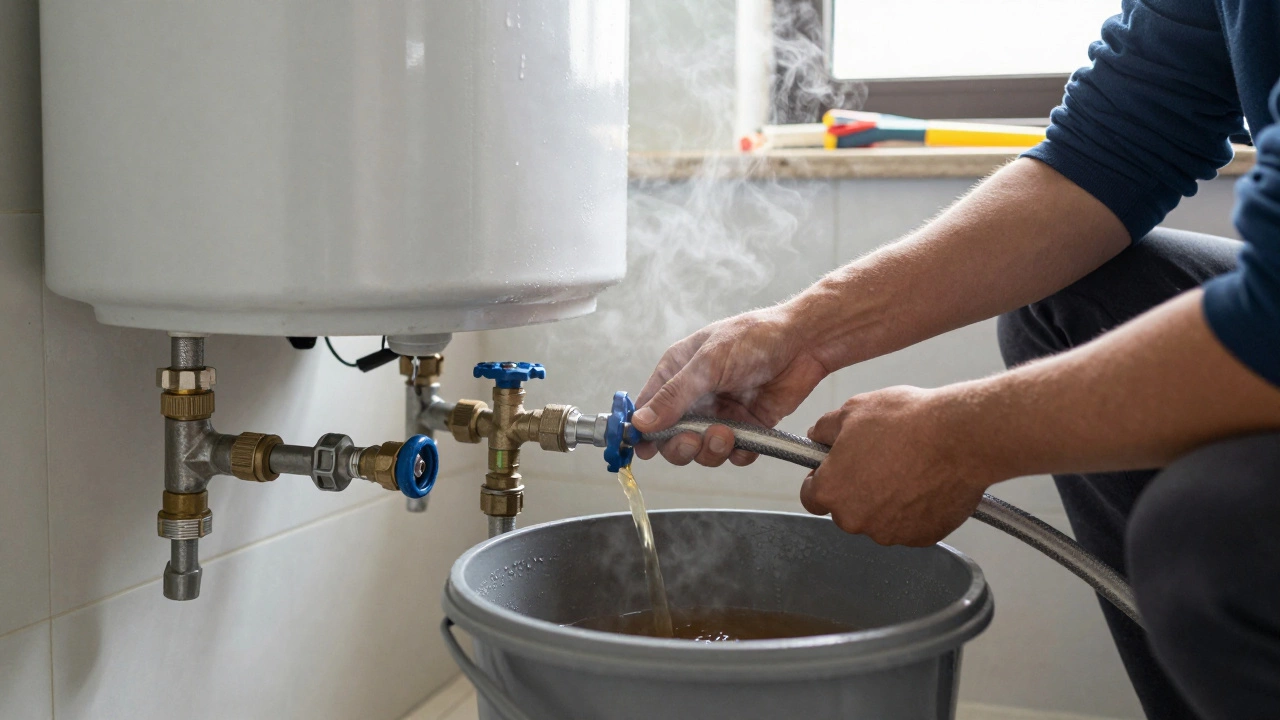
When you hear flush water heater, the process of draining sediment from the bottom of a water heater tank to improve efficiency and prevent damage. Also known as water heater flushing, it’s one of the most overlooked but critical tasks for any home with a tank-style heater. Most people don’t think about their water heater until it stops working—or worse, starts leaking. But the truth is, sediment buildup is quietly killing your unit right now. Every time hot water heats up, minerals in the water settle at the bottom. Over time, that layer gets thicker, forcing the heater to work harder, using more energy, and wearing out faster.
That’s where sediment buildup, the accumulation of mineral deposits at the bottom of a water heater tank that reduces efficiency and causes noise or failure comes in. If you’ve ever heard your water heater rumble like a dragon waking up, that’s not magic—it’s sand and scale grinding against the heating element. A simple flush can remove up to 90% of that buildup. And if you’re wondering how often, most manufacturers say once a year. But if you live in an area with hard water, twice a year isn’t overkill. Skip this, and you’re basically paying extra to heat rocks.
Flushing isn’t the only thing that keeps your water heater alive. It’s closely tied to another key part: the anode rod, a sacrificial metal rod inside the tank that attracts corrosive elements to protect the tank lining. Also known as sacrificial anode, it’s the unsung hero that keeps your tank from rusting through. If your anode rod is gone, your tank is next. That’s why checking or replacing it every 1–3 years goes hand-in-hand with flushing. You can’t fix one without thinking about the other.
And here’s the kicker: if your water heater is over 8 years old and you’ve never flushed it, you’re already in damage control mode. A 10-year-old heater that’s been flushed regularly might still have 5 more years. One that hasn’t? It’s a ticking time bomb. You’re not just risking a cold shower—you’re risking a flooded basement.
What you’ll find below are real, tested guides from people who’ve been there. No fluff. No theory. Just how to flush your heater step by step, how to tell if your anode rod is dead, why sediment is stealing your energy bills, and when it’s smarter to replace the whole thing instead of trying to fix it. These aren’t hypothetical tips—they’re the fixes that actually work in homes across Hinckley and beyond.
4 December 2025
·
0 Comments
Flushing your water heater removes sediment buildup that reduces efficiency and shortens lifespan. Learn the difference between draining and flushing, when to do it, and how to do it safely to extend your heater's life.
Read more