Water Heater Lifespan Calculator
How long will your water heater last?
Answer these questions to estimate your water heater's remaining lifespan
Your Water Heater's Remaining Lifespan
Recommendation:
Key factors affecting your water heater:
Most people don’t think about their water heater until it stops working. Then suddenly, you’re standing in a cold shower, wondering why it happened and how long you’ll be without hot water. The truth is, water heaters don’t last forever. But how long should you expect yours to last? And what can you do to make it last longer?
How Long Does a Water Heater Last?
A standard tank-style water heater in a typical New Zealand home lasts between 8 and 12 years. That’s the average you’ll see from manufacturers and plumbers alike. Tankless water heaters, on the other hand, can run for 20 years or more with proper care. But these numbers aren’t magic. They’re averages based on usage, water quality, and maintenance habits.
Here’s the thing: a water heater that’s 10 years old isn’t broken just because it hit a decade. But if it’s leaking, making strange noises, or struggling to heat water, it’s probably near the end. Waiting too long to replace it risks a sudden failure - and that often means flooding your laundry room or underfloor insulation.
What Affects a Water Heater’s Lifespan?
Not all water heaters are created equal. Several factors can cut years off its life:
- Water hardness - In areas like Wellington, where water can be moderately hard, mineral buildup inside the tank slowly coats the heating elements and lining. Over time, this insulation makes the heater work harder, leading to overheating and corrosion.
- Usage frequency - A family of four using hot water for showers, laundry, and dishes every day puts more strain on the system than a single person using it sparingly.
- Installation quality - Poorly installed units can have pressure imbalances, improper venting, or wrong pipe connections that stress the tank.
- Thermostat settings - Setting your water heater above 60°C increases corrosion and energy use. Most manufacturers recommend 50-55°C for safety and longevity.
- Flushing neglect - If you’ve never drained your tank, sediment has likely built up for years. One flush every 6-12 months can double the life of your unit.
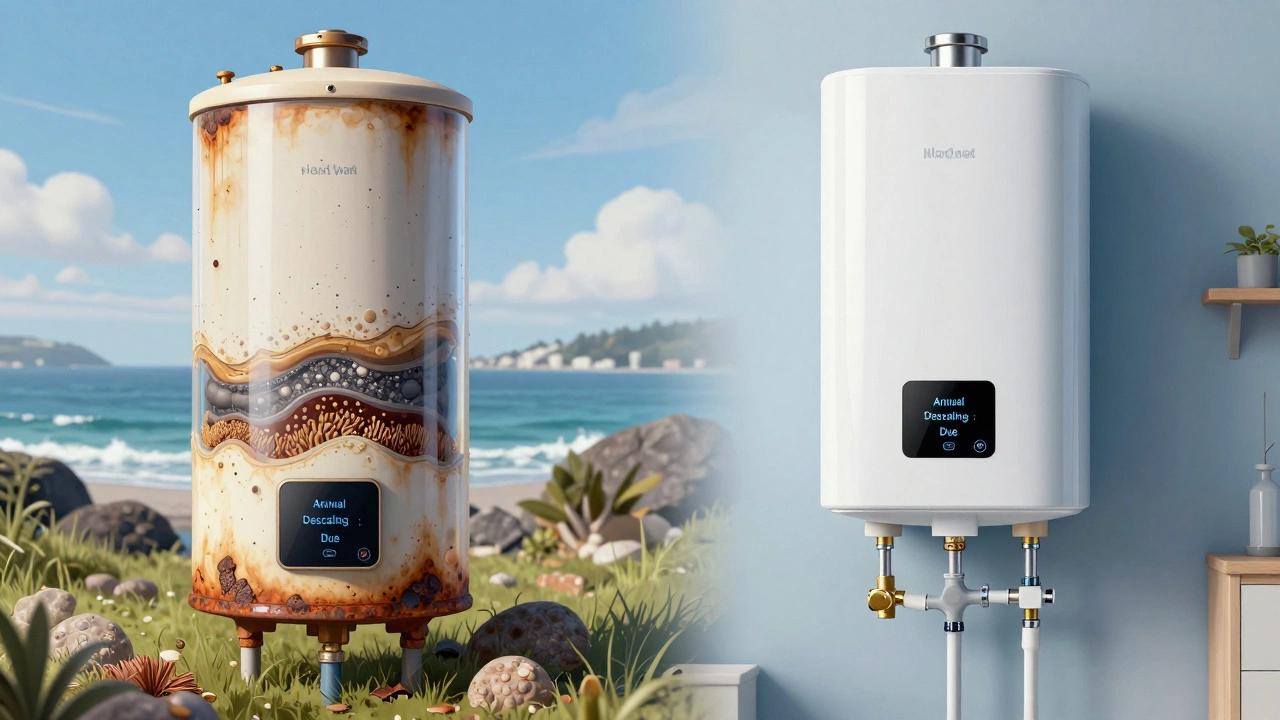
For example, a water heater in a coastal home near the ocean might corrode faster due to salt-laden air, even if the water itself isn’t hard. In contrast, a unit in a newer home with a water softener might easily hit 15 years.
Tank vs. Tankless: Which Lasts Longer?
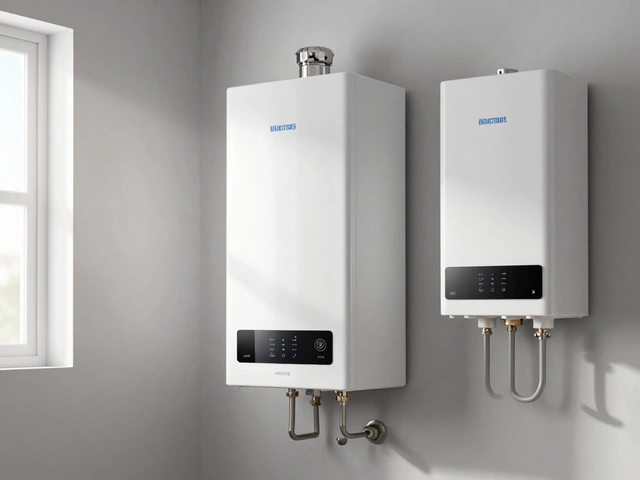
There are two main types of water heaters in New Zealand homes: tank and tankless.
| Feature | Tank Water Heater | Tankless Water Heater |
|---|---|---|
| Average lifespan | 8-12 years | 15-20+ years |
| Initial cost | $800-$1,800 | $2,500-$4,500 |
| Energy efficiency | Medium | High |
| Maintenance needed | Annual flush | Annual descale |
| Hot water capacity | Fixed (50-120L) | Unlimited (on-demand) |
Tankless heaters cost more upfront but save money over time through lower energy bills and longer life. They also take up less space. But they’re not perfect. If your water is hard, mineral deposits can clog the small internal pipes. That’s why annual descaling with vinegar or a commercial cleaner is critical - skipping it can slash a tankless unit’s life by half.
Tank heaters are cheaper to install and easier to replace. But once they start leaking, they’re usually done. No repair fixes a corroded tank. You just need a new one.
Signs Your Water Heater Is Reaching the End
You don’t need to wait for a flood to know it’s time. Here are the real warning signs:
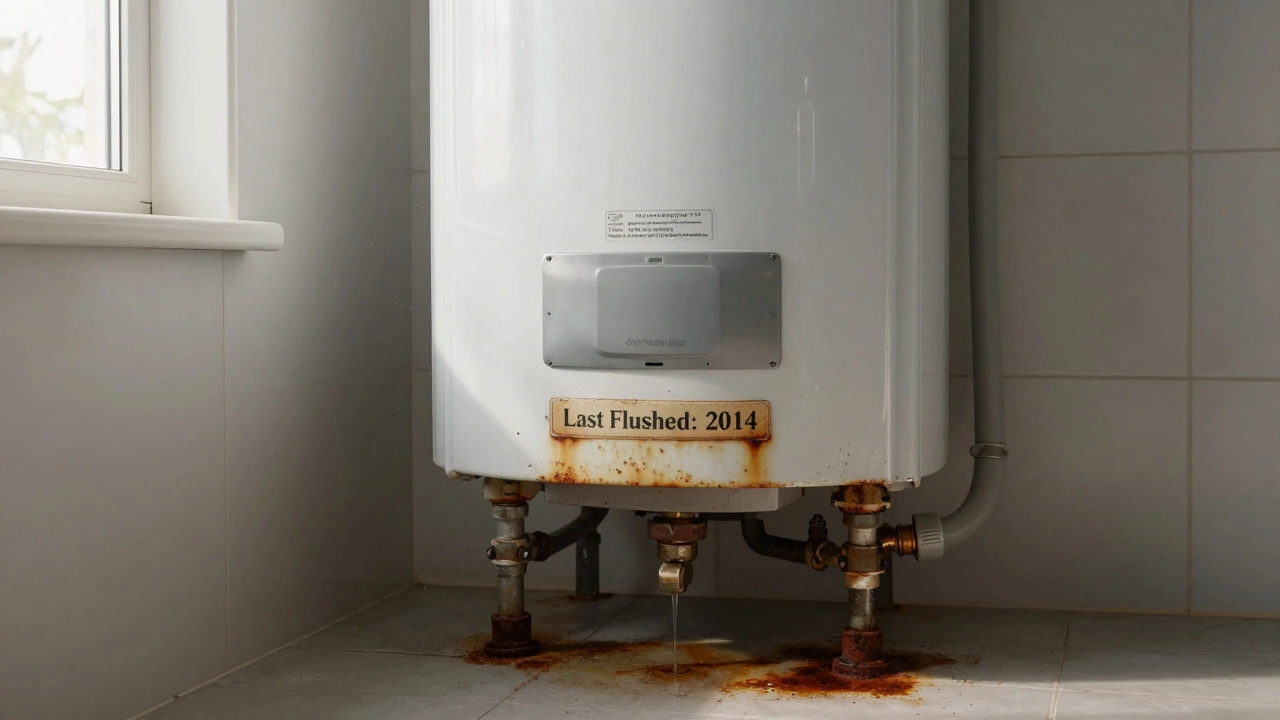
- Water coming out rusty or muddy - That’s rust from inside the tank. Once you see this, you’ve got months, maybe less.
- Strange noises - Popping, cracking, or rumbling sounds mean sediment is boiling under the heating element. It’s a sign of serious buildup.
- Hot water runs out faster - If your 100L tank only gives you 10 minutes of shower before it goes cold, the heating element or dip tube may be failing.
- Water pooling around the base - Even a slow drip means the tank is corroding. Don’t ignore it.
- Age over 10 years - If it’s older than 10 and you’re noticing any of the above, start planning for replacement.
One homeowner in Lower Hutt had a 14-year-old unit that started leaking slowly. He thought he could wait until summer. Three weeks later, the tank burst overnight. Water flooded his laundry, ruined the floorboards, and damaged the washing machine. The repair bill was $4,200. A new water heater would’ve cost $1,800.
How to Extend Your Water Heater’s Life
If your heater is under 8 years old, you can still stretch its life. Here’s what actually works:
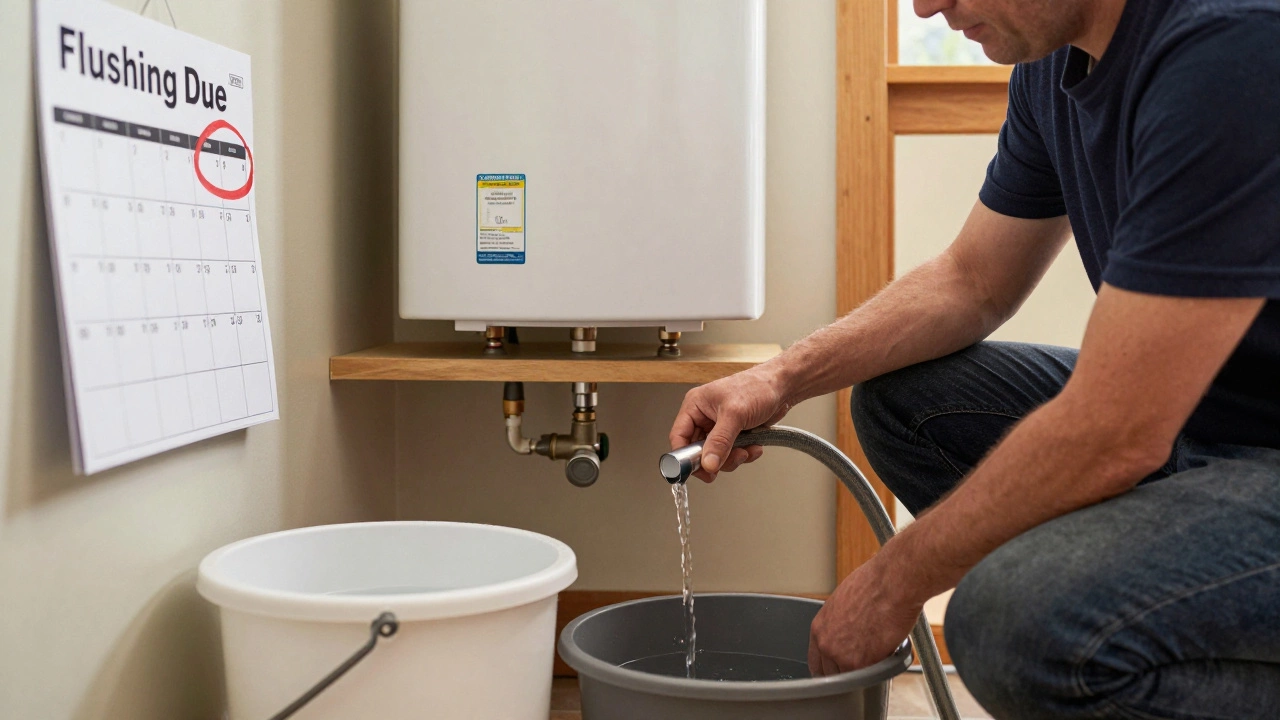
- Flush the tank every 6-12 months - Turn off the power or gas, connect a hose to the drain valve, and let it run until the water runs clear. This removes sediment that causes corrosion.
- Check the anode rod every 2-3 years - This sacrificial rod attracts corrosive elements away from the tank. When it’s more than half eaten away, replace it. Most homeowners never check this - and that’s why their tanks fail early.
- Set the temperature to 55°C - Higher temps speed up corrosion and waste energy. 55°C is hot enough to kill bacteria and safe for showers.
- Install a water softener if you have hard water - Reduces mineral buildup inside the tank and pipes.
- Insulate the tank and pipes - Especially in colder homes. Less heat loss means less strain on the system.
One Wellington plumber says 70% of the water heaters he replaces could’ve lasted another 5 years if the owner had flushed the tank once a year. It takes 20 minutes. It costs nothing but time.
When to Replace - Not Repair
Some repairs make sense. A faulty thermostat? Easy fix. A broken pressure relief valve? Replace it. But if the tank itself is leaking or rusted, repair isn’t an option. You’re throwing money at a sinking ship.
Here’s a rule of thumb: if the repair cost is more than half the price of a new unit, walk away. And if your heater is over 8 years old, even a $300 repair might not be worth it. A new 100L tank costs $1,200 installed. A $600 repair on a 12-year-old unit? You’re just delaying the inevitable.
Think of it like a car. You wouldn’t spend $3,000 fixing a 15-year-old sedan with a blown engine when you could buy a reliable used one for $4,000. Same logic applies to water heaters.
What to Look for When Buying a New One
When it’s time to replace, consider these factors:
- Size - A household of 1-2 people needs 50-80L. 3-4 people? Go for 100-120L. Too small and you run out of hot water. Too big and you waste energy.
- Energy source - Electric is cheapest to install. Gas is cheaper to run. Heat pump models use 60-70% less electricity than standard electric - and qualify for government rebates in New Zealand.
- Warranty - Look for at least a 6-year warranty. Some premium models offer 10-12 years. Longer warranty usually means better tank lining and thicker insulation.
- Efficiency rating - Look for the Energy Star label or a high First Hour Rating (FHR). Higher FHR means more hot water delivered per hour.
Heat pump water heaters are becoming popular in New Zealand because they’re so efficient. They pull heat from the air around them - like a reverse air conditioner. They cost more upfront ($2,500-$3,500), but they cut electricity use by two-thirds. Many homeowners get a $1,000 rebate from the government’s Warm Up New Zealand scheme.
Final Thoughts
Your water heater isn’t something you should ignore until it breaks. Treat it like your car: regular checkups prevent big problems. Flush it. Check the anode rod. Keep the temperature right. These small habits can add years to its life - and save you from a messy, expensive surprise.
If your heater is over 8 years old and you’ve never flushed it, don’t wait for a leak. Schedule a flush now. It’s the cheapest insurance you’ll ever buy for your home.
How long does a water heater last on average?
A standard tank water heater lasts 8 to 12 years. Tankless models last 15 to 20 years or more with proper maintenance. Lifespan depends on water quality, usage, and whether you flush the tank regularly.
Can I repair a leaking water heater?
If the leak is from a valve or pipe connection, yes - those can be fixed. But if water is coming from the tank itself, the tank is corroded and cannot be repaired. Replacement is the only safe option.
Should I replace my 10-year-old water heater?
If it’s still working fine and you’ve maintained it, you can wait. But if you’re seeing rust, noise, or shorter hot water supply, it’s time to plan for replacement. Waiting risks sudden failure and flooding.
How often should I flush my water heater?
Flush it every 6 to 12 months. In areas with hard water, do it every 6 months. Flushing removes sediment that causes corrosion and reduces efficiency.
What’s the best type of water heater for New Zealand homes?
For most homes, a heat pump water heater is the best choice - it’s energy efficient, qualifies for rebates, and lasts longer than standard electric models. If you have gas available, a gas tank heater is a cost-effective alternative. Tankless models are great for small homes or if you want endless hot water.