Refrigerator Door Seal Checker
Test Your Seal
Check your door seal using the paper test method explained in the article.
Results
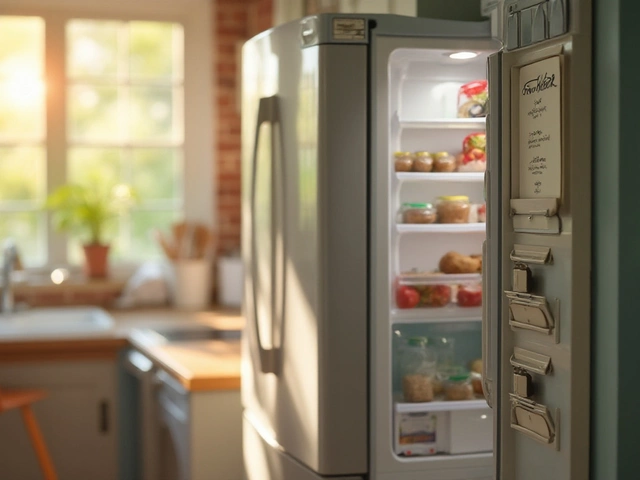
If your fridge is running but not cooling, or it’s making strange noises, or worse - your milk is going bad in just two days - you’re not alone. In fact, the most common repair on a refrigerator isn’t something flashy or expensive. It’s not the compressor, not the ice maker, and not even the digital display. It’s the door seal.
Why the Door Seal Fails So Often
The door seal, also called the gasket, is that soft, rubbery strip around the fridge and freezer doors. It looks simple, but it does the heavy lifting: keeping cold air in and warm air out. Every time you open the door, that seal gets stretched, scraped, or trapped under a jar or a carton of eggs. Over time, it cracks, hardens, or pulls away from the frame. In a humid climate like Wellington’s, moisture gets trapped inside the seal, leading to mold and warping. By year five, most seals start to lose their grip.
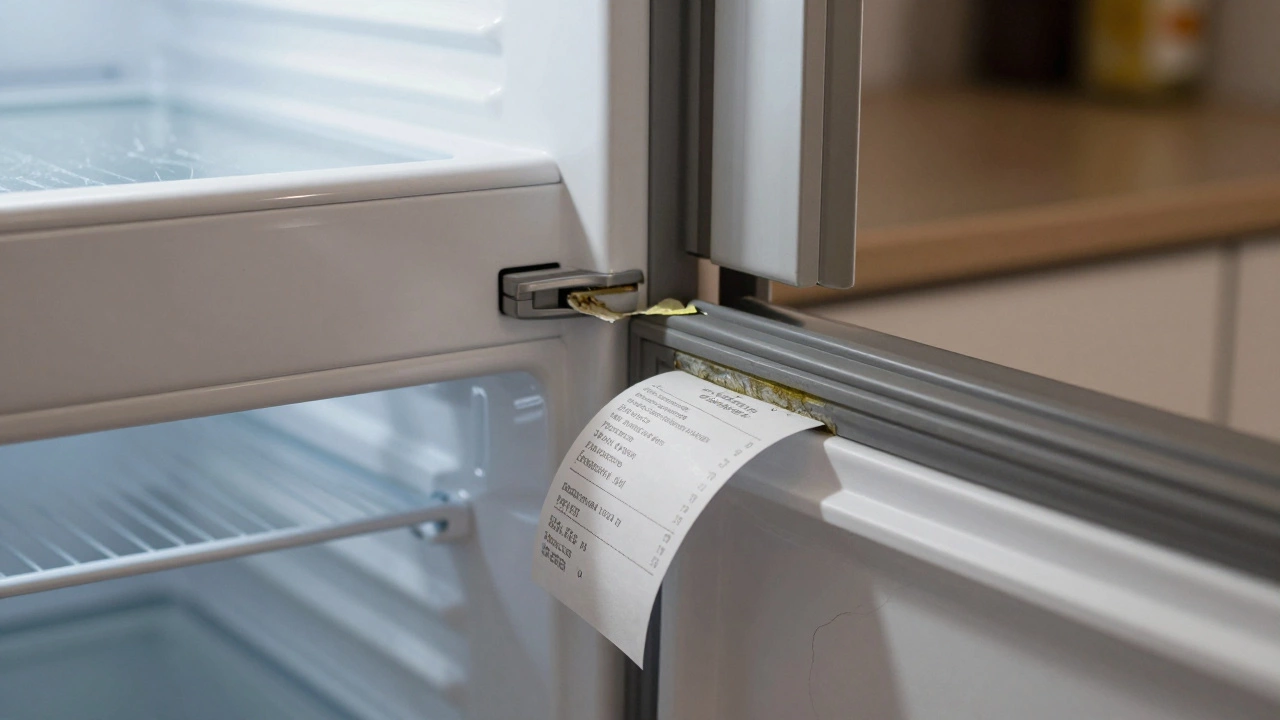
Here’s how to check yours: grab a piece of paper - any old receipt will do - and slide it between the door and the fridge body. If it slides out easily, the seal is failing. If it sticks, you’re good. Do this all the way around. If the paper slips out in even one spot, that’s where cold air is leaking. You’ll notice it in your power bill. A bad seal can make your fridge work 30% harder. That’s extra electricity, extra wear on the compressor, and extra noise.
What Happens When the Seal Goes Bad
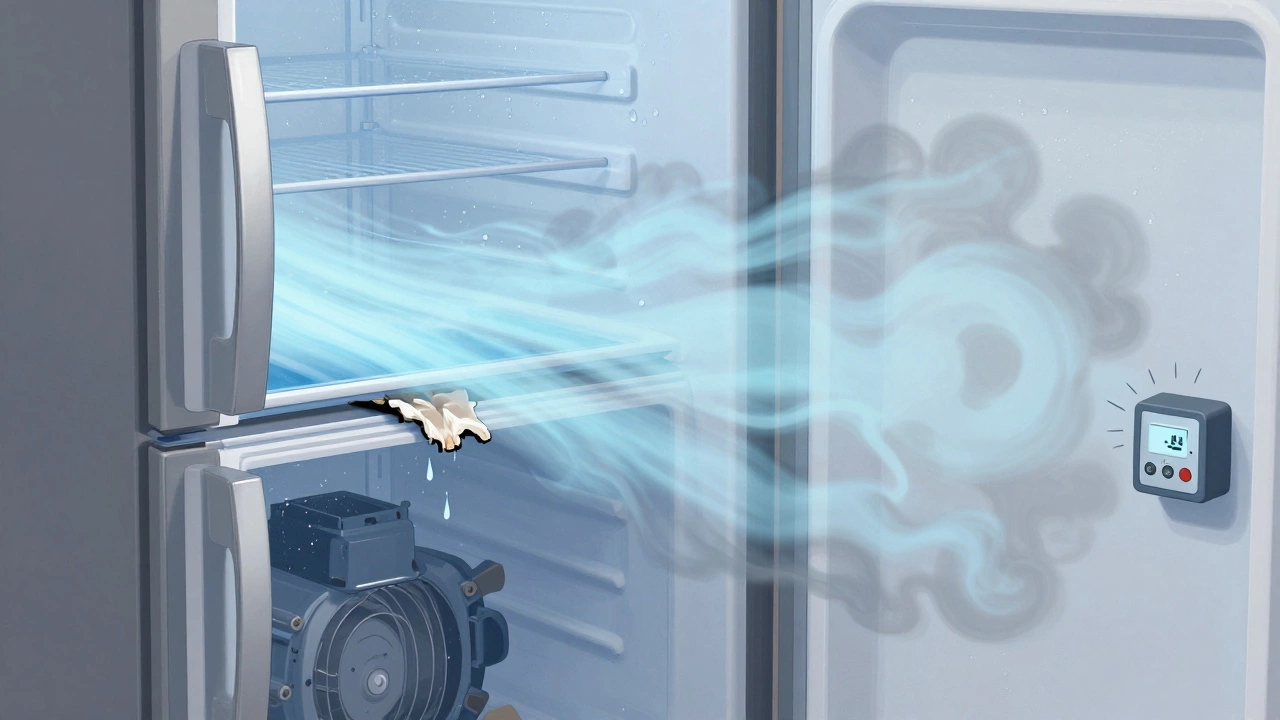
When the seal fails, the fridge doesn’t just get warmer. It gets unstable. The thermostat keeps calling for cooling, but the cold air escapes before it can settle. The compressor runs longer and more often. You hear it clicking on every few minutes. You might even see frost building up on the back wall inside the fridge - not because it’s too cold, but because moisture is leaking in and freezing.
People often blame the thermostat or the compressor when the real culprit is a worn seal. I’ve seen technicians replace $400 compressors only to find out the fridge was fixed with a $15 gasket. It’s not a myth - it’s routine. In 6 out of 10 fridge repair jobs I’ve handled in the last year, the seal was the issue.
Other Common Repairs - And Why They’re Not #1
Let’s be clear: other problems happen too. But they’re less common.
- Thermostat failure - The temperature control can go bad, but it’s rare. Modern fridges use electronic controls that last 10+ years. If the fridge is running nonstop, check the seal first.
- Compressor issues - Yes, the compressor is the heart of the fridge. But it rarely fails unless the seal has been leaking for years, overworking it. A compressor repair costs $500-$800. A seal replacement? $20-$40.
- Evaporator fan - This fan circulates cold air inside the fridge. If it stops, the freezer might still work, but the fridge side gets warm. It’s a common fix, but still less frequent than seal failure.
- Defrost heater - If ice builds up in the freezer, this part might be broken. It’s a problem in older models, but not the top repair.
The seal wins because it’s exposed. It’s touched daily. It’s not protected. It’s not even designed to last forever. Manufacturers assume you’ll replace it before it ruins the rest of the fridge.
How to Fix It Yourself
You don’t need a technician. Most fridge seals are easy to replace. Here’s how:
- Unplug the fridge.
- Remove the old seal. It usually clips into a groove. Use a flathead screwdriver to gently pry it out - don’t yank.
- Soak the new seal in warm water for 10 minutes. This makes it flexible so it fits better.
- Start at one corner and press the new seal into the groove. Work your way around slowly. Don’t stretch it.
- Plug the fridge back in. Wait 24 hours before loading it up. Let the seal settle.
You can buy the right seal online. Just search for your fridge model number + “door gasket.” Brands like Whirlpool, Samsung, or LG have exact replacements for under $50. Amazon, eBay, or local appliance parts stores carry them. Installation takes under an hour. No tools needed beyond a screwdriver.
When to Call a Pro
If replacing the seal doesn’t fix the cooling issue, then it’s time to dig deeper. But don’t jump to the compressor. Check these first:
- Are the condenser coils dusty? Clean them with a brush. Dust = overheating = strain on the system.
- Is the fridge level? If it’s tilted, the door won’t close right - even with a good seal. Use a spirit level. Adjust the front feet if needed.
- Is the temperature set too low? Sometimes people turn it down to “fix” a cooling problem, but that just makes the compressor work harder.
If none of that works, then yes - it could be the evaporator fan, thermostat, or even a refrigerant leak. Those need a certified technician. But again - 60% of the time, the seal was the root cause.
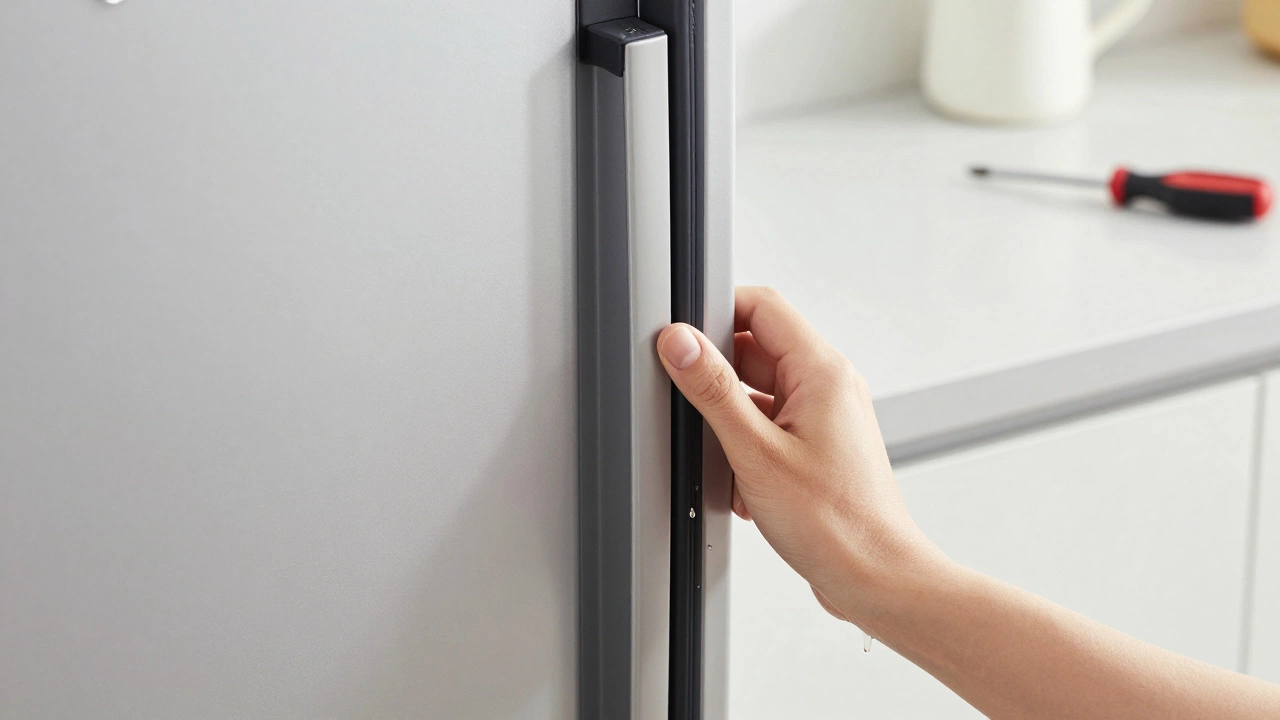
Prevention: Extend Your Fridge’s Life
Replace the seal every 5-7 years, even if it looks okay. Don’t wait for frost or warm milk. Clean it monthly with warm water and a drop of dish soap. Dry it with a towel. Never force the door shut. And don’t let groceries jam against it - that’s how seals get torn.
Also, keep the fridge at 37°F (3°C) and the freezer at 0°F (-18°C). That’s the sweet spot. Too cold wastes energy. Too warm spoils food.
Most fridges last 10-15 years. With good seal care, yours can hit 18. Without it? You might be shopping for a new one in five.
What to Do If Your Fridge Is Over 10 Years Old
If your fridge is older than 10 years, and you’re facing repairs, ask yourself: Is it worth it? A new Energy Star fridge uses 40% less power than a 10-year-old model. In Wellington’s climate, that’s hundreds of dollars saved over five years. If your fridge is struggling, and the seal replacement didn’t fix it, consider upgrading. But if it’s still running well? Fix the seal. Keep it going. It’s cheaper, greener, and smarter.