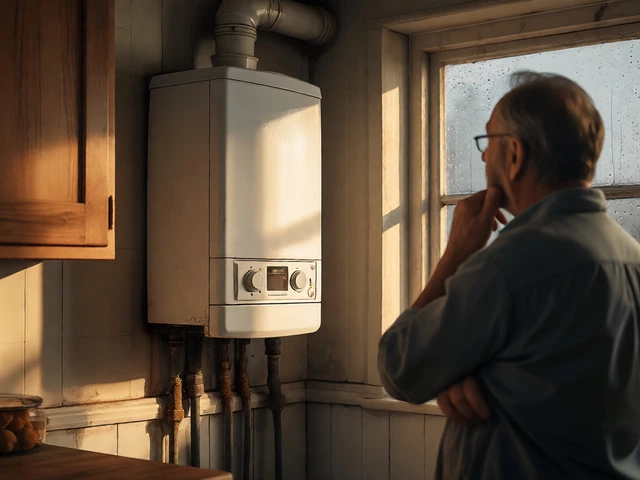
You wake up in the morning, turn on the shower, and nothing but cold water comes out. You try the kitchen tap. Cold. The bathroom sink? Still cold. You check the laundry machine-it’s not heating either. You didn’t see this coming. One minute your hot water was fine, the next, it’s gone. What happened?
Your water heater isn’t broken-it’s probably just stuck
Most people assume a sudden loss of hot water means their water heater has died. But in 7 out of 10 cases, it’s something simple. A tripped breaker. A faulty thermostat. A pilot light that went out. These aren’t expensive fixes. And they don’t always need a plumber.
In Wellington, where winters are damp and cold, a sudden cold shower isn’t just inconvenient-it’s uncomfortable. But before you call a technician, check these five things first.
1. Check the power supply (electric water heaters)
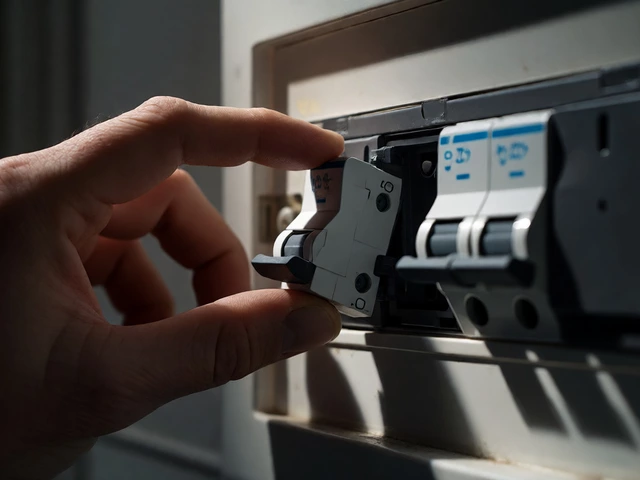
If you’ve got an electric water heater, the first thing to look at is the circuit breaker. It’s easy to miss. Water heaters pull a lot of power, and sometimes the breaker trips from age, overload, or a short in the wiring.
Go to your fuse box. Look for the breaker labeled “Water Heater,” “HW,” or “Electric Hot Water.” If it’s in the middle or off position, flip it fully to off, then back to on. You might hear a click. Wait 30 minutes and test the water again. If it trips again right away, there’s a deeper issue-a bad heating element or a short in the tank. Don’t keep resetting it. That’s a fire risk.
2. Reset the high-temperature cutoff (electric models)
Most electric water heaters have a red reset button on the thermostat. It’s there to shut off power if the water gets too hot-usually because of a thermostat failure. If it trips, the heater stops working entirely. No hot water. No warning. Just silence.
Locate the thermostat panel. It’s usually on the side of the tank, behind a removable cover. Inside, you’ll see two thermostats (upper and lower). The reset button is small, red, and often tucked under a plastic shield. Press it firmly. You’ll feel a click. Replace the cover, turn the breaker back on, and wait.
Many homeowners never know this button exists. If you’ve had this happen before, it’s likely the same issue again. A faulty thermostat or sediment buildup is probably to blame.
3. Relight the pilot light (gas water heaters)
If you’re on gas, your water heater uses a small flame called a pilot light to heat the water. Wind, drafts, or even a gas line hiccup can blow it out. You won’t hear it go out. You’ll only notice when the water turns cold.
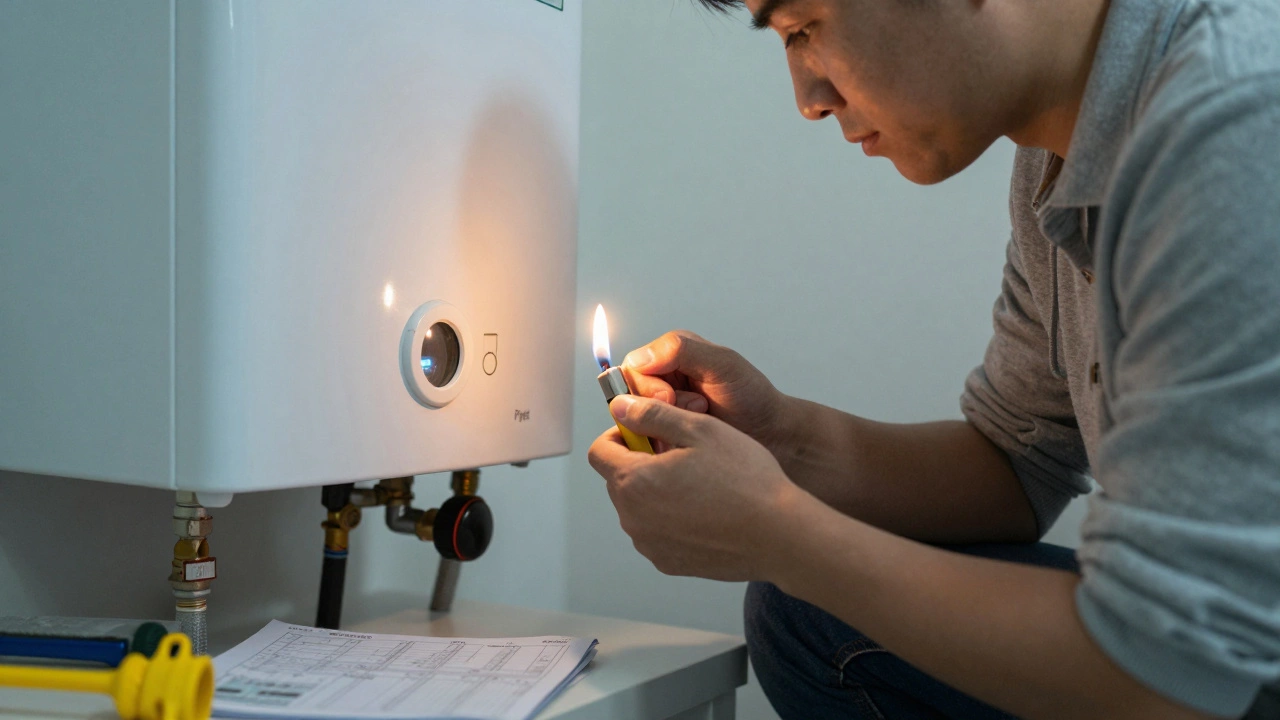
Check for the pilot light by looking through the viewing port on the front of the tank. If you see no flame, it’s out. Most gas heaters have instructions printed on the side. Turn the gas knob to “Off,” wait five minutes, then switch to “Pilot.” Hold the pilot button down, light it with a long match or lighter, and keep holding for 30 seconds after the flame catches. Then release and turn the knob to “On.”
If the pilot won’t stay lit after three tries, the thermocouple is likely faulty. It’s a cheap part-under $20-and easy to replace. Just disconnect the old one, match the length and tip, and install the new one. No tools needed.
4. Check for sediment buildup (both electric and gas)
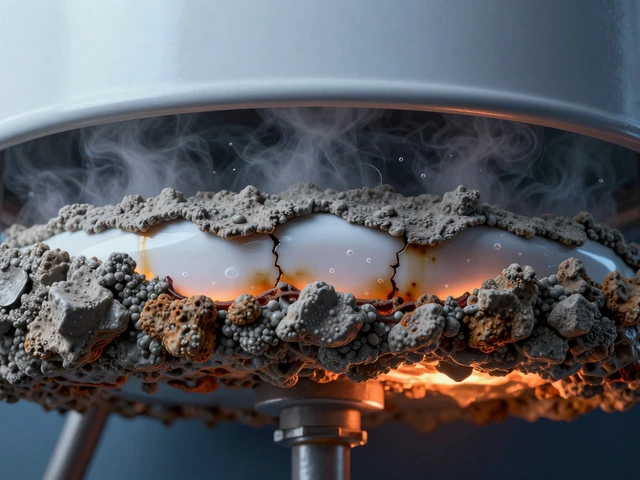
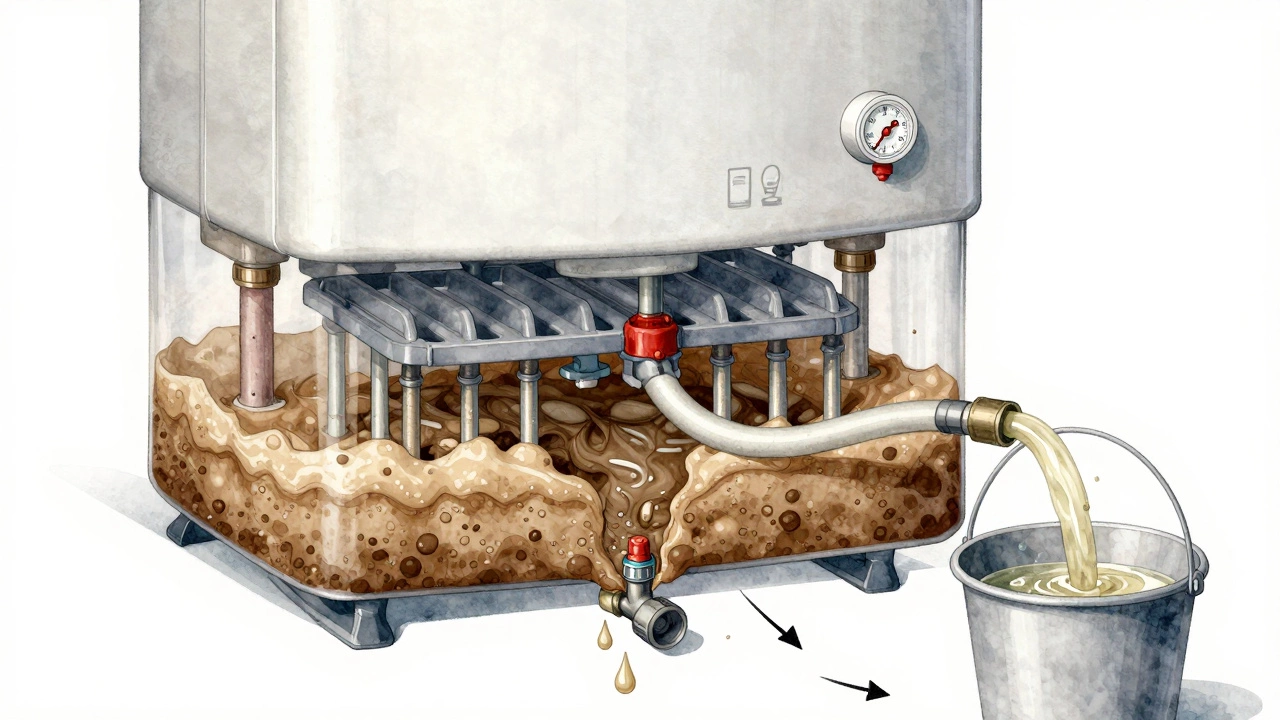
Over time, minerals in the water settle at the bottom of the tank. In hard water areas like parts of Wellington, this builds up fast. That sludge acts like insulation. The heating element or burner can’t reach the water. So the water heats slowly-or not at all.
Flushing the tank is the fix. Turn off the power or gas. Shut the cold water inlet valve. Attach a garden hose to the drain valve at the bottom of the tank. Run the other end outside or into a bucket. Open the drain valve and let it run for 10-15 minutes. You’ll see cloudy water at first, then clear. That’s the sediment leaving.
Do this once a year. If you’ve skipped it for three years or more, your heater’s efficiency drops by 30%. That’s why you’re running out of hot water faster than before.
5. Look for leaks or pressure issues
A sudden loss of hot water can also mean your tank is leaking. Not always visible. Sometimes it’s just a slow drip under the tank, or water pooling on the floor. Even a small leak can trigger the pressure relief valve to open and drain the tank.
Check the pipe coming out of the top of the tank. That’s the hot water outlet. Is it dry? Now check the bottom. Is there a puddle? Smell for rust or dampness. If you find moisture, the tank may be corroded. That’s a sign it’s done.
Also, check the pressure relief valve. It’s a small pipe sticking out the side near the top. If it’s dripping, that’s normal. If it’s gushing, the pressure is too high. Turn off the water heater and call a professional. High pressure can rupture the tank.
What’s NOT the problem
Some people think a cold shower means the whole system is broken. It doesn’t. If you’ve got a tankless water heater, it’s not “out of hot water”-it’s either not getting gas, not getting power, or has a blocked filter. Tankless units have error codes. Check the display. A blinking “E1” usually means no flame. “E3” means water flow sensor failure.
And no, your neighbor’s hot water being fine doesn’t mean your heater is fine. Each home has its own system. Even in apartment buildings, hot water is often split into zones.
When to call a professional
You’ve checked the breaker. You reset the thermostat. You relit the pilot. You flushed the tank. Still no hot water? Then it’s time to call someone.
Call a pro if:
- The heating element is dead (you can test it with a multimeter, but most people don’t have one)
- The tank is leaking from the body, not just the valves
- The gas line is hissing or smells like rotten eggs
- You’ve got an old unit (over 10 years) and it’s failing repeatedly
Water heaters last about 8-12 years. If yours is older than that and you’re fixing it again, you’re just delaying the inevitable. Replacing it now saves you from a bigger mess later.
Prevent this from happening again
Here’s how to keep your hot water flowing:
- Flush the tank every 6-12 months
- Set the thermostat to 50°C (122°F). Higher settings wear out the tank faster
- Install a water softener if you’re in a hard water area
- Check the anode rod every 2 years-it protects the tank from rust
- Replace your water heater before it hits 10 years old
Most people wait until the heater dies to think about replacement. But a new electric water heater in New Zealand costs between $1,200 and $2,500 installed. A quick flush and reset? That’s 10 minutes and $0. That’s the difference between paying $2,000 and $0.
Final thought: It’s not magic-it’s physics
Your water heater isn’t a black box. It’s a tank with pipes, elements, and valves. When it stops working, it’s usually because one small part failed. Not the whole system. You don’t need to be a plumber to fix most of these problems. You just need to know where to look.
So next time your hot water vanishes, don’t panic. Don’t call someone right away. Check the breaker. Reset the button. Look for the pilot light. Flush the tank. You might save yourself a service call-and a lot of cold showers.
Why did my hot water suddenly stop?
Hot water can stop suddenly due to a tripped circuit breaker, a blown pilot light (on gas units), a faulty thermostat, a failed heating element, or heavy sediment buildup in the tank. In most cases, it’s not a full system failure-just one component that’s easy to fix.
Can a water heater explode if it stops working?
No, a water heater won’t explode just because it stops heating. But if the pressure relief valve is blocked or faulty, and the tank keeps heating without releasing pressure, pressure can build up dangerously. That’s rare with modern units, but it’s why you should never ignore a leaking relief valve or a tank that’s over 10 years old.
How long does it take for hot water to come back after resetting the heater?
After resetting a tripped breaker or thermostat, it takes about 30 to 60 minutes for the water to heat back up. Gas heaters heat faster-usually 20 to 40 minutes. Electric heaters take longer because they rely on lower-wattage elements. Don’t rush it. Testing too soon gives false results.
Is it safe to flush a water heater myself?
Yes, if you follow basic safety steps. Turn off the power or gas, shut the cold water inlet, and use a hose to drain the tank slowly. Never drain into a plastic bucket indoors-it can melt. Always drain outdoors or into a floor drain. Wear gloves. Hot water can cause burns. If you’re unsure, hire a professional.
Should I replace my water heater if it’s 12 years old?
Yes. Water heaters rarely last beyond 12 years. Even if it’s still working, efficiency drops sharply after 10. You’ll pay more in energy bills, and the risk of sudden failure increases. Replacing it now avoids flooding, emergency repairs, and the cost of last-minute replacements in winter.