Freezer Troubleshooting Assistant
Is there power?
Look at the digital display or open the door. Does the light turn on? Is there a display reading?
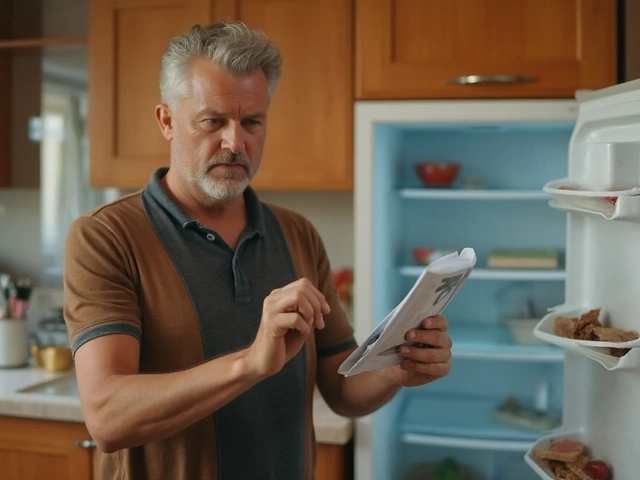
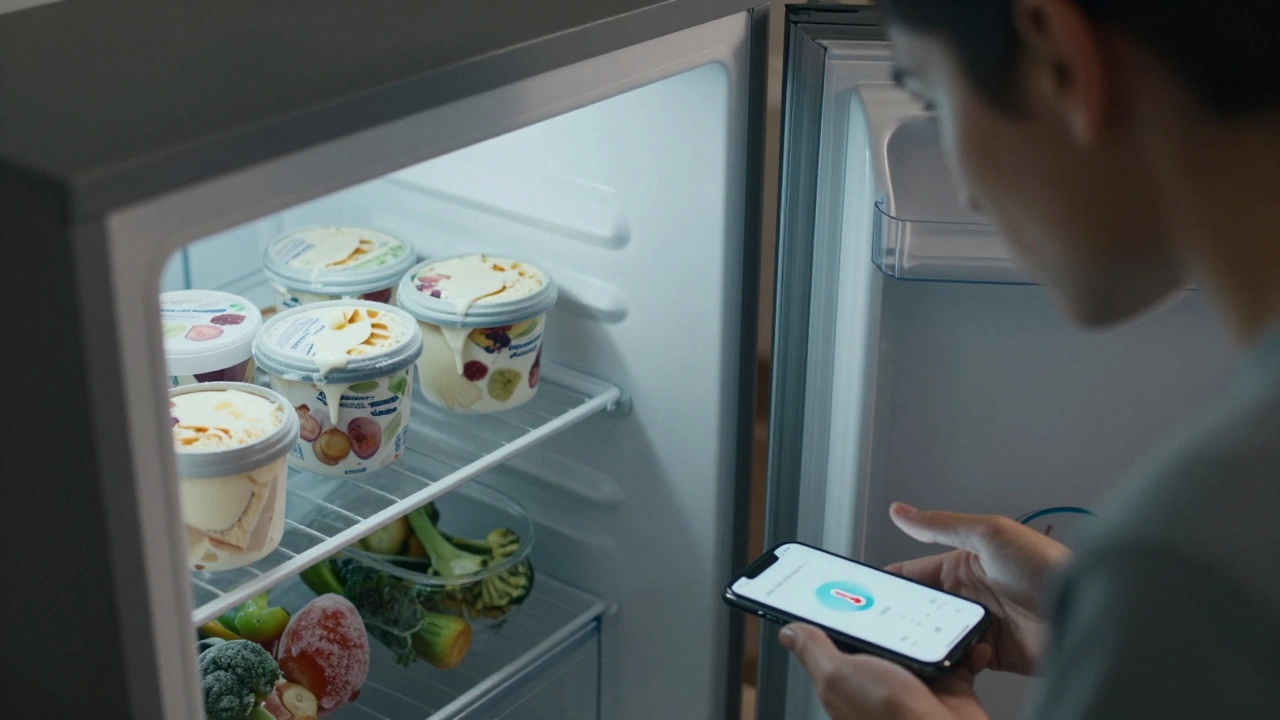
Your phone buzzes with a notification from your smart home app: "Temperature Alert." You rush into the kitchen or garage to find your chest freezer is sitting at a lukewarm 10°C. The ice cream is soup. The frozen vegetables are mush. Panic sets in. This is one of those household moments that feels like a disaster waiting to happen.
Before you call a technician and hand over your credit card for a diagnostic fee, take a breath. In many cases, a freezer repair job is just a loose plug, a dirty coil, or a tripped breaker. Sometimes, it’s a more complex component failure. But knowing where to look can save you hundreds of dollars and potentially save the food inside. Here is exactly how to diagnose why your unit stopped cooling and what steps to take next.
Is It Really Dead? Check the Basics First
It sounds obvious, but we often skip the simplest checks when stress hits. Before you grab a screwdriver, verify that electricity is actually reaching the appliance. Look at the digital display if your model has one. If it’s blank, the issue is likely power-related rather than mechanical.
- The Power Cord: Ensure the plug is fully inserted into the wall socket. Give it a gentle tug to make sure it hasn’t worked itself loose behind the heavy cabinet.
- The Circuit Breaker: Head to your fuse box. Did another high-draw appliance trip the breaker? Reset it if necessary. If it trips again immediately, stop using that circuit; there is a short somewhere.
- The Outlet: Plug a lamp or a phone charger into the same outlet. If the lamp doesn’t work, the problem is with your house wiring, not the freezer.
If the light inside the freezer turns on when you open the door, the unit has power. This is a crucial clue. It means the main control board and the user interface are alive. The problem is likely isolated to the cooling system components: the compressor, the condenser coils, or the evaporator fan.
Listen to the Hum (or Lack Thereof)
Sound is your best diagnostic tool before disassembly. Stand close to the back of the unit. Do you hear a low hum? A click? Or absolute silence?
A steady, low hum usually indicates the compressor is running. The compressor is the heart of the refrigeration cycle, pumping refrigerant through the lines. If it’s humming but the air isn’t getting colder after an hour, you might have a blocked airflow issue or a failing capacitor.
If you hear a loud clicking sound followed by silence, repeat three times, wait ten minutes, and try again, your compressor relay or overload protector may be faulty. These are small, inexpensive parts that sit near the compressor at the bottom rear of the unit. They act as switches to start the motor. When they wear out, the compressor tries to start, fails, clicks off, and repeats the cycle.
Silence, however, suggests the compressor isn’t receiving the signal to start. This could be a dead thermostat, a failed control board, or a completely burnt-out compressor motor. We’ll tackle these deeper issues after checking the airflow.
The Hidden Killer: Dirty Condenser Coils
This is the number one cause of premature freezer failure that homeowners ignore. Behind or underneath your freezer is a network of metal tubes called condenser coils. Their job is to release heat from inside the freezer to the room outside.
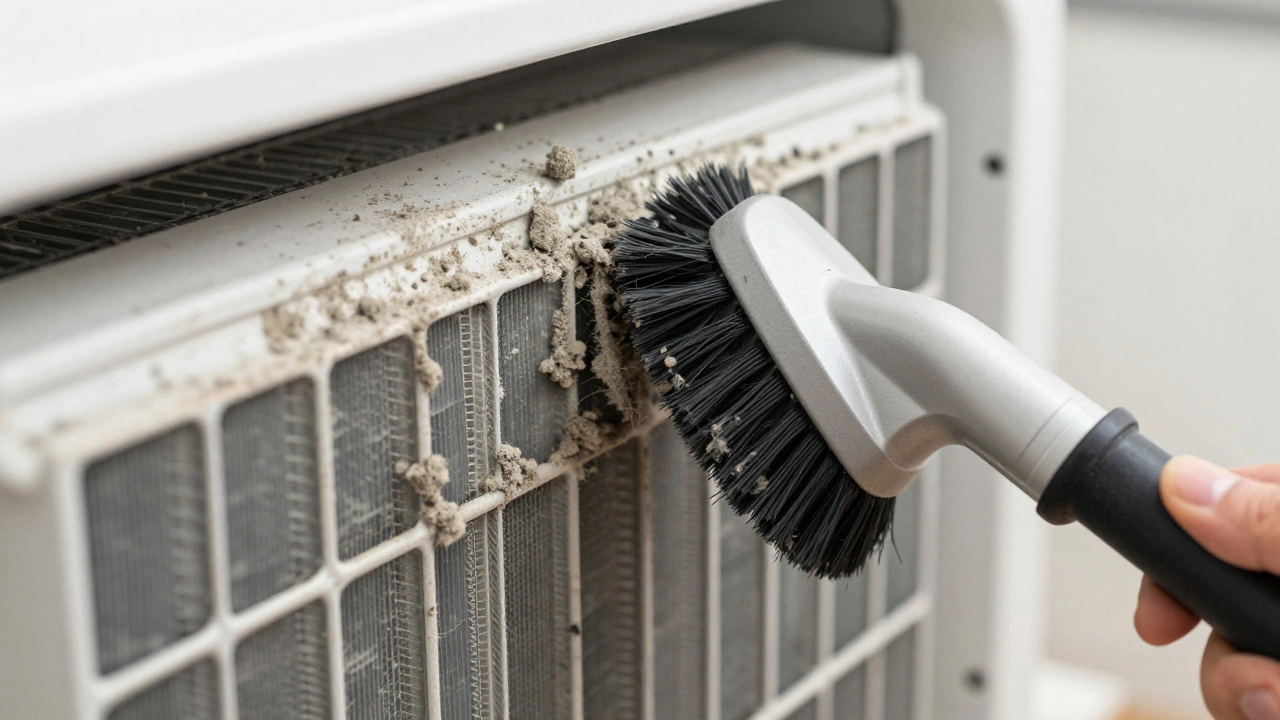
Over time, these coils collect dust, pet hair, and grime. Think of it like wearing a thick wool sweater while running a marathon. The freezer works harder and hotter to shed that heat. Eventually, the compressor overheats and shuts down to protect itself, or it burns out entirely.
- Pull the freezer away from the wall.
- Locate the coils. On upright freezers, they are often behind a kickplate at the bottom or on the back panel. On chest freezers, they are usually wrapped around the sides under a plastic cover.
- Use a coil brush or a vacuum cleaner with a long hose attachment to clean them thoroughly.
If the coils are caked in gray fuzz, cleaning them might instantly restore cooling efficiency. It’s free, takes twenty minutes, and extends the life of your appliance significantly. Always perform this maintenance every six months, especially if you have pets.
Ice Buildup and the Defrost System
Open the freezer door and look at the back wall. Is it covered in a thick layer of frost or ice? A thin sheen is normal. An inch-thick block is not.
Modern freezers use an automatic defrost system to melt this ice periodically. This system relies on three key components: the defrost heater, the defrost thermostat, and the main control board.
If the defrost heater fails, ice builds up on the evaporator coils. This ice acts as insulation, preventing cold air from circulating. The freezer runs constantly trying to reach the set temperature but never gets there. Eventually, the ice blocks the air vents completely, and the compartment warms up.
To test this, unplug the freezer and let it thaw completely (you can speed this up with a hair dryer on low heat, keeping it moving to avoid melting the plastic). Once the ice is gone, plug it back in. If the freezer cools normally for a few days and then stops again, you’ve confirmed a defrost system failure. The heater is the most common culprit here. It’s a simple resistive element that can be tested with a multimeter for continuity. If it shows infinite resistance, replace it.
Fan Failures: Evaporator vs. Condenser
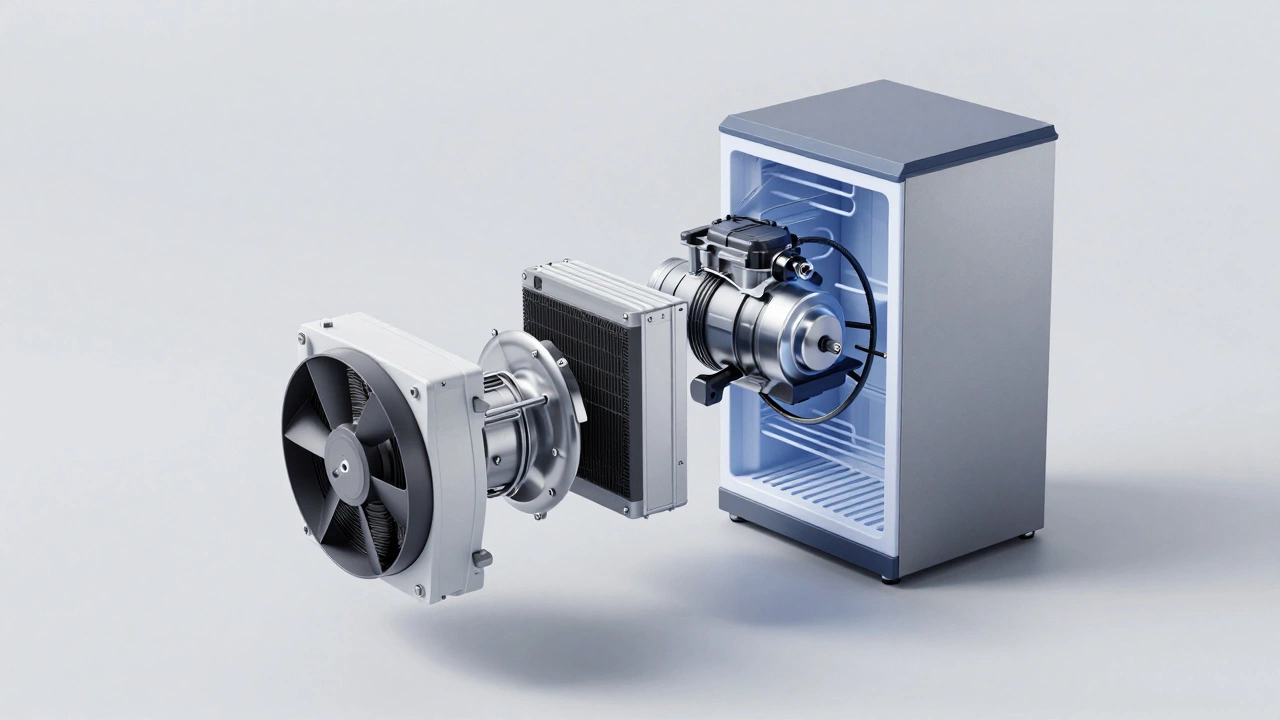
Cold air doesn’t just appear; it needs to move. Your freezer has two fans. One pushes hot air across the condenser coils (condenser fan), and the other circulates cold air from the evaporator coils into the storage space (evaporator fan).
If you hear the compressor humming but feel no cold air coming from the vents inside, check the evaporator fan. It is located behind the back panel inside the freezer compartment. If the fan motor is seized or the blades are hitting ice, it won’t spin. You can often see if it spins by listening for a whirring sound or looking through the vent holes.
If the freezer is warm but the back of the unit is also hot to the touch, the condenser fan might be dead. Without this fan, the compressor overheats and shuts down. Replace any fan that makes grinding noises or refuses to spin when powered.
When to Call a Professional
Sometimes, DIY fixes hit a wall. There are specific scenarios where calling a licensed technician is the smarter financial decision.
| Issue | Complexity | Action |
|---|---|---|
| Dirty Coils / Loose Plug | Low | DIY immediately |
| Defrost Heater / Thermostat | Medium | DIY if comfortable with basic tools |
| Fan Motor Replacement | Medium | DIY or Pro |
| Compressor Failure | High | Call Pro (often not worth repairing) |
| Refrigerant Leak | Very High | Call Pro (requires EPA certification) |
If the compressor is dead, the cost of replacement plus labor often exceeds 50% of the price of a new unit. Unless it’s a high-end commercial-grade freezer, replacement is usually the better path. Similarly, refrigerant leaks require specialized equipment and certification to handle legally and safely. Do not attempt to recharge freon yourself.
Saving Your Food During the Downtime
While you troubleshoot, minimize food loss. A full chest freezer can keep food frozen for about 48 hours if the lid stays closed. An upright freezer holds cold for roughly 24 hours due to less efficient insulation and door seals.
Group food together. Mass retains cold better than individual packages. Use dry ice if available; placing it on top of the food helps maintain freezing temperatures longer. Avoid opening the door unless absolutely necessary. Every time you crack the seal, you lose precious cold air.
How much does it cost to repair a freezer?
Simple repairs like replacing a thermostat or defrost heater typically cost between $150 and $300 including labor. More complex issues involving compressors or sealed system repairs can range from $400 to $700. Always get a diagnostic quote first.
Can I fix a freezer that is running but not freezing?
Yes, this is often caused by dirty condenser coils, a failed evaporator fan, or a broken defrost system. Start by cleaning the coils and checking if the internal fan is spinning. If those are fine, inspect the defrost heater for continuity.
Why is my freezer making a clicking noise?
A repetitive clicking noise usually indicates a failing compressor start relay. The compressor tries to start, fails, and the relay clicks off. This part is inexpensive and easy to replace if you are handy with basic tools.
Should I replace or repair an old freezer?
If the repair cost exceeds half the price of a new energy-efficient model, replacement is usually the better choice. New models use significantly less electricity and come with warranties. Consider the age of the unit; if it's over 10 years old, parts may become scarce.
How do I know if the defrost heater is bad?
Signs include excessive frost buildup on the back wall, the freezer running continuously without cooling, and visible damage to the heater element. You can test it with a multimeter; it should show low resistance. Infinite resistance means it is open and needs replacement.