Extractor Fan Installer Finder
Not sure who to call? Answer the questions below to find out if you need an Electrician, a Plumber, or both.
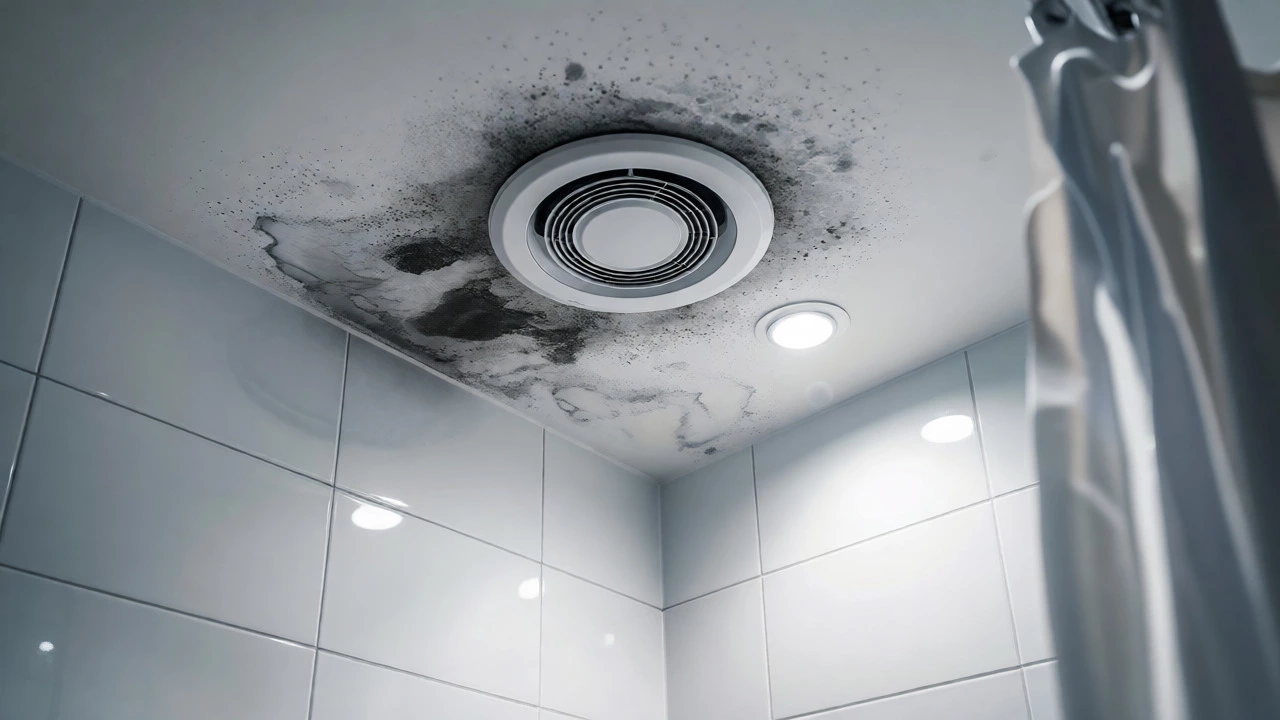
You’re standing in your bathroom, staring at a damp patch on the ceiling or maybe just dealing with that lingering humidity after a hot shower. You need an extractor fan installed to suck out the moisture and prevent mold. But who do you call? The plumber is already there fixing the leaky tap, so can’t they just handle it? It’s a common question, and the answer isn’t a simple yes or no. It depends entirely on what kind of fan you have and where it needs to go.
Here’s the quick reality check: In most cases, a plumber does not install the electrical components of a standard wall or ceiling-mounted extractor fan. That job belongs to an electrician. However, plumbers absolutely play a role if your fan connects to the plumbing vents or if you are installing a specific type of inline fan within a wet area. Understanding this division of labor saves you from hiring the wrong person, wasting money, and potentially failing building code inspections.
The Short Answer: Electrician vs. Plumber
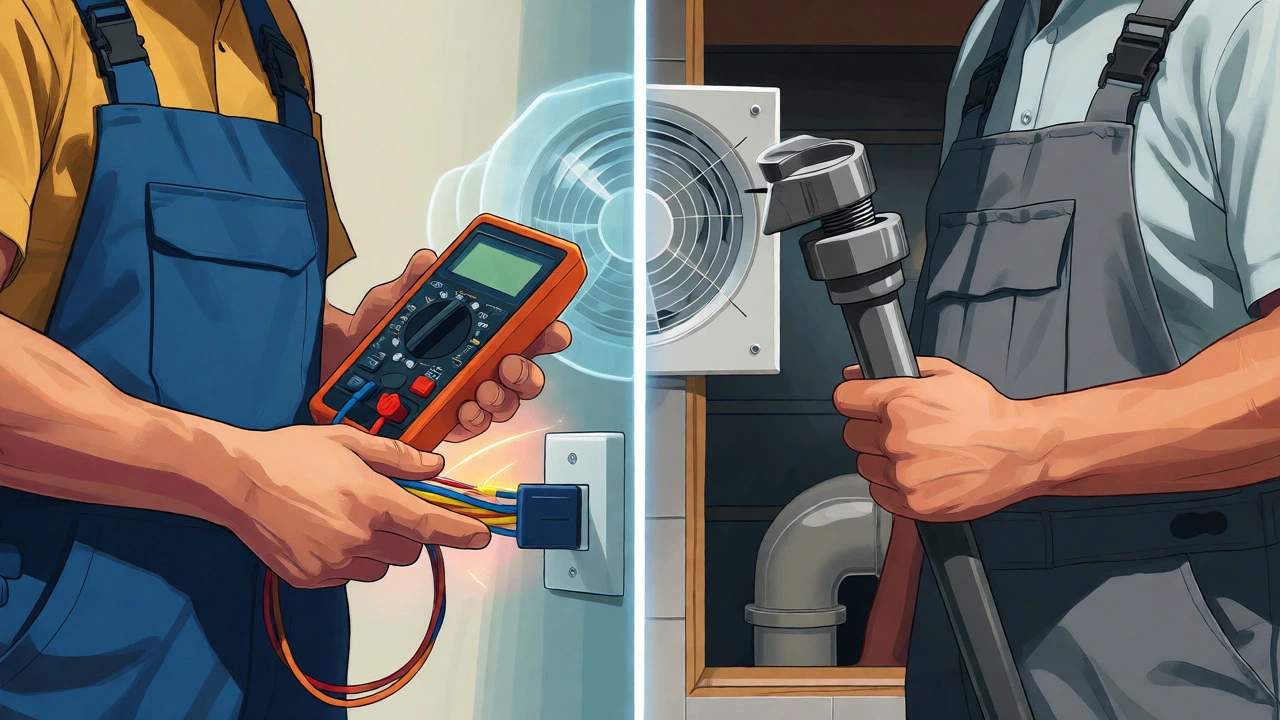
Let’s cut through the noise. If you are buying a standard household extractor fan from a hardware store-whether it’s a slimline unit for the window, a ceiling-mounted box, or a wall vent-the primary installer is an electrician. Why? Because these units require connection to the mains power supply (usually 230V), integration with existing lighting circuits or independent switches, and compliance with electrical safety standards like AS/NZS 3000 in New Zealand and Australia.
A plumber’s expertise lies in water systems: pipes, taps, showers, toilets, and drainage. While both trades work in the same room, their licenses cover different risks. An electrician handles the risk of fire and shock; a plumber handles the risk of leaks and contamination. Mixing them up without proper cross-licensing leads to messy situations. So, if your fan needs wiring, call an electrician. If your fan needs to connect to a soil stack or requires cutting into plumbing vents, you might need a plumber, but usually, the electrician still wires it up.
When Can a Plumber Handle the Job?
There are niche scenarios where a plumber takes the lead, or at least shares the load. These usually involve inline fans or systems integrated directly with plumbing infrastructure.
- Bathroom Ventilation via Plumbing Vents: Some older homes or specific commercial setups use the plumbing vent stack as part of the air exchange system. If you are modifying a vent pipe to accommodate a fan housing, a plumber handles the pipework. They ensure the seal is watertight and compliant with drainage codes.
- Wet Area Compliance: In some jurisdictions, any modification to a "wet area" (like cutting tiles or waterproofing) falls under the purview of a licensed builder or plumber if it affects the structural integrity of the waterproof membrane. If installing the fan requires breaking the waterproof seal around a duct, a plumber or tiler might need to reseal it before the electrician mounts the final grille.
- Combined Trades: Many handyman services or smaller plumbing businesses employ staff who hold dual qualifications or simply have the practical skills to mount a fan. If you hire a "plumber" who advertises "general maintenance," ask specifically if they are registered electricians for the wiring portion. Never assume.
Why You Shouldn't DIY the Electrical Part
You might be tempted to skip the professional altogether. After all, YouTube makes it look easy. But here is the danger zone: bathroom zones. Building codes divide bathrooms into zones based on proximity to water sources. Zone 1 is inside the shower; Zone 2 is immediately outside; Zone 3 is the rest of the room. Each zone has strict rules about which electrical fittings can be used and how high they must be mounted.
If you install a fan rated incorrectly for its zone, or if you wire it without a Residual Current Device (RCD) protection where required, you create a hazard. Worse, when you sell your house, a pre-sale inspection will flag non-compliant electrical work. This can cost thousands to rectify later. A licensed electrician provides a Certificate of Compliance (CoC) or similar documentation, proving the work meets local standards. A plumber doing unauthorized electrical work cannot provide this certificate.
The Cost Breakdown: What Are You Paying For?
Understanding the cost structure helps you decide who to hire. Prices vary by region, but generally, the labor split looks like this:
| Task | Primary Trade | Estimated Labor Time | Why This Trade? |
|---|---|---|---|
| Mounting & Wiring Standard Fan | Electrician | 1-2 Hours | Requires mains voltage connection and circuit testing. |
| Cutting Ceiling/Wall Hole | Builder/DIY | 30 Mins | Structural modification; often done by the installer or homeowner. |
| Ducting to External Wall | Handyman/Electrician | 1 Hour | Physical routing of flexible ducting; no water involved. |
| Modifying Plumbing Vent Stack | Plumber | 2+ Hours | Involves PVC piping, solvent welding, and drainage compliance. |
| Waterproofing Seals | Plumber/Tiler | 45 Mins | Maintaining the wet-area barrier integrity. |
Notice that for 80% of residential jobs, the electrician is the one writing the invoice. If you try to force a plumber to do the wiring, they may charge you extra to bring in a sub-contractor, or worse, do it off-the-books, leaving you with no warranty.
Step-by-Step: How the Process Usually Works
If you are planning an installation, here is the logical flow to keep things smooth. This assumes a standard retrofit in an existing home.
- Assessment: Check your existing switch. Do you have a spare switched live? If not, the electrician will need to run new cabling from the junction box. This adds time and cost.
- Preparation: Clear the ceiling or wall space. If you need a hole cut, measure carefully. Most fans come with templates. If you are nervous about cutting plasterboard, many electricians offer this as part of the package.
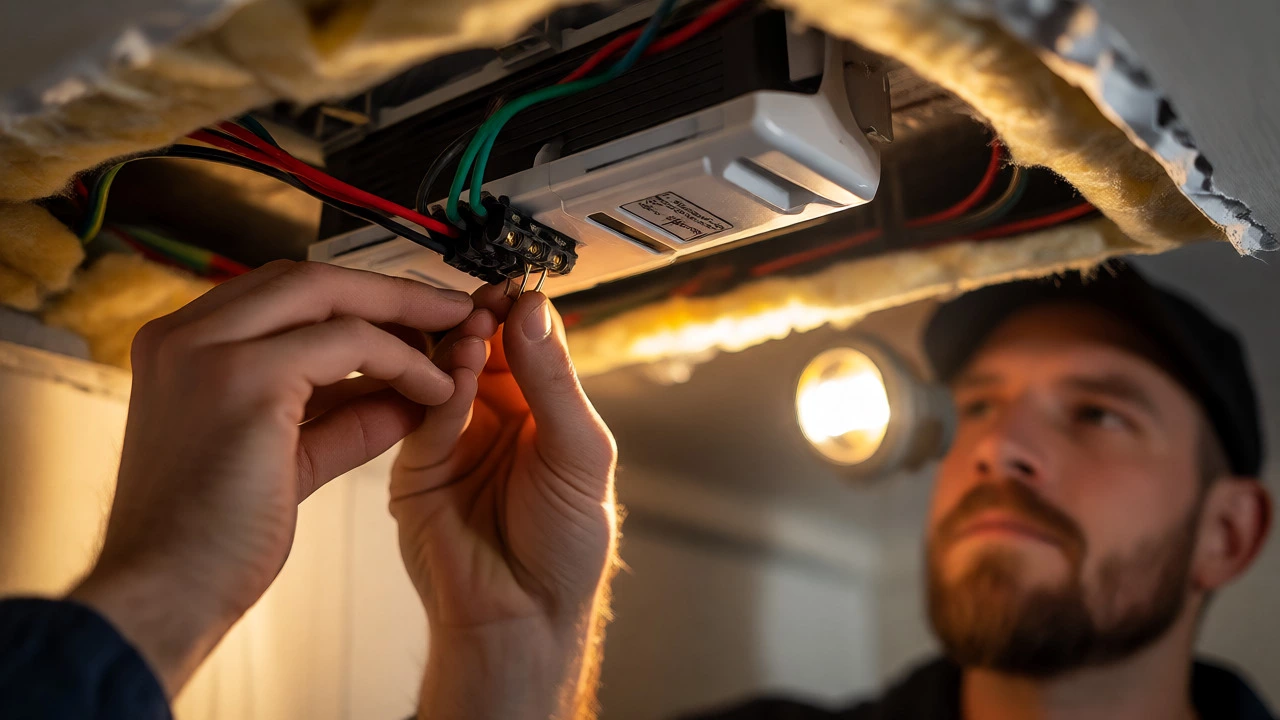
- Electrical Isolation: The electrician turns off the breaker. They test for dead. This is non-negotiable.
- Mounting: The fan housing is secured to joists or battens. Ducting is attached and routed to the exterior vent. Ensure the duct is as straight as possible to maintain airflow efficiency.
- Wiring: Connect Live, Neutral, and Earth. If using a timer or humidity sensor, wire according to the manufacturer’s diagram.
- Testing: Power on. Check airflow. Check for vibration. Verify the switch operation.
- Certification: Request the paperwork. Keep it in your home maintenance folder.
Common Pitfalls to Avoid
Even with the right tradesperson, mistakes happen. Here are the big ones I’ve seen in Wellington and beyond.
- Venting into the roof cavity: Never let anyone vent moist air into your attic. It causes rot and mold. Always vent to the outside. If the external vent is far away, you need a more powerful fan to push the air through longer ducting.
- Ignoring insulation: When cutting through a ceiling, you disturb the insulation. If the electrician doesn’t replace or secure it properly, you’ll lose heat efficiency. Ask them to tidy up the insulation around the new hole.
- Wrong fan size: A tiny fan won’t clear a large bathroom. Calculate the volume of your room (Length x Width x Height). Multiply by the recommended air changes per hour (usually 10-15 for bathrooms). Match this to the fan’s CFM (Cubic Feet per Minute) or L/s rating.
- Noisy installations: Cheap fans vibrate against ceiling joists. Use rubber grommets or isolation mounts. If it sounds like a jet engine, the installation was likely rushed.
Frequently Asked Questions
Can a handyman install an extractor fan?
Yes, a handyman can physically mount the fan and route the ducting. However, in many regions, only a licensed electrician can legally connect it to the mains power. If the handyman is also a registered electrician, then yes, they can do the whole job. Always verify their license number before letting them touch the wires.
How much does it cost to have an extractor fan installed?
Costs vary by location and complexity. For a simple replacement where wiring exists, expect to pay between $150 and $300 NZD for labor. If new wiring is needed, or if significant ceiling repairs are required, costs can rise to $500+. The fan unit itself ranges from $50 for basic models to $300+ for silent, high-efficiency units.
Do I need a permit to install an extractor fan?
In New Zealand and Australia, you typically do not need a council building consent for a simple fan replacement or addition if it doesn't alter the structure significantly. However, the electrical work must be certified by a licensed electrician. Always check local council rules, especially if you are in a historic heritage zone.
What happens if my plumber installs the fan without being an electrician?
If a plumber performs electrical work without a license, the work is considered non-compliant. You won't get a Certificate of Compliance. If you sell your home, the buyer's inspector may fail the property, forcing you to pay for a licensed electrician to re-certify or redo the work. Additionally, your home insurance might be voided if an electrical fire occurs due to unlicensed work.
Can I replace an old fan myself?
If you are confident working with electricity, you can swap a like-for-like unit. Turn off the power, disconnect the three wires (Live, Neutral, Earth), remove the old unit, and attach the new one using the same terminals. However, if the new fan has different mounting dimensions or requires new wiring runs, hire a pro. Safety first.