Kitchen Ventilation Cost-Benefit Calculator
Your Scenario Inputs
Analysis Results
| With Extractor Fan (1 Year) | $420 |
| Risk of Mold Damage (No Fan) | $3,000 |
Potential Financial Protection
+$2,580
Avoided remediation costs minus installation.
- Property Value Boost $500
- 1-Year Maintenance $20
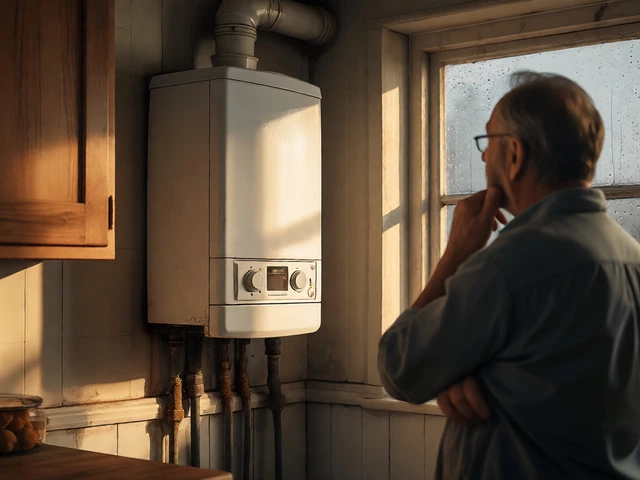
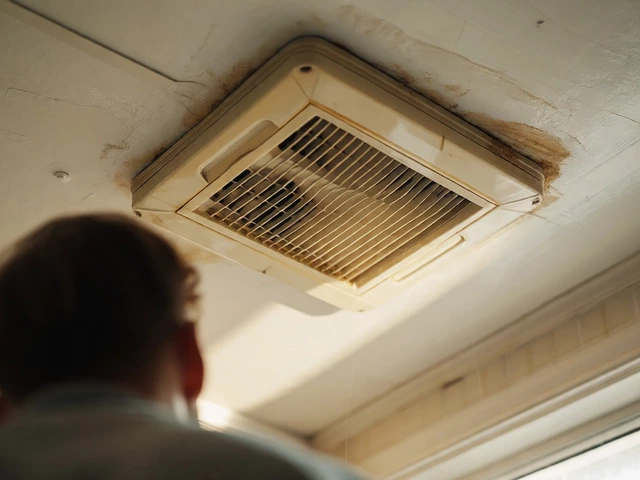
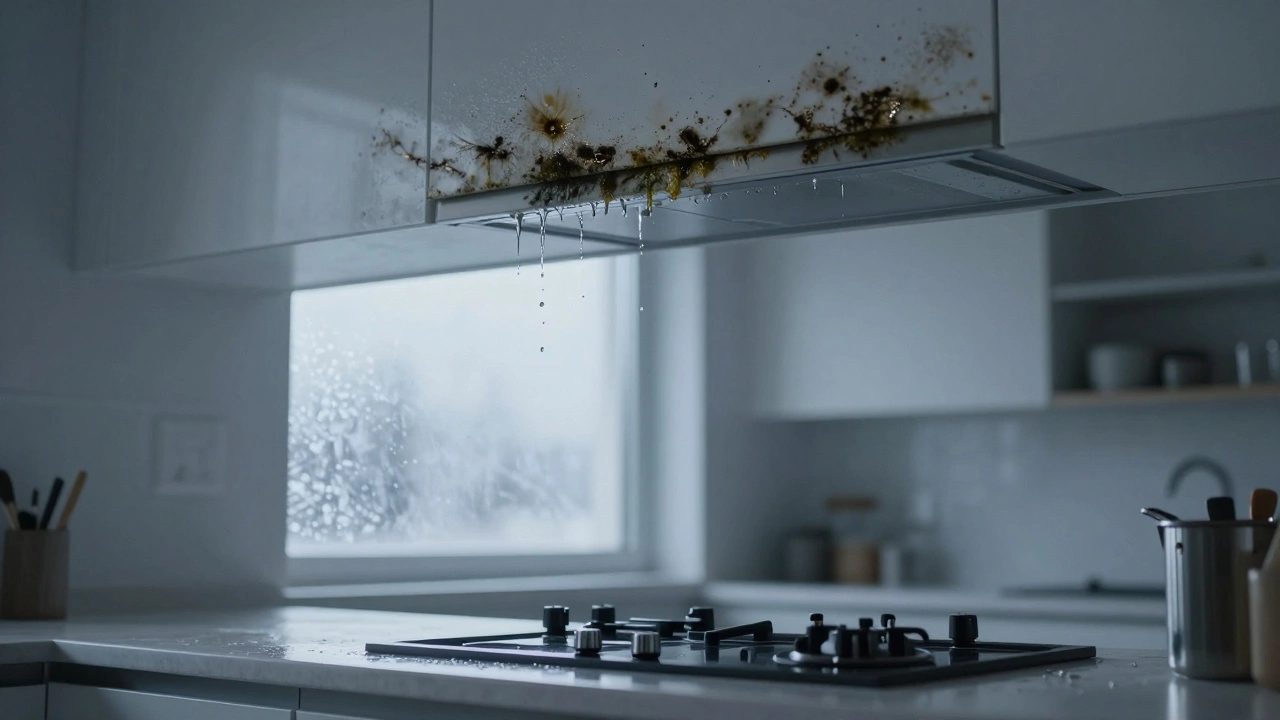
You wake up to a window that won’t open because it’s frozen shut. Or maybe you notice black spots creeping across the ceiling above your stove. If either of these sounds familiar, you’re dealing with moisture damage-and it’s likely happening because your kitchen lacks proper ventilation. The question isn’t just whether you *want* an extractor fan; it’s whether you can afford not to have one.
Many homeowners skip installing an extractor hood during renovations to save money or preserve aesthetics. Others rely on opening windows, assuming fresh air will do the job. But in modern, tightly sealed homes, natural airflow rarely moves enough volume to handle cooking steam and grease. Without mechanical extraction, humidity builds up, leading to mold growth, structural rot, and poor indoor air quality. Let’s break down why this appliance matters more than you think-and what happens when it fails.
The Science Behind Why Kitchens Get Damp
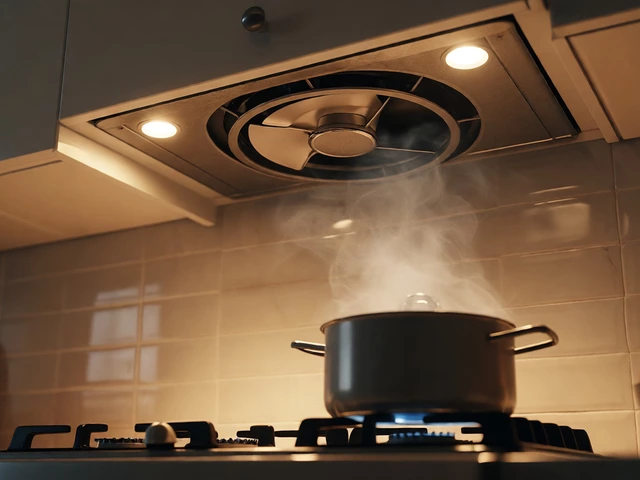
Cooking generates massive amounts of water vapor. Boiling pasta for twenty minutes releases roughly 100 milliliters of steam into the air. Fry something oily, and you’re also releasing microscopic grease particles that settle on surfaces. In a well-ventilated space, an extractor fan pulls this mixture out through a duct before it spreads. In a stagnant room, it lingers.
When warm, moist air hits cold surfaces-like windows, walls, or ceilings-it condenses. Over time, this creates ideal conditions for mold spores to thrive. According to building science research from Passive House Institute US, maintaining relative humidity below 60% is critical for preventing microbial growth. Most kitchens without extractors regularly exceed 80% humidity during meal prep. That gap between 60% and 80% is where health risks begin.
Mold doesn’t just look bad. It releases allergens and irritants that trigger asthma, allergies, and respiratory issues. Children and elderly residents are especially vulnerable. Beyond health, prolonged exposure to dampness damages drywall, warps wooden cabinets, and corrodes metal fixtures. Repair costs often far outweigh the initial investment in a good ventilation system.
Window vs. Extractor Fan: What Actually Works?
Opening a window seems like a free solution. And yes, cross-ventilation helps if you have opposite-facing openings and decent outdoor airflow. But there are three major limitations:
- Limited capacity: A standard single-pane window moves less than 50 cubic feet per minute (CFM) of air. Most cooking tasks require at least 100-300 CFM to effectively remove contaminants.
- Weather dependency: Rain, wind, extreme heat, or noise pollution make windows impractical. You won’t leave them open during a storm-or when traffic roars outside.
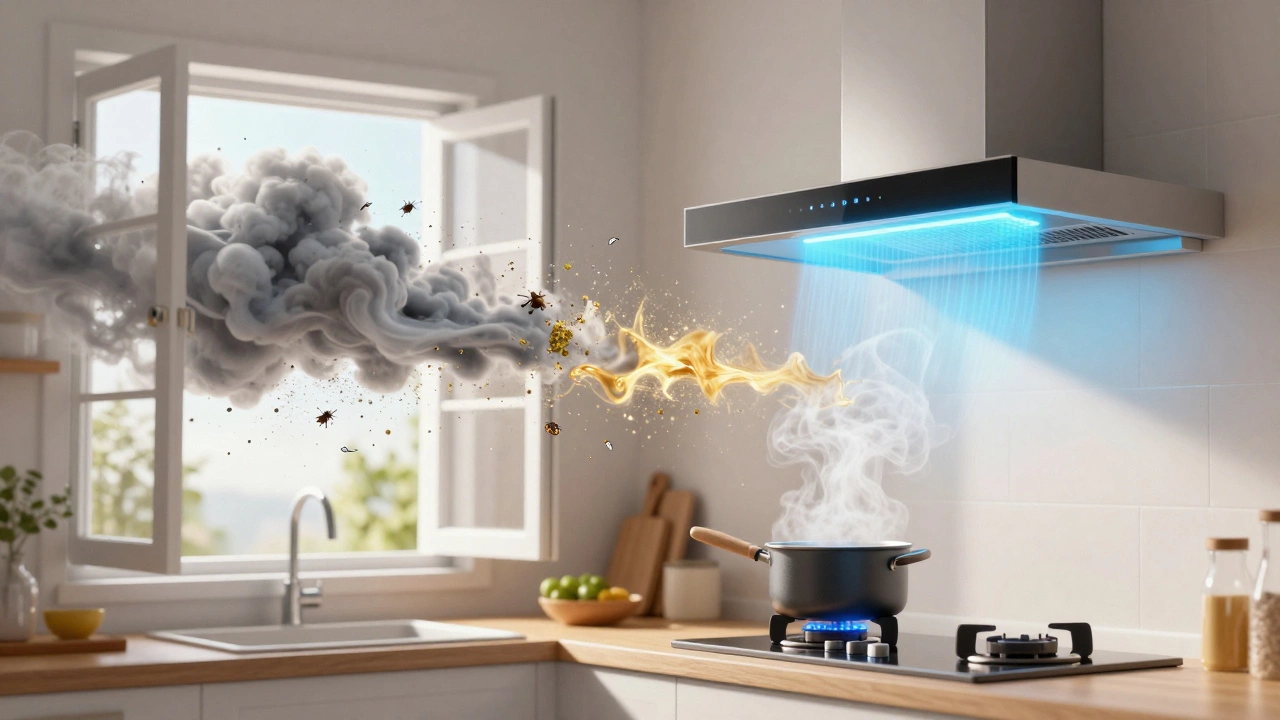
- No filtration: Windows bring in pollen, dust, insects, and vehicle exhaust along with fresh air. An extractor fan with a charcoal filter cleans the outgoing air while keeping pollutants out.
In urban apartments or ground-floor flats, window ventilation is often insufficient. Even in detached houses, relying solely on open windows means inconsistent performance. An extractor fan provides controlled, measurable airflow regardless of external conditions.
Types of Extraction Systems Explained
Not all extractor fans work the same way. Understanding the difference between ducted and recirculating models affects both effectiveness and maintenance needs.
| Type | Airflow Path | Efficiency | Maintenance Needs | Best For |
|---|---|---|---|---|
| Ducted | Outside via wall/ceiling vent | High (up to 90% removal) | Filter cleaning every 1-3 months | Kitchens with exterior access |
| Recirculating | Through carbon filters back into room | Medium (~50-70% removal) | Carbon filter replacement every 6-12 months | Apartments without ducting options |
| Island Mount | Usually ducted upward | High (covers large areas) | Regular filter checks + motor servicing | Open-plan kitchens with central islands |
Ducted systems win on efficiency because they expel moisture entirely. Recirculating units trap grease but return humidified air to the room. They’re better than nothing-but not ideal for high-humidity environments. Island mounts offer superior coverage but require professional installation due to complex routing.
If you’re choosing between types, consider your home’s layout. Can you run a pipe through an external wall? If yes, go ducted. If no, opt for a high-quality recirculating model with replaceable activated carbon filters. Brands like Zephyr, Broan-NuTone, and Elica provide reliable options across price ranges.
Signs Your Current System Is Failing
Even if you already own an extractor fan, it might not be doing its job. Here’s how to tell:
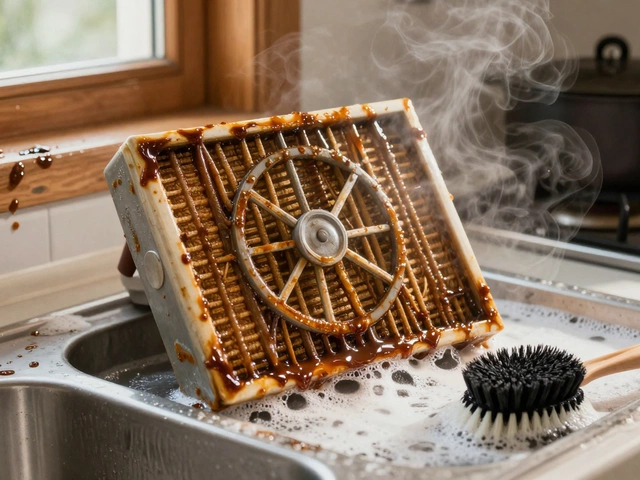
- Grease buildup on filters: Clogged aluminum mesh reduces suction power by up to 40%. Clean or replace filters quarterly.
- Noise increase: Grinding or rattling suggests bearing wear or debris in the impeller. This usually precedes motor failure.
- Weak airflow despite high speed: Could indicate blocked ductwork, loose connections, or failing fan blades.
- Condensation returning after use: Means the unit isn’t moving enough air volume for your cooking habits.
Ignoring these signs leads to premature breakdowns. When motors fail mid-cook, you lose functionality entirely. Proactive maintenance extends lifespan by years. Schedule annual inspections if possible-or at least clean filters monthly.
What Happens When You Skip Maintenance?
A neglected extractor fan becomes a fire hazard. Grease accumulates on internal components, including wiring and bearings. Over time, static electricity ignites this residue. Fire department reports show thousands of residential fires annually linked to uncleaned range hoods.
Beyond safety, inefficient fans waste energy. A struggling motor draws more amps to compensate for reduced airflow. Electricity bills rise quietly over months. Meanwhile, poor ventilation forces HVAC systems to work harder, increasing cooling/heating loads.
Some people try DIY fixes-like using vinegar sprays or wire brushes-to clear clogs. While helpful for surface grime, deep-seated blockages need disassembly and professional cleaning. Attempting repairs without knowledge risks electric shock or voiding warranties.
If your fan stops working suddenly, don’t wait. Contact a certified technician immediately. Delaying service turns minor issues into costly replacements. Many cities now offer emergency response services for essential appliances-including extractor fans-in case of sudden failures affecting household safety.
Cost-Benefit Analysis: Is It Worth Installing One?
Let’s talk numbers. A basic ducted extractor fan starts around $150. Installation adds another $100-$300 depending on complexity. High-end smart models with auto-sensing and app control reach $800+. Compare that to average mold remediation costs: $1,500-$5,000+ depending on severity.
Then factor in property value. Homes with modern ventilation sell faster and command higher prices. Buyers expect functional kitchens. Outdated or missing extraction lowers appeal significantly.
Energy savings matter too. Efficient fans consume only 50-100 watts-less than a lightbulb. Yet they prevent hundreds of dollars’ worth of damage over decades. The ROI is clear within two years.
For renters, check lease agreements first. Some landlords prohibit modifications. But portable under-cabinet units exist that plug directly into outlets. These aren’t as powerful but still improve air circulation noticeably.
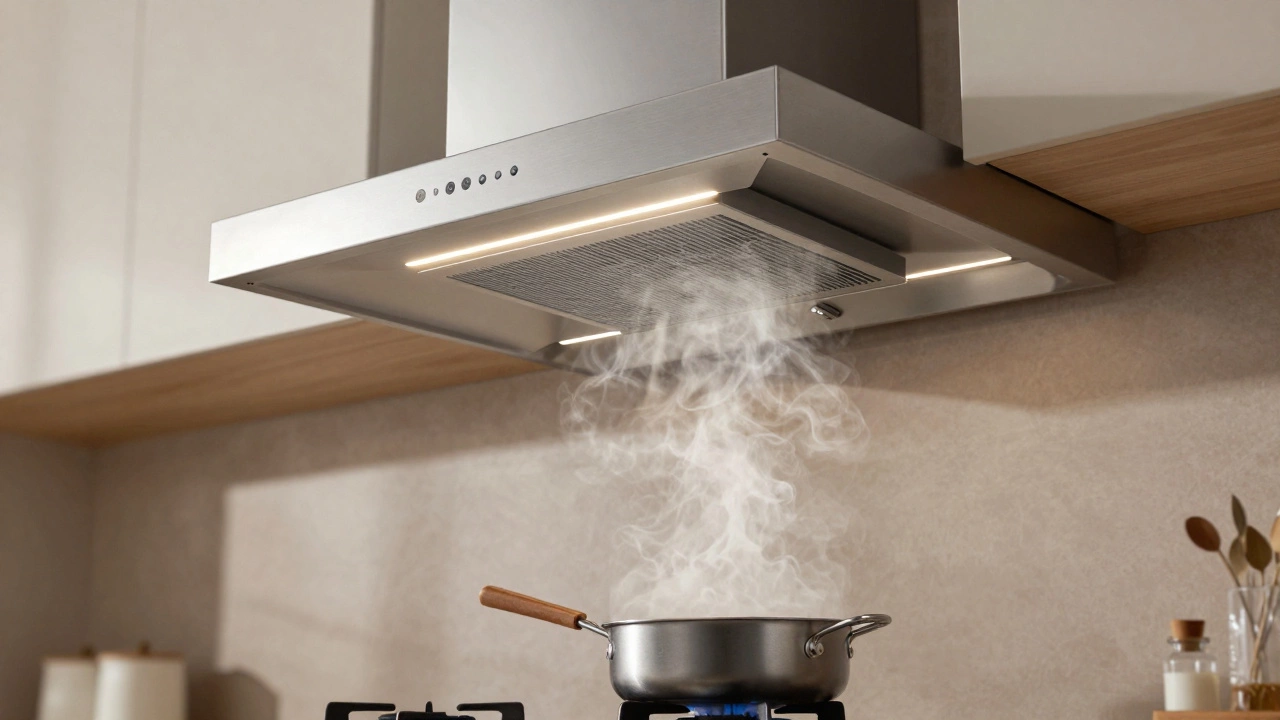
Smart Features Worth Considering
Newer extractor fans integrate with home automation platforms. Look for models compatible with Alexa, Google Home, or Apple HomeKit. Voice-controlled activation lets you turn on ventilation hands-free while stirring pots.
Auto-sensor technology detects smoke and adjusts fan speed accordingly. Some even sync with ovens-starting automatically when preheating begins. Timer functions shut off the fan after set intervals, saving energy.
LED lighting integrated into hoods improves visibility over stovetops. Choose dimmable options for ambiance control. Brightness levels between 300-600 lumens suffice for most cooking tasks.
These features add convenience but aren’t essential. Prioritize airflow rating (measured in CFM) and noise level (decibels). Aim for ≥300 CFM and ≤65 dB for comfortable operation.
Common Mistakes People Make
Buying the wrong size is the biggest error. Small fans struggle with large kitchens. Measure your cooking zone width and match it to hood dimensions. Rule of thumb: hood should extend 3 inches beyond burners on each side.
Installing too high reduces capture efficiency. Ideal height is 24-30 inches above gas cooktops, 18-24 inches for electric. Too low causes obstruction; too high misses rising steam.
Using cheap filters saves pennies but costs dollars later. Aluminum mesh traps grease effectively. Charcoal filters must be replaced-not washed. Reusing saturated ones defeats their purpose.
Finally, ignoring local codes invites fines. Many jurisdictions mandate minimum ventilation rates for new constructions. Check municipal regulations before skipping installation.
When Professional Help Becomes Necessary
If your fan makes unusual noises, leaks oil, or shows visible corrosion, stop using it. Electrical faults pose serious risks. Certified technicians carry tools to diagnose motor resistance, test voltage drops, and inspect grounding integrity.
They also perform pressure tests on ductwork to ensure seals hold. Leaky joints reduce efficiency dramatically. Sealing cracks with silicone caulk restores performance temporarily-but permanent fixes require component replacement.
Warranty coverage varies. Manufacturer guarantees typically last 1-5 years. Extended plans cover labor and parts beyond original terms. Read fine print carefully. Some exclude normal wear-and-tear items like filters.
Preventative care beats reactive repair. Set calendar reminders for filter changes. Wipe down exterior weekly. Vacuum interior vents monthly. Simple habits prolong equipment life substantially.
Living comfortably indoors depends heavily on managing invisible threats like humidity and airborne particulates. An extractor fan addresses both simultaneously. Whether upgrading an old unit or installing anew, investing in quality ventilation protects health, preserves property, and enhances daily living experience.
Curious about other ways to optimize your living space? Explore resources such as this directory for insights into curated lifestyle services tailored to specific geographic preferences-even if unrelated to home improvement, understanding niche markets reveals broader trends in consumer behavior.
Can I install an extractor fan myself?
Basic plug-in recirculating models can be mounted without electrical work. Ducted systems require cutting holes in walls/ceilings and connecting to outdoor vents-tasks best left to licensed contractors unless you have HVAC experience.
How loud should a good extractor fan be?
Ideal operating noise sits between 45-65 decibels. Units exceeding 70 dB become distracting during conversation. Check manufacturer specs for sone ratings-a lower number means quieter operation.
Do I need an extractor fan if I rarely cook?
Yes. Even occasional boiling produces significant moisture. Bathrooms generate similar humidity levels, yet we accept exhaust fans there. Kitchens deserve equal attention to prevent long-term damage.
What’s the lifespan of an average extractor fan?
With regular maintenance, quality units last 10-15 years. Motors degrade gradually. Bearings seize first. Replace worn parts instead of entire assemblies when feasible.
Are smart extractor fans worth the extra cost?
Only if you value automation. Core functionality remains unchanged. Smart features enhance usability but don’t improve ventilation efficiency. Stick to proven brands offering firmware updates for longevity.