Cooker Repair vs. Replace Calculator
Use this tool to apply the "50% Rule" used by technicians. If repair costs exceed 50% of a new unit's price, replacement is often the smarter financial choice, especially as units approach their expected lifespan.
Enter Your Details
Enter your cooker details on the left to get a personalized repair vs. replace recommendation.
There is no single expiration date stamped on the back of your cooker. One unit might sputter out after seven years, while another chugs along happily for twenty. The question isn't just about age; it's about whether fixing it makes financial sense compared to buying a new one. If you are staring at a broken hob or an oven that won't hold temperature, you need a clear framework to decide: repair or replace?
The cooker (also known as a range or stove) is a major home appliance that combines cooking surfaces with an oven. Its typical lifespan ranges from 10 to 15 years, depending heavily on usage intensity and maintenance habits. Gas cookers often outlast electric ones due to simpler mechanics, but modern induction models are changing this landscape with fewer moving parts.
The Average Lifespan by Fuel Type
Not all cookers are created equal. The fuel source dictates the mechanical complexity, which in turn affects how long the unit survives daily abuse. In New Zealand, where gas remains popular despite the shift toward electrification, understanding these differences saves you money.
Gas Cookers typically last 13-15 years. They rely on burners and thermocouples, components that are relatively easy to replace. However, ignition systems and safety valves can fail earlier if grease builds up. If your gas cooker is older than 15 years, finding specific spare parts becomes a nightmare, often forcing a replacement regardless of condition.
Electric Cookers usually have a shorter life of 10-12 years. Heating elements, thermostats, and door seals wear out faster. The electronic control boards in modern electric ovens are also prone to failure after a decade, making repairs disproportionately expensive.
Induction Cooktops (often paired with separate wall ovens) can last 15+ years. Because there is no open flame or exposed heating element, there is less physical wear. The main risk here is the glass ceramic surface cracking or the internal cooling fans failing, but these units generally require less maintenance.
When to Repair vs. Replace: The 50% Rule
Money is usually the deciding factor. A handy heuristic used by technicians in Wellington and across NZ is the "50% Rule." If the cost to repair your cooker exceeds 50% of the price of a comparable new model, you should replace it.
Consider this scenario: Your 12-year-old oven has a faulty fan motor. The part costs $80, but labor brings the total bill to $250. A basic new freestanding cooker costs $600. Since $250 is more than 40% of $600, and the unit is already near the end of its expected life, replacement is the smarter move. You avoid paying again for a different breakdown next year.
However, if the repair is minor-like replacing a light bulb, a knob, or a simple seal-and the cooker is under 10 years old, keep it. There is no need to throw away a working machine just because one small part failed.
Five Clear Signs It’s Time to Let Go
Beyond age and cost, physical symptoms tell you when a cooker is nearing the end of the road. Ignoring these signs can lead to higher energy bills or even safety hazards.
- Inconsistent Temperature: If your cake burns on top but stays raw in the middle, or if roasts take twice as long, the thermostat or heating element is failing. While fixable, repeated calibration issues suggest the core system is degrading.
- Excessive Energy Bills: An inefficient cooker works harder to maintain heat. If your electricity or gas usage spikes without a change in cooking habits, the insulation or seals are likely compromised. Modern appliances are significantly more efficient, potentially offsetting the purchase price through savings over time.
- Difficulty Lighting or Igniting: For gas users, if the igniter clicks but doesn’t spark, or sparks constantly, the module is dying. Replacing igniters repeatedly is a sign of systemic electrical fatigue.
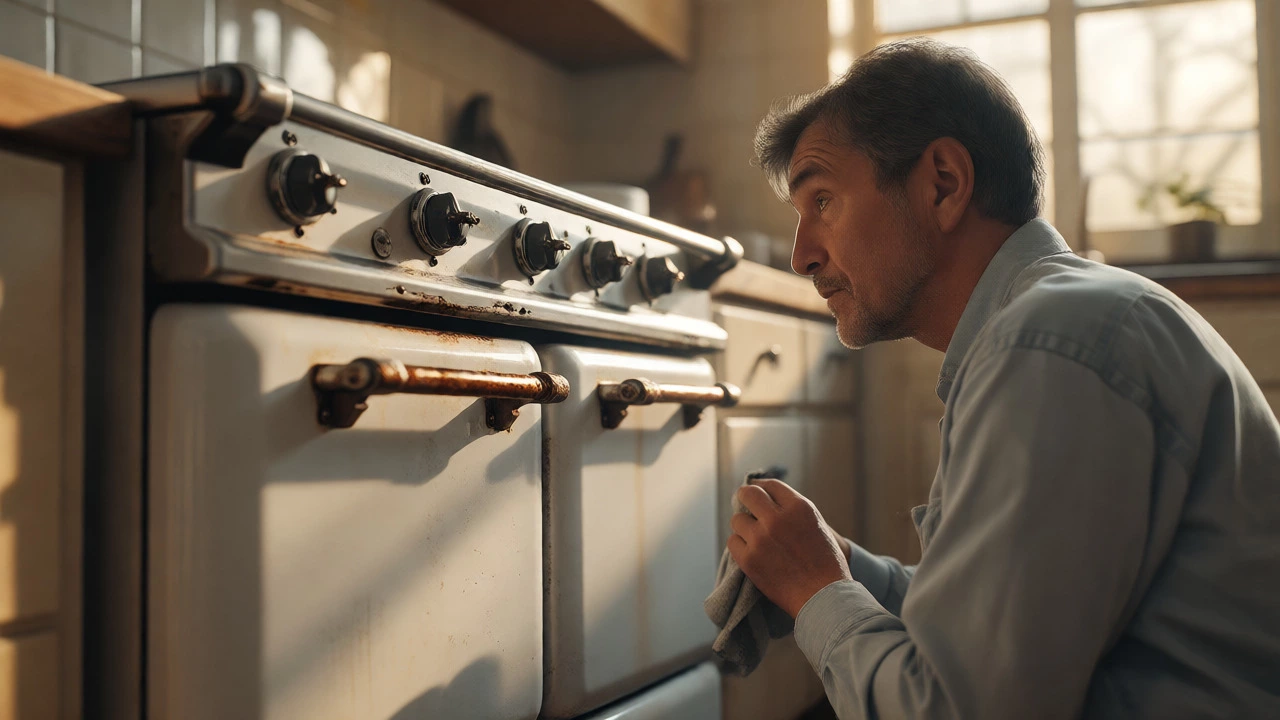
- Visible Rust or Cracks: Rust inside the oven cavity can flake into food. Cracked enamel traps bacteria and looks unsightly. More importantly, deep rust can compromise structural integrity or lead to gas leaks in older models.
- Unusual Noises or Smells: A burning smell that doesn’t come from food indicates wiring issues or overheating components. Loud humming from the fan motor suggests bearings are shot. These are often precursors to complete failure.
Cost-Benefit Analysis: Repairing vs. Buying New
To make this concrete, let’s look at typical market prices in New Zealand as of late 2026. Prices vary by brand and retailer, but these averages help frame the decision.
| Issue | Typical Repair Cost (NZD) | New Unit Cost (NZD) | Verdict |
|---|---|---|---|
| Door Seal/Gasket | $50 - $100 | $600+ | Repair (if under 12 yrs) |
| Ignition Module | $150 - $250 | $700+ | Replace (if over 10 yrs) |
| Main Oven Element | $120 - $200 | $600+ | Repair (if otherwise healthy) |
| Control Board | $300 - $500 | $800+ | Replace (usually) |
| Glass Hob Crack | $250 - $400 | $900+ | Replace (risk of injury) |
Notice how the verdict shifts based on the component. Small, cheap parts justify repair. Complex electronics or structural damage justify replacement. Always ask your technician for a quote before agreeing to work. If they say "it might need more," walk away and get a second opinion.
The Hidden Value of Upgrading
Replacing a cooker isn't just about fixing a break; it's an opportunity to improve your kitchen experience. Older appliances lack the safety features and efficiency standards of modern units. For instance, many pre-2010 cookers do not have automatic shut-off timers or child locks, which are standard now.
Energy efficiency is another major factor. Look for the Energy Rating Label on new models. A 5-star rated electric oven uses significantly less power than a 2-star model from a decade ago. Over five years, those savings can add up to several hundred dollars, effectively subsidizing the cost of the new appliance.
Furthermore, technology has changed how we cook. Features like convection fans, pyrolytic cleaning (which burns off grime at high temperatures), and precise temperature probes save time and effort. If you hate scrubbing the oven, upgrading to a self-cleaning model pays dividends in convenience alone.
Extending the Life of Your Current Cooker
If your cooker is still young enough to save, proper maintenance can push its lifespan further. Most failures are caused by neglect rather than manufacturing defects.
- Clean Spills Immediately: Sugary liquids seep into burner ports and harden, causing uneven flames. Grease buildup insulates heating elements, causing them to overheat and fail.
- Check Door Seals: Once a month, inspect the rubber gasket around the oven door. If it’s brittle or torn, hot air escapes, forcing the heater to work harder. Replacing a seal is cheap and easy.
- Avoid Heavy Loads: Don’t overload oven racks beyond their weight limit. This bends the rack supports and stresses the hinges.
- Ventilation: Ensure the cooker has adequate clearance from walls and cabinets. Blocked vents cause overheating and shorten the life of internal electronics.
Final Thoughts on Timing Your Purchase
Don’t wait until your cooker dies completely during Thanksgiving dinner or a busy holiday week. Emergency replacements often mean paying full retail price with no room for negotiation. Start looking at options when your unit hits the 10-year mark or shows early warning signs. Sales cycles often align with end-of-financial-year promotions or Black Friday, offering better deals.
Ultimately, trust your instincts. If repairing feels like throwing good money after bad, cut your losses. A reliable cooker is central to home comfort, and investing in a fresh, efficient model ensures you won’t be left hungry-or frustrated-for years to come.
How long does a gas cooker last compared to an electric one?
Gas cookers typically last longer, averaging 13-15 years, compared to electric cookers which average 10-12 years. This is largely because gas burners and thermocouples are mechanically simpler and easier to repair than the complex electronic control boards and heating elements found in electric models.
Is it worth repairing a 15-year-old oven?
Generally, no. At 15 years, most ovens are approaching the end of their usable life. Spare parts may be discontinued, and other components are likely to fail soon. Unless the repair is very minor (like a light bulb or knob), the cost-to-benefit ratio usually favors replacement.
What is the 50% rule for appliance repair?
The 50% rule states that if the cost to repair an appliance exceeds 50% of the price of a new equivalent model, you should replace it instead. This prevents spending too much on a machine that is likely to have other issues in the near future.
Can I replace just the oven or just the hob?
Yes, if you have separate built-in appliances. If you have a freestanding range (where the oven and hob are one unit), you must replace the entire appliance. Many homeowners choose to switch to separate built-in ovens and hobs to allow for independent upgrades in the future.
Do newer cookers use less electricity?
Yes, modern cookers are significantly more energy-efficient due to better insulation, improved heating elements, and smart controls. Check the Energy Rating Label; a newer 5-star rated oven can reduce energy consumption by 10-20% compared to older models, saving money on utility bills over time.