Dishwasher Repair or Replacement Calculator
Dishwasher Assessment
Enter details and click "Calculate Recommendation" to see your results.
When your dishwasher starts leaving dishes dirty, making strange noises, or leaking water all over the kitchen floor, it’s easy to panic. Should you call a repair technician? Or is it time to buy a new one? The answer isn’t always obvious. But knowing what to look for can save you hundreds - or even thousands - of dollars.
How old is your dishwasher?
Most dishwashers last between 8 and 12 years. If yours is older than 10, even small problems are usually signs it’s nearing the end. A 12-year-old dishwasher with a broken spray arm isn’t just broken - it’s overdue. Parts for older models are harder to find, and repair costs often creep close to the price of a new unit. Newer models are more energy-efficient, quieter, and have better cleaning tech. If your dishwasher was bought before 2016, you’re probably using 30% more water and electricity than a 2025 model.Is it cleaning properly?
If your dishes come out with food still stuck on them, especially on the top rack, it’s not just bad loading. It’s a sign something’s wrong inside. Check the spray arms first - are they clogged with dried food or mineral buildup? Clean them with vinegar and a toothbrush. If that doesn’t help, the pump or filter might be failing. A worn-out pump won’t push water with enough force. A clogged or damaged filter won’t trap debris, so it recirculates gunk onto your plates. If cleaning the filter and arms doesn’t fix it after two cycles, the issue is deeper. Don’t waste money on a $150 pump repair if the whole system is worn out.Are there leaks?
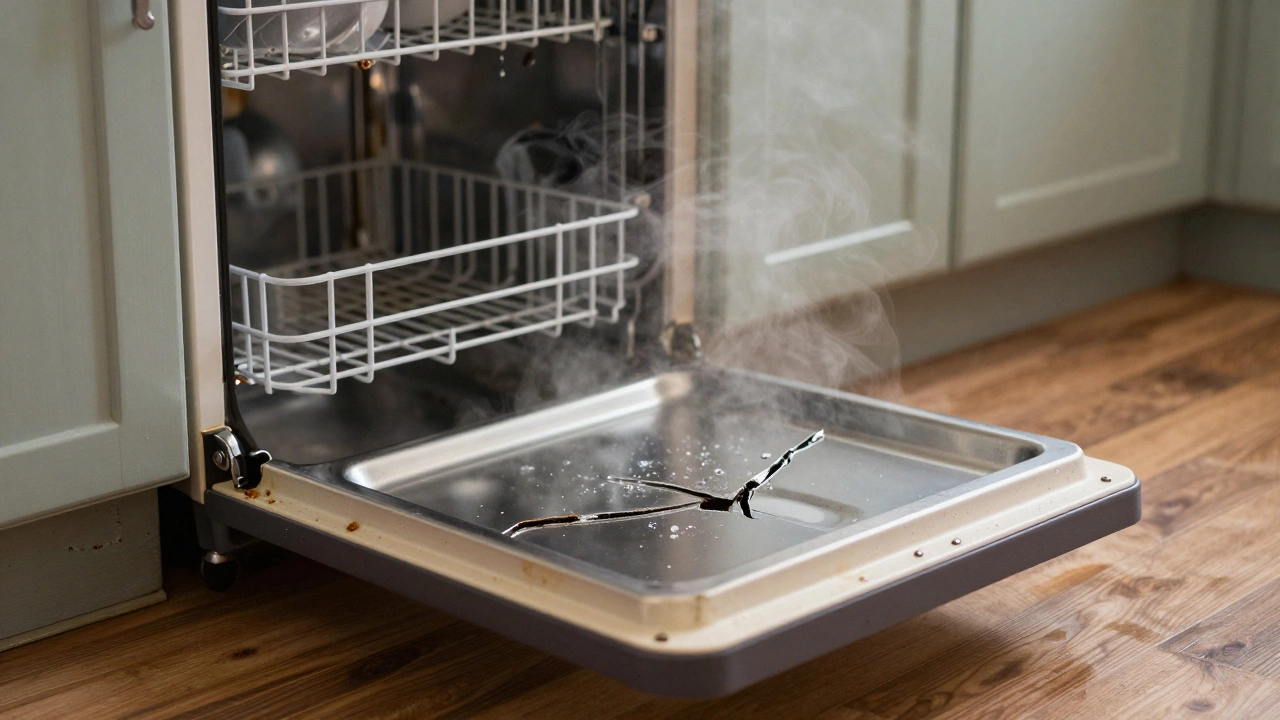
A small drip under the dishwasher is easy to ignore. But if you’re wiping up water every other day, that’s a problem. Most leaks come from the door seal, the inlet valve, or a cracked tub. Door seals wear out after 5-7 years. Replacing one costs $40-$80 and takes an hour. Easy fix. But if the tub itself is cracked - especially near the bottom - that’s a death sentence. Plastic tubs crack from heat stress and age. Metal tubs rust. Neither can be safely repaired. If the leak is coming from the tub, replacement is your only option.Strange noises?
All dishwashers make some noise. But grinding, screeching, or loud banging? That’s not normal. A grinding sound often means the motor or pump bearings are failing. A screech could be a broken impeller. A loud bang might mean a loose spray arm hitting the dishes. These aren’t just annoying - they’re warning signs. Motors don’t suddenly die. They whine for weeks before giving out. If you hear this noise consistently, especially when the cycle starts, get it checked. But if the motor is the issue and your unit is over 8 years old, replacing the whole dishwasher is usually smarter. A new motor costs $200-$300, plus labor. A new dishwasher? $600-$1,200, depending on features.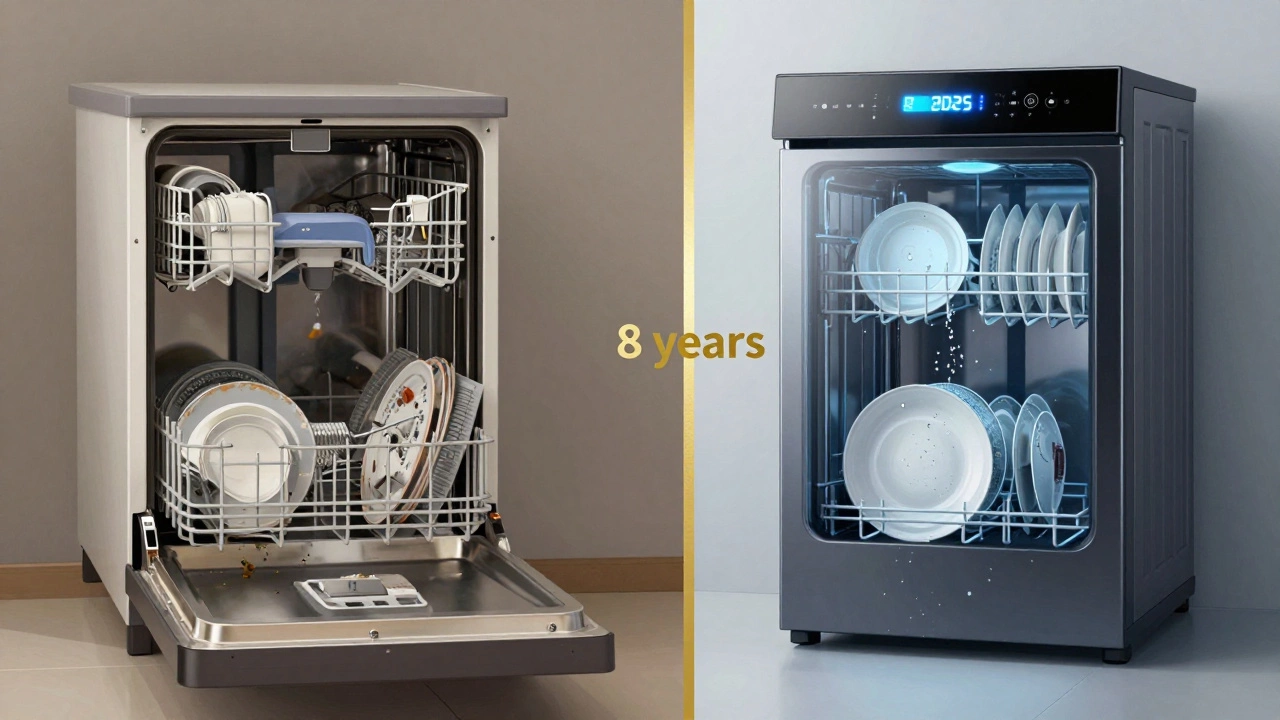
Is it rusting or looking worn?
Look inside the tub. Is there rust on the walls, the racks, or the bottom? Rust means the protective coating has broken down. Once rust starts, it spreads. It can contaminate your dishes, damage the pump, and weaken the structure. Stainless steel tubs don’t rust - but the racks do. If your racks are falling apart, replacing them costs $60-$100. But if the tub itself is rusting, that’s not a repair job - it’s a sign the whole unit is failing. Same goes for the exterior. Peeling paint, warped doors, or cracked plastic trim? These aren’t just cosmetic. They mean the dishwasher is aging fast and may not seal properly, leading to leaks or heat loss.How often are you calling for repairs?
If you’ve called a technician more than twice in the last year, it’s time to think about replacement. One repair is fine. Two is a coincidence. Three or more? That’s a pattern. Each repair costs $100-$200 on average. After three repairs, you’ve spent $300-$600. That’s nearly half the price of a new mid-range dishwasher. And the next problem? It could be something even more expensive - like a control board failure. Control boards fail randomly. When they do, they often take other parts down with them. Fixing one might just delay the next breakdown.Energy bills are rising?
Old dishwashers use a lot of water and electricity. A 2010 model might use 14 liters of water per cycle. A 2025 model uses 8-10 liters. That’s 30-40% less. Electricity use drops too. Modern units have sensors that adjust water and heat based on how dirty the dishes are. Older ones just blast water and heat for the full cycle, no matter what. If your power bill has jumped in the last year - and you haven’t changed your habits - your dishwasher might be the culprit. Check your utility bill for appliance usage estimates. Many providers show this. If your dishwasher is listed as a top energy user, upgrading could cut your monthly bill by $10-$20.Do you have the space and budget for a new one?
Sometimes the real issue isn’t the dishwasher - it’s your kitchen layout. If your unit is built-in and you’re thinking of switching to a smart model with Wi-Fi or steam cleaning, you need to check if it fits. Measure the height, width, and depth. Standard dishwashers are 24 inches wide. Some slim models are 18 inches. If you’re switching from a built-in to a portable, you’ll need a nearby sink and power outlet. Also, consider installation. If you’re replacing with the same model, you can often reuse the plumbing. If you’re upgrading to a different type, you might need a plumber. That adds $200-$400. Budget $700-$1,200 for a good new dishwasher, plus installation. If you can’t afford that, repairing might make sense - but only if the problem is simple and the unit is under 8 years old.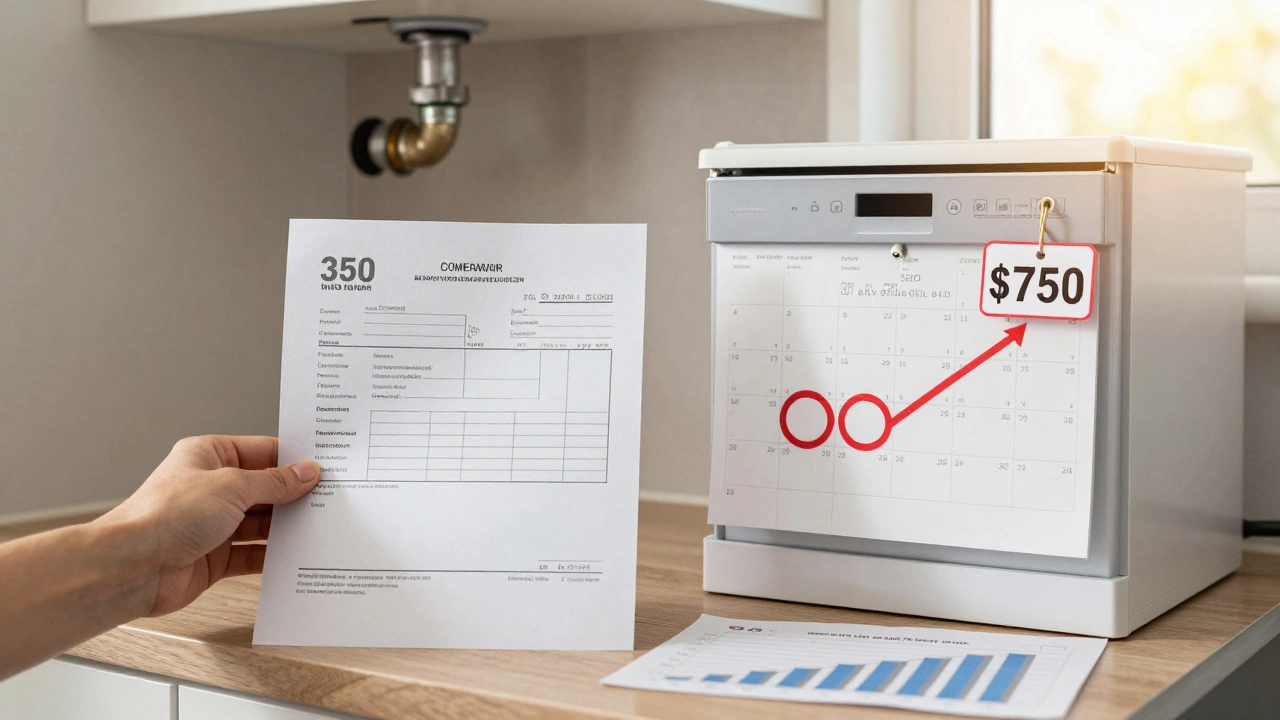
What’s the repair cost vs. replacement cost?
Here’s a quick rule: if the repair costs more than 50% of a new dishwasher’s price, walk away. A new basic dishwasher in New Zealand costs around $650. So if a repair quote is over $325, consider replacement. That’s not a hard rule - but it’s a good one. A $400 repair on a 10-year-old dishwasher means you’re paying $400 to keep something that’s already used up most of its life. A $700 new one gives you 8-10 more years of reliable use, better cleaning, and lower bills.What’s the most common mistake people make?
People wait too long. They think, “It’s still working,” and ignore the signs. But a failing dishwasher doesn’t just stop working - it starts causing damage. Water leaks can rot cabinets. Mold grows in damp corners. Rust spreads. By the time you call someone, the damage might be worse than the dishwasher itself. If you’ve noticed any of the signs above - especially leaks, rust, or repeated repairs - don’t wait for it to break completely. Act early. You’ll save money, avoid mess, and get better performance sooner.When should you just replace it?
Replace your dishwasher if:- It’s over 10 years old
- It’s leaking from the tub, not the door seal
- It’s rusting inside
- You’ve had two or more repairs in the last year
- It’s using way more water or power than it used to
- A repair quote is over half the price of a new model
Keep repairing it only if:
- It’s under 8 years old
- The problem is a simple part like a filter, spray arm, or door latch
- The repair cost is under $150
- You plan to move in the next 2-3 years
Can I fix a dishwasher leak myself?
Yes - if it’s the door seal. Turn off the power and water, remove the old gasket, and install a new one. It’s a $50 part and takes 30 minutes. But if the leak is from the tub, pump, or inlet valve, don’t try it. Those require tools, plumbing knowledge, and safety precautions. Mistakes can flood your kitchen.
Is it worth repairing a dishwasher with a broken control panel?
Usually not. Control panels cost $200-$400 to replace, and they’re often tied to other electronic failures. If the panel is faulty, other sensors or circuits may be damaged too. Even if you fix it, the unit is likely to fail again soon. For dishwashers over 7 years old, replacement is the smarter choice.
Do newer dishwashers really save money?
Yes. A 2025 model uses about 8-10 liters of water per cycle, compared to 14-18 liters in older models. That’s 40% less water. Electricity use drops too - modern units heat water more efficiently and use sensors to avoid over-cleaning. Over a year, that can save you $80-$120 on utility bills. Plus, many qualify for government energy rebates in New Zealand.
How long does a dishwasher repair usually take?
Most repairs take 1-2 hours if the part is in stock. But if the technician needs to order a part - especially for an older model - you could be waiting 3-7 days. Some parts aren’t even made anymore. That’s why replacement often ends up being faster than repair.
Should I buy a dishwasher with a stainless steel tub?
Yes. Stainless steel tubs last longer, resist rust, and handle heat better than plastic. They’re quieter too. Plastic tubs crack after 8-10 years. Stainless steel lasts 15+ years. The price difference is small - usually $50-$100 more. It’s worth it for durability and performance.