Microwave Repair Cost Calculator
Microwave Health Check
⚠️ Important Safety Note: Microwave repairs involve high-voltage components (2,000+ volts). Do not attempt DIY repairs unless you have professional electronics experience. A single mistake can cause serious injury or death. Professional repair is strongly recommended.
Ever turned on your microwave and heard nothing but silence? No light, no hum, no spinning plate. You check the outlet. You try another plug. Still dead. The first thing most people guess? Microwave fuse blown. And if you’ve been searching online, you’ve probably seen conflicting advice: "Just replace it yourself for $5," or "Call a pro, it’ll cost $150." So what’s the real price? Let’s cut through the noise.
Why Fuses Blow in Microwaves
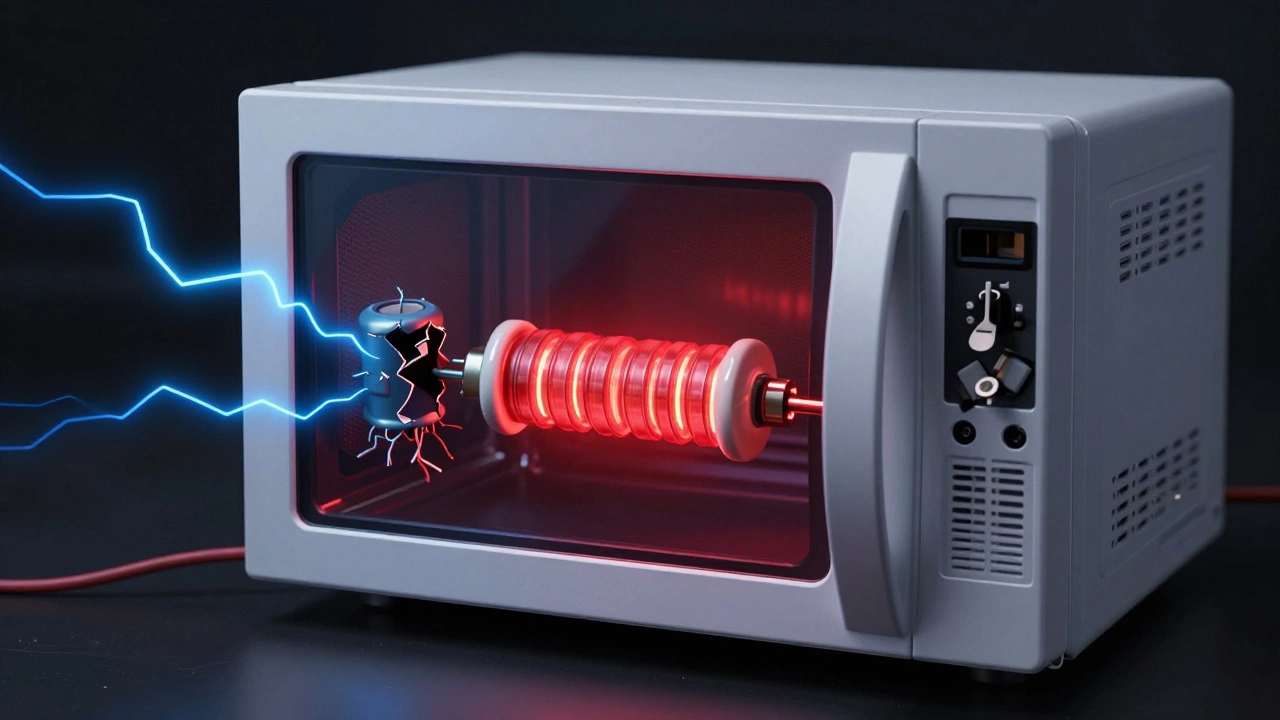
Microwave fuses aren’t like the ones in your car or home electrical panel. They’re designed to protect the magnetron-the part that actually generates the microwaves-from power surges or overheating. When the fuse blows, it’s usually a symptom, not the root problem. Common causes include:- A power surge from a storm or faulty wiring
- A failing high-voltage diode or capacitor
- A short in the door safety switch
- Overheating from blocked ventilation or dirty interior
Cost Breakdown: DIY vs Professional
Here’s what you’re actually paying for, broken down by approach.DIY Replacement
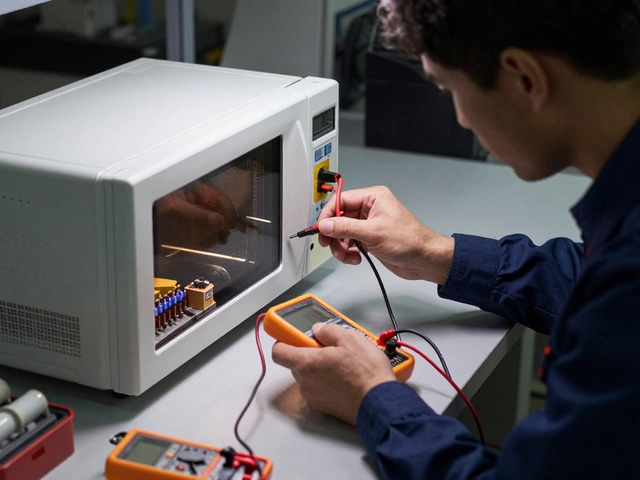
You can buy a replacement fuse online for between $3 and $8. Most microwaves use a 15-amp or 20-amp ceramic fuse, often labeled as “HMC” or “F20.” You’ll need a screwdriver, a multimeter (to test if the fuse is actually blown), and some patience. The process takes about 30-45 minutes if you’ve never opened one before. But here’s the catch: if you’re not careful, you can get seriously hurt. Microwaves store high-voltage electricity in capacitors-even when unplugged. A single mistake can deliver a lethal shock. If you’ve never worked with electronics, this isn’t the time to start.Professional Repair
A licensed technician will charge between $80 and $180 for fuse replacement, depending on your location and labor rates. In Wellington, the average is around $120. That includes:- Diagnostic fee (usually $30-$50)
- Parts (fuse + any other faulty components found)
- Labor (30-60 minutes of skilled work)
- Warranty on the repair (typically 30-90 days)
When It’s Not Worth Repairing
Microwaves under $100 are rarely worth fixing. If your microwave is older than 7 years, and the repair cost exceeds $100, it’s usually smarter to replace it. New budget models start at $80, and mid-range ones with smart features go for $200-$300. Here’s a quick decision guide:- If your microwave is 5+ years old and the repair is over $100 → Replace it
- If it’s under 5 years old and you use it daily → Repair it
- If it’s built into your cabinetry → Repair it (replacement is messy)
- If you’ve had multiple repairs in the last year → Replace it
What to Look for in a Repair Technician
Not all repair people are equal. Here’s how to avoid getting overcharged:- Ask if they use OEM (original equipment manufacturer) parts. Generic fuses can fail faster.
- Confirm they test the entire high-voltage circuit-not just swap the fuse.
- Get a written quote before they start. Some shops charge $50 just to open the unit.
- Check if they offer a warranty. No warranty? Red flag.
How to Test If the Fuse Is Actually Blown
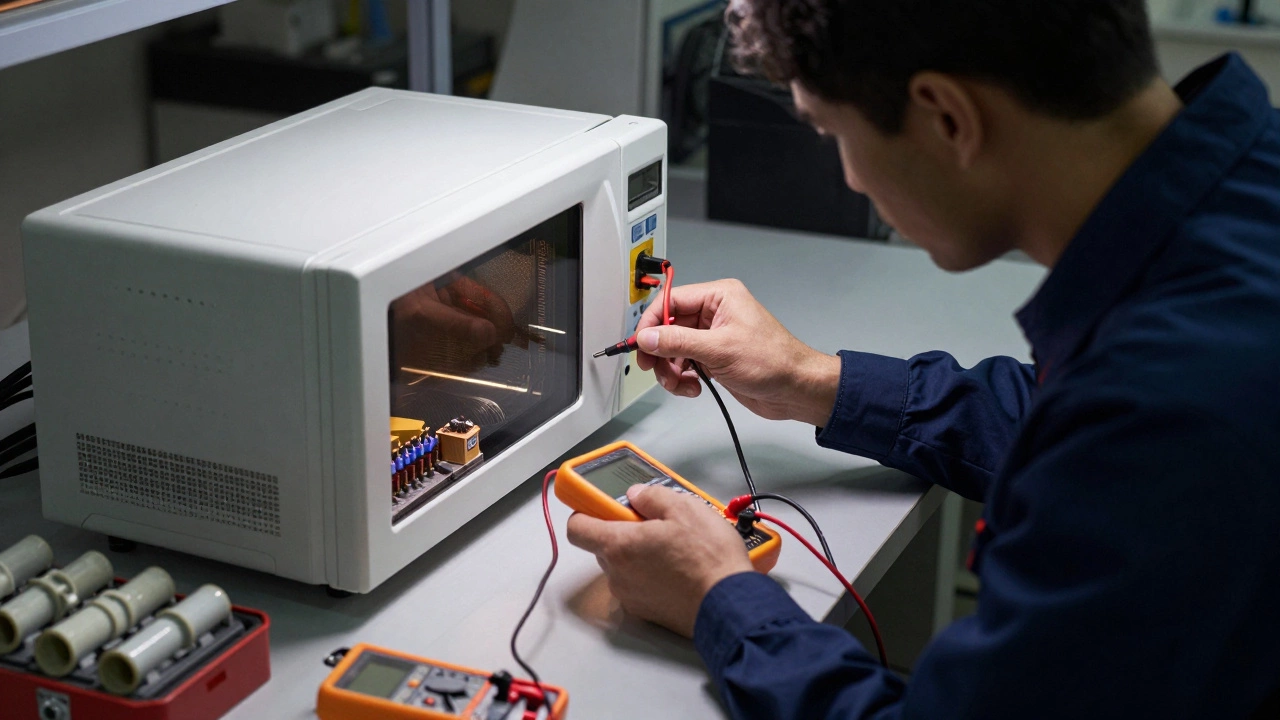
Before you spend money, confirm the fuse is the issue. You’ll need a multimeter (available at hardware stores for $20-$40). Set it to continuity mode (the one with the sound wave symbol).- Unplug the microwave. Wait 10 minutes to let capacitors discharge.
- Remove the outer casing (usually 6-8 screws on the back or sides).
- Locate the fuse-it’s usually near the power cord entry, a small white or ceramic cylinder.
- Remove the fuse and place the multimeter probes on each end.
- If the meter beeps, the fuse is good. If it doesn’t beep, the fuse is blown.
Common Mistakes People Make
- Replacing the fuse with a higher amp rating (e.g., replacing a 15-amp with a 20-amp). This is dangerous-it removes the safety feature.
- Not unplugging the microwave before opening it. Even a turned-off microwave can hold 2,000+ volts.
- Assuming the fuse is the problem without testing other components. Most blown fuses are caused by another failure.
- Buying fuses from random Amazon sellers. Counterfeit fuses exist. Stick to brands like Littelfuse or Bussmann.
What You’ll Pay in 2026
Based on recent data from appliance repair services in New Zealand, here’s what you’re likely to pay:| Service Type | Parts Cost | Labor Cost | Total Estimate |
|---|---|---|---|
| DIY (parts only) | $3-$8 | $0 | $3-$8 |
| Professional (basic repair) | $8-$15 | $70-$100 | $80-$115 |
| Professional (with additional parts) | $20-$50 | $70-$100 | $100-$180 |
| New microwave (basic model) | $80-$150 | $0 | $80-$150 |
Final Advice: Is It Worth It?
If your microwave is less than 5 years old, and you’ve got a solid repair quote under $120, go ahead. But if you’re on the fence, ask yourself: Do I really need a microwave with 10 preset buttons, or just one that heats my coffee? Most people upgrade for convenience, not necessity. If you’re happy with your current microwave and just need it to work again, a professional repair is a smart move. But if you’ve been meaning to replace it anyway? Save the repair money and invest in a new one.And if you’re tempted to DIY? Only if you’ve got a multimeter, know how to discharge capacitors, and aren’t afraid of high voltage. Otherwise, call a pro. A $120 repair is cheaper than a hospital bill.
Can I replace a microwave fuse myself?
Yes, but only if you know how to safely discharge the high-voltage capacitor inside the microwave. Unplugging it isn’t enough-the capacitor can hold a lethal charge for hours. If you’ve never worked with electronics, it’s safer to call a technician. The fuse itself costs less than $10, but the risk isn’t worth it.
Why does my microwave keep blowing fuses?
A fuse that blows repeatedly means something else is faulty. Common causes include a shorted high-voltage diode, a failing magnetron, or a malfunctioning door switch. Replacing the fuse without fixing the root cause will only lead to the same problem again. A technician will test all these components before replacing the fuse.
Do all microwaves have a fuse?
Almost all microwaves have at least one fuse, usually located near the power cord entry. Some models have two: one for the main circuit and another for the control panel. The fuse protects the magnetron from power surges. If your microwave is completely dead with no lights or sounds, a blown fuse is one of the first things to check.
Is it cheaper to repair or replace a microwave?
For microwaves under $100, replacement is almost always cheaper than repair. For models over $200, or those built into cabinetry, repair makes sense if the cost is under $150. A general rule: if the repair costs more than 50% of a new microwave’s price, replace it instead.
How long does a microwave fuse last?
A microwave fuse doesn’t have a set lifespan-it lasts as long as the microwave works without a power surge or component failure. Most fuses last 5-10 years. If it blows earlier, it’s usually because another part in the microwave failed and caused the overload. It’s not a wear-and-tear part like a belt or filter.