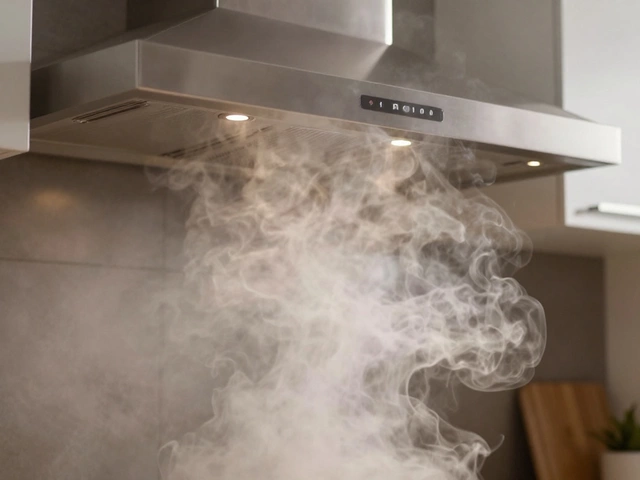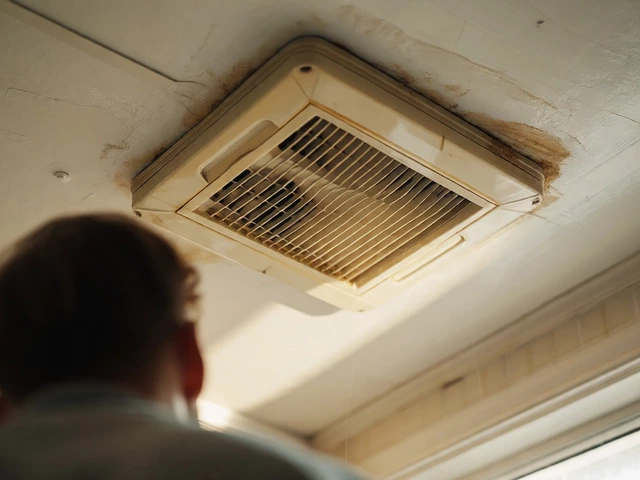

Extractor fans don’t just vanish when they stop working. Most of them can be fixed-often for less than the cost of a new one. But not all problems are worth fixing. If your extractor fan’s been making that grinding noise for months, or it’s not pulling air at all, you might be wondering: is it worth repairing, or should you just replace it?
Why extractor fans fail
Most extractor fans die for one of four reasons: dust buildup, motor wear, faulty wiring, or a broken capacitor. It’s rarely one big disaster. More often, it’s slow decay. Grease and dust pile up over time, clogging the blades and forcing the motor to work harder. That extra strain wears out the bearings. Eventually, the motor overheats. Or the capacitor-the little box that helps the motor start-dries out and loses its charge.In New Zealand kitchens, humidity and cooking grease make this worse. A fan running every day in a steamy bathroom or a busy kitchen can collect enough grime in two years to choke itself. If you’ve never cleaned yours, you’re already halfway to failure.
What you can fix yourself
Before you call a technician, try these simple fixes. They solve 60% of common problems.- Remove and clean the filters-most extractor fans have washable metal or charcoal filters. Soak them in hot, soapy water for 30 minutes, scrub off the grease, and let them dry completely. Reinstalling a dirty filter is like putting a sock over a vacuum cleaner.
- Clear the duct-check the vent pipe outside. A bird’s nest, leaves, or even hardened grease can block airflow. Use a flashlight and a long brush. If it’s a rigid metal duct, you can even run a vacuum through it.
- Check the switch-flip the wall switch on and off a few times. Sometimes it’s just a loose contact. If the fan works when you jiggle the switch, it’s time to replace it. They cost under $15.
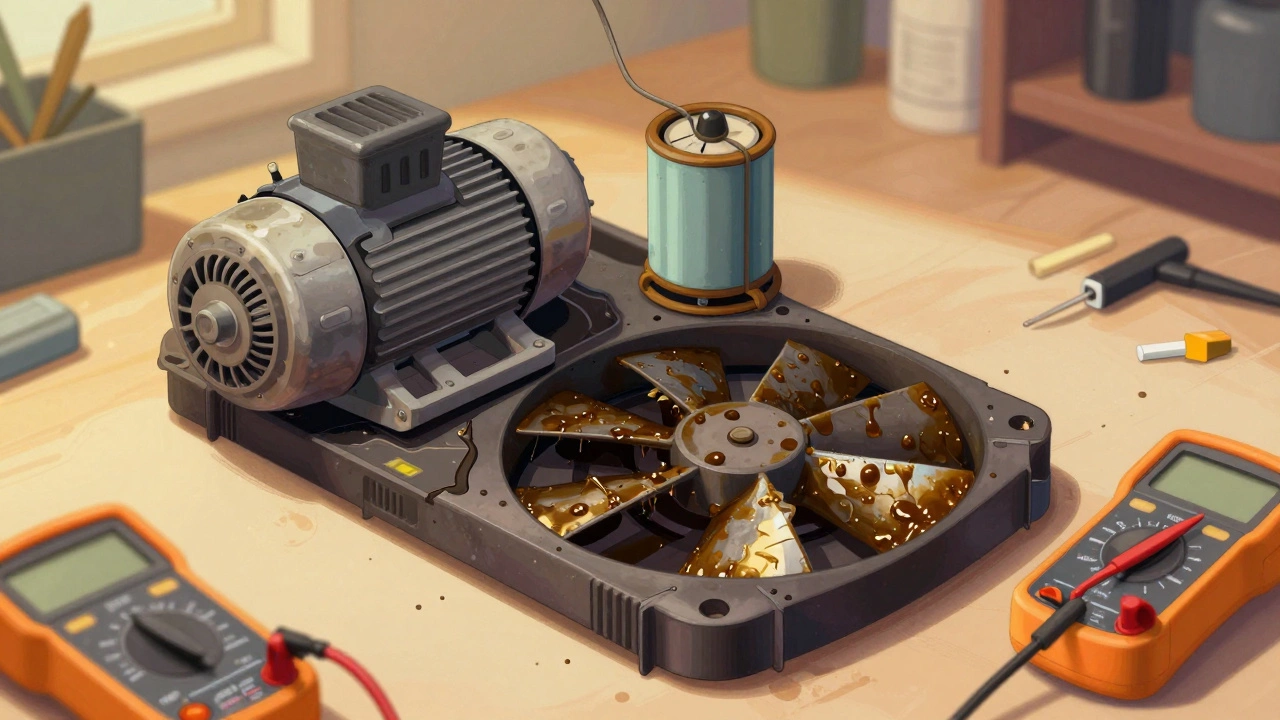
- Test the capacitor-if the fan hums but doesn’t spin, the capacitor is likely dead. You can buy a replacement for $8-$12. Turn off the power, take a photo of the wiring before you disconnect anything, and swap it out. Match the microfarad (µF) rating and voltage exactly.
These fixes take less than an hour. No tools needed beyond a screwdriver and a bucket.
When the motor is the problem
If cleaning doesn’t help and the fan still won’t spin, the motor might be dead. But here’s the catch: you don’t always need to replace the whole unit. Many extractor fans use standard motors that can be swapped out. Look for the motor’s model number on a label near the base. Search online for “extractor fan motor [model number]”. You’ll often find replacements for $30-$60.Replacing a motor isn’t hard if you’re comfortable with wiring. Just:
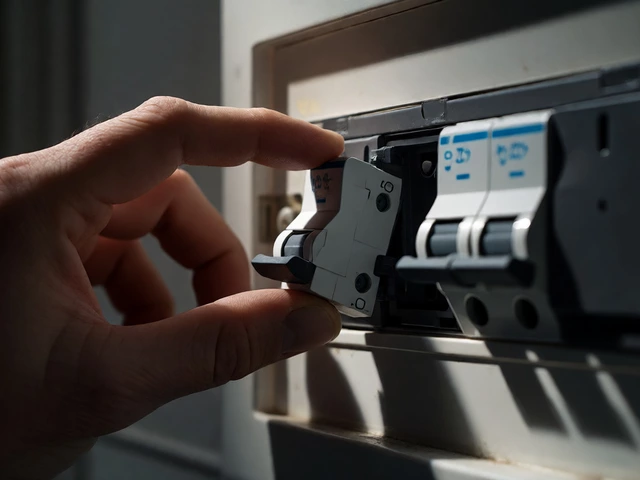
- Turn off the power at the circuit breaker.
- Unscrew the fan housing and disconnect the wires.
- Remove the old motor (usually held by 2-4 screws).
- Connect the new motor the same way, screw it in, and reassemble.
Most motors have color-coded wires: brown for live, blue for neutral, and green/yellow for earth. If yours doesn’t match, take a photo before you disconnect. Don’t assume-wiring can vary by brand.
When repair isn’t worth it
Some extractor fans aren’t worth fixing. If your unit is:- Over 12 years old
- From a brand that doesn’t sell parts anymore (like some budget models from 2010-2015)
- Integrated into cabinetry with no easy access
- Part of a ducted system that’s rusted or leaking
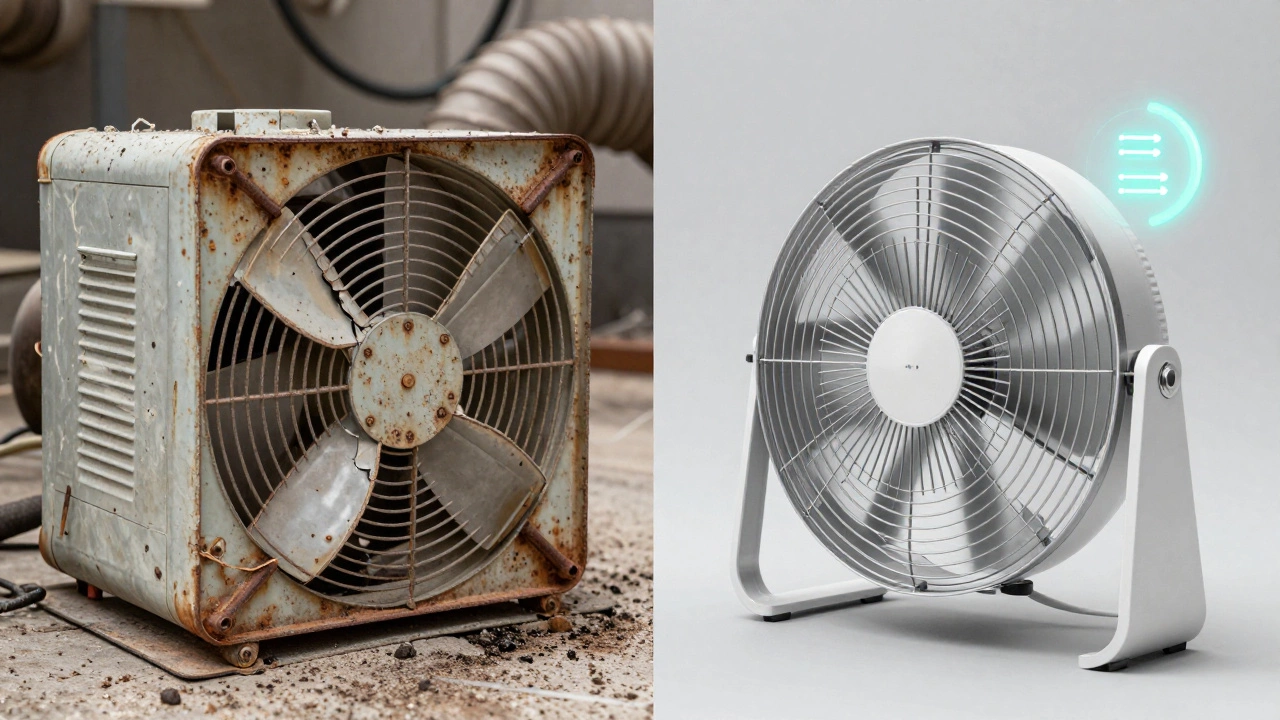
Then replacement is smarter. Modern extractor fans are quieter, more efficient, and come with smart features like humidity sensors and timers. A decent new unit costs $150-$300. But here’s the trick: if you’re replacing it, upgrade the ducting too. Old flexible plastic ducts trap grease and reduce airflow. Swap them for rigid metal ducts with smooth interiors. That alone can double your fan’s performance.
How long do repairs last?
A clean filter and a new capacitor might give you 2-3 more years. A new motor? 5-7 years, if you keep the unit clean. But repairs are temporary fixes unless you change your habits. If you cook heavily every day, clean the filters monthly. If you use it for steam from showers, clean it every two months. Set a reminder on your phone. That’s the real secret-maintenance beats repair every time.Cost comparison: repair vs replace
| Option | Typical Cost | Time to Complete | Expected Lifespan After |
|---|---|---|---|
| Filter cleaning | $0 | 15 minutes | 6-12 months |
| Capacitor replacement | $10-$15 | 30 minutes | 2-3 years |
| Motor replacement | $40-$80 | 1-2 hours | 5-7 years |
| New unit (DIY install) | $150-$300 | 2 hours | 10+ years |
| New unit (professional install) | $250-$500 | 1-2 hours | 10+ years |
Notice something? Repairing the motor often costs less than half the price of a new unit. But if you’re already replacing the ducting, upgrading to a new fan makes sense. You’ll save on energy bills and noise. A modern fan uses 30% less power and runs at half the decibel level.
What to look for in a new extractor fan
If you decide to replace it, here’s what actually matters:- Cubic meters per hour (m³/h)-for a small kitchen, aim for 150-200 m³/h. For a large kitchen or open-plan space, go 300+.
- Noise rating-look for units under 50 dB. Anything above 60 dB is loud enough to interrupt conversation.
- Filter type-metal mesh filters are washable. Charcoal filters are for recirculating models (no duct to outside). Avoid plastic filters-they melt.
- IP rating-for bathrooms, choose IPX4 or higher. That means it’s splash-proof.
- Smart features-delayed shut-off, humidity sensors, and remote controls are nice, but not essential. Stick to basics if you want reliability.
Brands like Zephyr, Elica, and Vent-A-Hood are reliable. But don’t ignore local brands like Broan-NuTone or even some Australian-made models-they’re often cheaper and work just as well.
Common mistakes people make
- Buying a fan with no accessible filters. If you can’t reach the filter, you won’t clean it. And if you don’t clean it, the motor dies.
- Using flexible ducting. It kinks, traps grease, and reduces airflow by 40%. Always use rigid metal.
- Ignoring the vent cap outside. A blocked vent means your fan is working harder than it should. Check it twice a year.
- Assuming all fans are the same. A 200 m³/h fan in a 4m² kitchen is fine. But if you have a 6m² open-plan space, you need at least 300 m³/h.
Final advice
Yes, extractor fans can be repaired. Most of them can be fixed for under $50. But repair only works if you’re willing to maintain it. If you’re not going to clean the filters or check the duct, then don’t bother repairing. Just replace it with something better.Think of it like a car. You can fix a worn-out alternator, but if the engine’s rusted and the transmission’s slipping, you don’t patch it-you trade it in. The same logic applies here.
Can I repair my extractor fan myself?
Yes, if the issue is dirty filters, a faulty switch, or a dead capacitor. These are simple fixes with basic tools. Replacing the motor is also doable if you’re comfortable with wiring. But if the fan is built into cabinetry or the housing is cracked, it’s safer to replace the whole unit.
How much does it cost to repair an extractor fan?
Most repairs cost between $10 and $80. Cleaning filters is free. Replacing a capacitor is $10-$15. A new motor runs $40-$80. Professional labor adds $80-$150 if you hire someone. Compare that to a new unit, which starts at $150.
Why does my extractor fan make a grinding noise?
Grinding usually means the motor bearings are worn out. Dust and grease have caused friction inside the motor. Cleaning won’t fix this. You’ll need to replace the motor or the whole unit. Continuing to run it will damage the windings and make the problem worse.
Is it worth repairing a 10-year-old extractor fan?
Only if it’s a high-end model and you can find the exact replacement parts. Most fans from 10+ years ago use obsolete motors and non-standard wiring. Even if you fix it, you’ll likely need another repair soon. A new fan will be quieter, more efficient, and last longer.
What’s the difference between a range hood and an extractor fan?
They’re the same thing. "Range hood" is the term used in the US. "Extractor fan" is common in Australia and New Zealand. Both pull air from above the stove and vent it outside (or recirculate it through a filter). The terms are interchangeable.
Do I need to hire an electrician to replace my extractor fan?
Not always. If you’re replacing it with the same model and the wiring is in good condition, you can do it yourself. Just turn off the power at the breaker. But if you’re changing the location, adding a timer, or upgrading to a smart model, an electrician should handle the wiring. Safety first.