Oven Repair vs. Replace Calculator
Recommendation
Based on financials and condition.
Financial Breakdown
Repair: $0
New Unit: $0
Savings if Replace: --
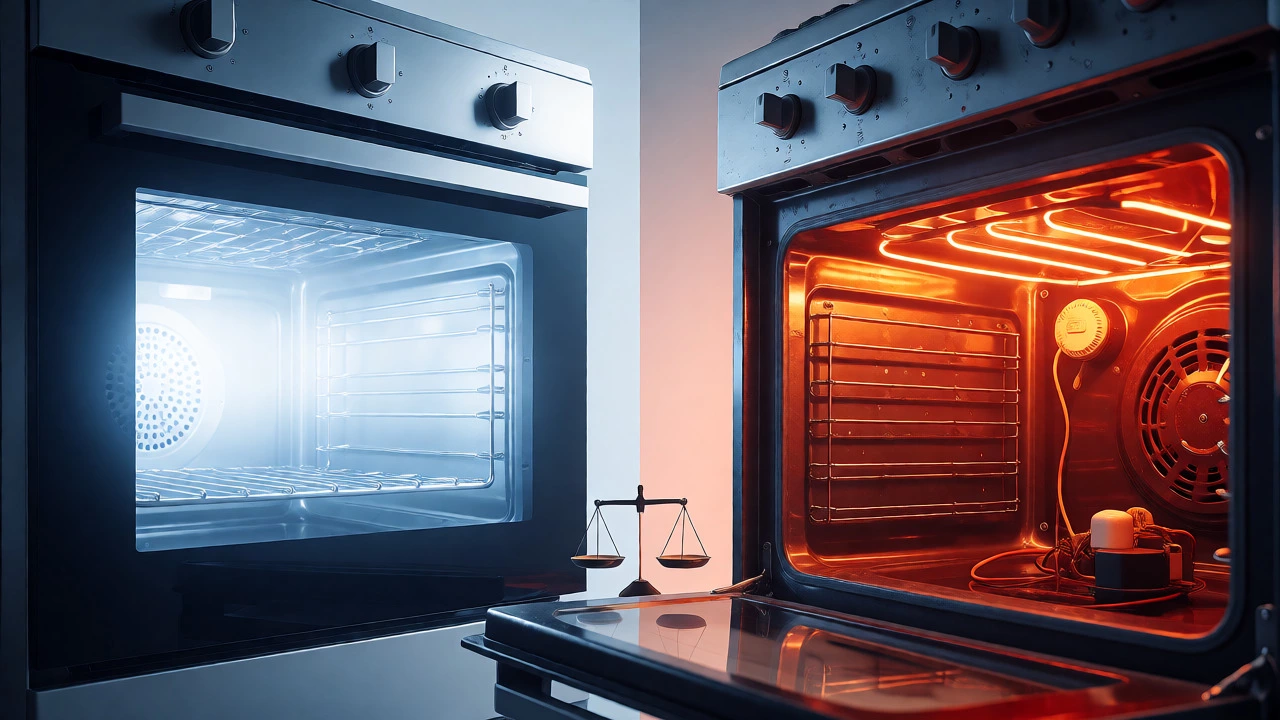
You’re standing in your kitchen, staring at that stubborn electric oven that’s been baking your Sunday roasts for a decade. The fan motor just whirred its last breath, or maybe the thermostat is lying to you again. The first thought isn’t "how do I fix this?" It’s "should I even bother?" This is the classic homeowner’s dilemma: pour money into an aging machine or cut losses and buy something new?
Here’s the blunt truth: there is no universal answer. A ten-year-old oven isn’t automatically dead, but it’s definitely middle-aged. Whether you save cash by fixing it depends entirely on what broke, how much the part costs, and whether the rest of the unit is still healthy. Let’s break down exactly when a repair makes financial sense and when you should start browsing online retailers.
The 50% Rule: Your First Litmus Test
Before you call a technician, use the industry-standard heuristic known as the 50% Rule. This rule states that if the cost of repairing an appliance exceeds 50% of the price of buying a comparable new one, you should replace it instead.
Why 50%? Because appliances depreciate rapidly. A new electric oven comes with a full warranty (usually 1-2 years) and modern energy efficiency standards. An old one has zero remaining life expectancy guarantees. If you spend $300 fixing an oven that only costs $600 new, you’ve thrown away half the value of a brand-new machine on a unit that could fail elsewhere next month.
However, this rule assumes the failure is isolated. If your oven has multiple failing components-say, both the door seal and the control board are shot-the math changes. You aren’t paying for one repair; you’re paying for two. That’s when the 50% threshold becomes even more critical.
What Broke Matters More Than How Old It Is
Not all breakdowns are created equal. Some failures are cheap fixes that extend the life of a solid machine. Others are signs that the core chassis is giving up. Here’s how to categorize common issues:
| Component Failure | Average Repair Cost (NZD) | Worth Repairing? | Reasoning |
|---|---|---|---|
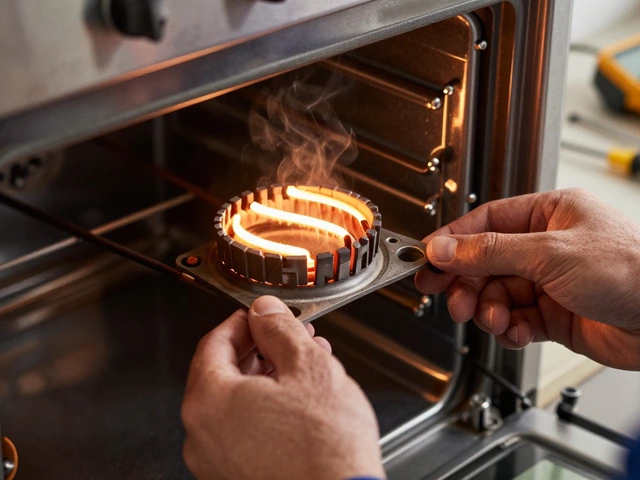
| Heating Element | $80 - $150 | Yes | Cheap part, easy swap. Elements are consumables like lightbulbs. |
| Door Seal/Gasket | $60 - $120 | Yes | Improves energy efficiency immediately. Prevents heat loss. |
| Thermostat | $150 - $250 | Maybe | Depends on overall condition. If the oven body is rusted, skip it. |
| Fan Motor | $200 - $350 | Borderline | High labor cost. Check if the shaft is seized before committing. |
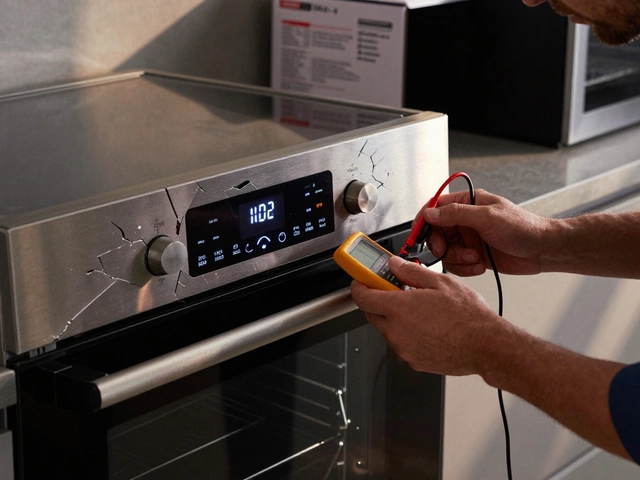
| Control Board | $300 - $500+ | No | Often indicates electrical age. High risk of cascading failures. |
| Glass Door Panel | $150 - $400 | Depends | If the frame is bent, replacement is often cheaper than glass. |
Notice the pattern? Simple mechanical parts like elements and seals are almost always worth fixing. Electronic brains, like control boards, are rarely worth the investment on a decade-old unit. Electronics degrade over time due to heat cycling. Once one component fails, others are likely close behind.
The Hidden Costs of Keeping an Old Oven
Repair costs aren’t just about the invoice from the technician. There are indirect costs you need to factor in before deciding to keep your 10-year-old stove running.
Energy Efficiency: Modern ovens, especially those with improved insulation and convection fans, use significantly less electricity than models from 2016. If your current oven leaks heat through a worn gasket or poor insulation, you’re paying extra every time you cook. Over five years, that wasted electricity can add up to hundreds of dollars, effectively subsidizing the cost of a new appliance.
Reliability Risk: What happens if your oven dies during Thanksgiving dinner or a busy work week? New appliances come with warranties that cover parts and labor. Old ones don’t. If you repair a thermostat today and the timer breaks three months later, you’ve paid two service call fees. Service calls alone can cost $100-$150 per visit. Frequent small repairs bleed your wallet dry faster than one big replacement.
Safety Concerns: Ten years is a long time for wiring and insulation to endure high heat. If you notice scorch marks near the power cord, sparking inside the cavity, or a burning smell that doesn’t go away after cleaning, stop using the oven. Electrical faults in older units can be fire hazards. No savings are worth risking your home.
When to Ignore the Age and Fix It Anyway
There are scenarios where age doesn’t matter. You should absolutely repair your oven if:
- The failure is minor: As mentioned, heating elements and door seals are low-cost, high-value repairs. They restore functionality without touching the complex electronics.
- You have a high-end built-in unit: If you own a premium European brand (like Miele, Bosch, or Gaggenau) that originally cost $4,000+, replacing it might cost $5,000+. In this case, spending $400 on a control board repair is a bargain compared to buying a new luxury unit.
- The cabinet fits perfectly: Replacing a built-in oven often requires modifying cabinetry. If your current oven is a standard size and fits seamlessly, avoiding carpentry costs ($500-$1,500) can justify a higher repair bill.
- Parts are readily available: Major brands support their models for 7-10 years. If you can get the part quickly, it’s worth trying. If the part is obsolete and requires special ordering with long lead times, consider replacement.
Signs Your Oven Has Reached Its End
Conversely, here are clear indicators that you should cut your losses and upgrade. Don’t throw good money after bad if you see these red flags:
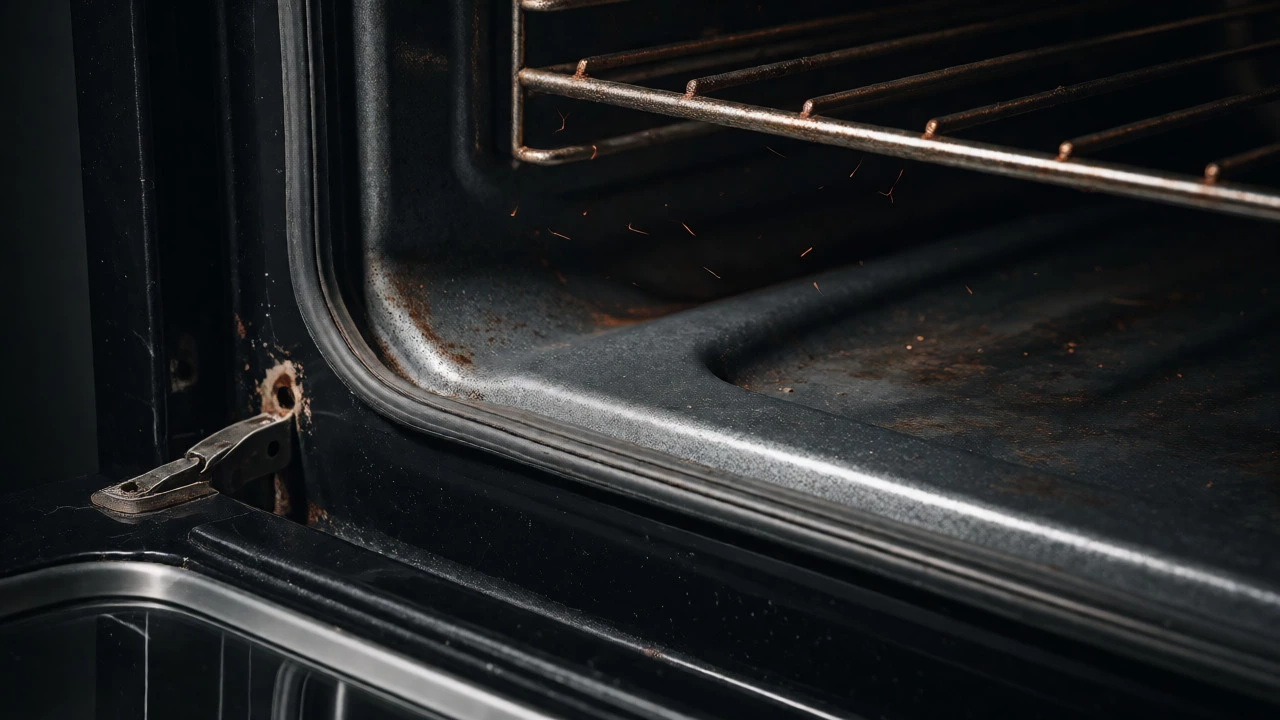
- Rust Inside the Cavity: Surface rust on racks is normal. Rust on the inner walls or floor of the oven means the enamel coating has failed. Moisture will continue to corrode the metal structure, leading to eventual structural failure. You can’t repaint oven interiors effectively.
- Multiple Component Failures: If you’ve already replaced the element once and now the fan is dying, the unit is entering its decline phase. Expect more repairs soon.
- Inconsistent Temperature: If your oven runs 20°C hotter or colder than set, even after calibration, the internal sensors are degrading. This ruins delicate dishes like soufflés or pastries.
- Lack of Spare Parts: Call a local supplier. If they say the model is discontinued and parts are backordered indefinitely, you’re gambling on availability. Better to replace now.
- Dated Features: Do you miss having a digital timer, child lock, or rapid preheat? These features improve daily usability. A 10-year-old oven likely lacks them. Upgrading improves quality of life, not just function.
How to Decide: A Quick Decision Tree
To make this easier, follow this simple logic flow when your oven breaks:
- Get a quote. Never guess. Have a technician diagnose the issue and provide a firm price including labor.
- Check the price of a new equivalent. Look at current retail prices for an oven with similar dimensions and features.
- Apply the 50% rule. Is the repair >50% of the new price? If yes, lean towards replacement.
- Inspect the condition. Is the interior rusted? Are other parts flaky? If yes, replace.
- Consider the brand. Is it a budget brand or a premium one? Premium brands justify higher repair costs.
For example, let’s say your 10-year-old mid-range electric oven has a faulty fan motor. The repair quote is $350. A comparable new oven costs $900. $350 is roughly 39% of $900. This passes the 50% test. However, if the oven interior shows significant wear and the control panel buttons are sticky, the risk of future failure is high. In this specific scenario, many homeowners would choose to replace, accepting the slightly lower percentage because of the reliability risk.
Making the Switch: Tips for Replacement
If you decide to replace, don’t just buy the cheapest option. Look for energy ratings (look for high star ratings under the Australian/New Zealand Energy Rating Label). Consider dual-fuel options if you cook frequently; gas hobs offer instant heat control while electric ovens provide consistent baking temperatures.
Also, check disposal options. Many retailers offer haul-away services for a small fee. Alternatively, council bulk collections often accept working appliances for donation or recycling. Ensure you disconnect the power safely before moving any heavy units.
How long should an electric oven last?
The average lifespan of an electric oven is between 10 and 15 years. Budget models may fail closer to 8-10 years, while high-end built-in units from reputable brands can last 15-20 years with proper maintenance. Key factors include frequency of use, cleaning habits, and the quality of initial installation.
Is it cheaper to repair or replace an oven?
It depends on the specific fault. Minor repairs like replacing a heating element or door seal are almost always cheaper than replacement. Major repairs involving electronic control boards or motors are often more expensive relative to the cost of a new unit. Use the 50% rule: if the repair costs more than half the price of a new oven, replacement is usually the better financial decision.
Can I replace just the oven and keep the hob?
Yes, if you have separate built-in appliances. Most modern kitchens feature a standalone oven and a separate hob. You can replace just the oven without touching the hob. However, ensure the new oven matches the existing cutout dimensions. Standard widths are 60cm, but heights and depths vary. Always measure before buying.
What are the most common reasons old ovens fail?
The most common failures in older ovens are degraded door seals causing heat loss, burnt-out heating elements, faulty thermostats, and failing cooling fans. Electronic control boards also fail frequently due to prolonged exposure to heat and humidity. Regular cleaning and checking seals can prevent some of these issues.
Does repairing an old oven void the warranty?
A 10-year-old oven typically has no manufacturer warranty left, so repair won't void anything. However, if you hire an unauthorized technician, ensure they provide a guarantee on their own labor and parts. Always ask for a written warranty on the repair itself, which usually lasts 3-6 months.