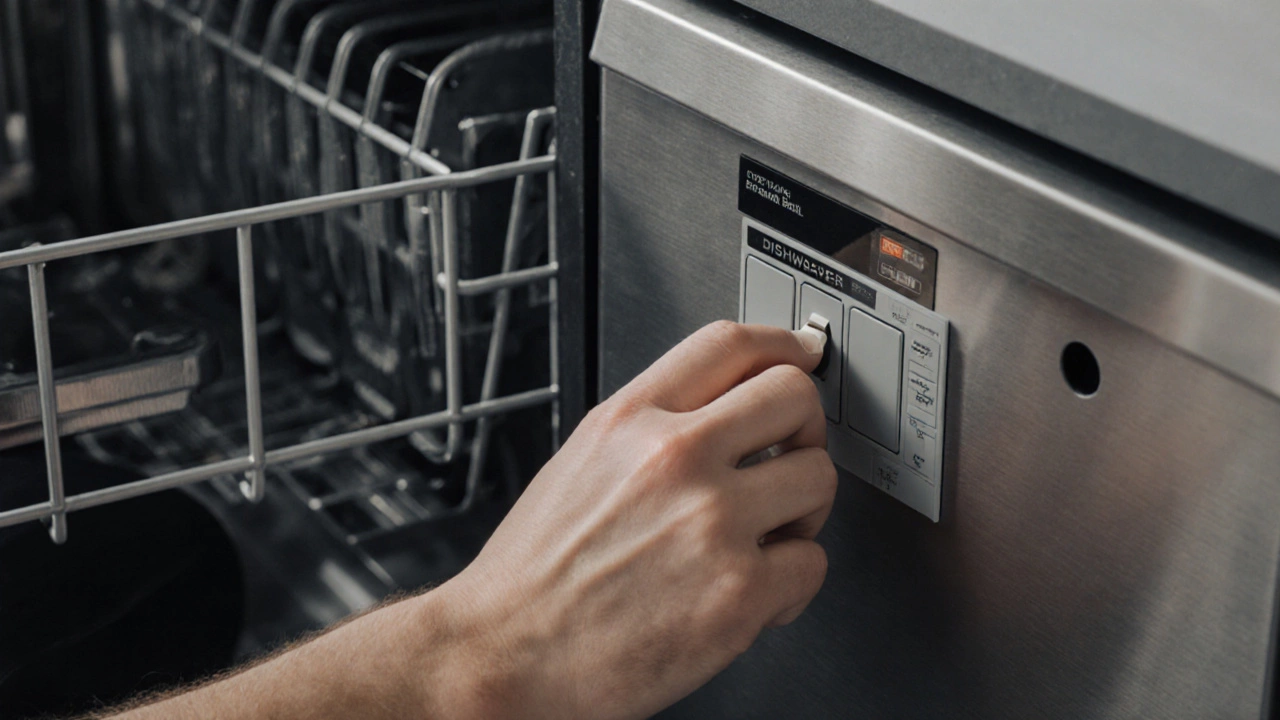
Dishwasher Not Working? Common Causes and Real Fixes
When your dishwasher, a household appliance designed to clean dishes automatically using water and detergent. Also known as a dish washer, it's one of the most relied-on tools in the kitchen suddenly stops running, it’s not just an inconvenience—it’s a disruption to your whole routine. You’re not alone. A lot of people panic when the dishwasher won’t start, won’t drain, or just sits there silent. But before you call a technician or start shopping for a new one, there are a few simple things to check that fix the problem in over 60% of cases.
The most common reason a dishwasher won’t work is a power issue. Maybe the outlet is dead, the circuit breaker tripped, or the plug came loose. It sounds basic, but people overlook it. Plug another device into the same outlet to test. If that doesn’t work, check your breaker panel. Another frequent culprit is the door latch. If the door doesn’t seal properly, the dishwasher won’t start as a safety feature. Try closing it firmly and listening for a click. If it still won’t start, the latch might be broken.
Then there’s the filter. Most modern dishwashers have a removable filter at the bottom that catches food bits. If it’s clogged, water can’t circulate, and the machine will either stop mid-cycle or fail to clean properly. Cleaning it takes two minutes—just pull it out, rinse under the tap, and pop it back in. A clogged drain hose is another silent killer. If the water isn’t draining, check the hose for kinks or blockages. Sometimes it’s just a bit of food stuck where the hose connects to the garbage disposal.
If your dishwasher runs but doesn’t clean, it’s often a spray arm problem. Food or soap residue can block the holes, stopping water from spinning out. Take it off, soak it in vinegar, and poke out the holes with a toothpick. You’d be surprised how often this alone fixes everything. And don’t forget the dishwasher detergent. Using the wrong kind—like regular dish soap—can cause overflow and shut the machine down. Always use pods, powder, or tablets made specifically for dishwashers.
Some models show error codes on the display. These aren’t random—they point to specific problems like a heating element failure, water inlet issue, or thermostat fault. Look up your model’s code online or in the manual. You’ll often find that the fix is cheaper than you think. And if your dishwasher is under five years old, repairs usually make more sense than replacement. Even a 4-year-old unit can be fixed for less than half the cost of a new one.
Below, you’ll find real-world guides from local technicians who’ve fixed hundreds of these exact problems in Hinckley homes. From resetting a tripped thermal fuse to replacing a worn-out pump, these posts break down what actually goes wrong—and how to fix it yourself, safely and cheaply. No fluff. No jargon. Just what works.
16 November 2025
·
0 Comments
Learn how to diagnose common dishwasher problems like leaks, poor cleaning, and no power. Step-by-step fixes for filters, spray arms, drains, and error codes-save money by troubleshooting yourself.
Read more