
If your oven won’t heat up, you’re not alone. Thousands of homeowners face this problem every year, especially during the holiday season when everyone’s cooking. The good news? Most of the time, it’s not a full replacement job. It’s usually one or two simple parts that have failed. You don’t need to call a technician right away. With a little troubleshooting, you can often fix it yourself-saving time and money.
Check the Power Supply First
Before you assume the oven is broken, make sure it’s actually getting power. Electric ovens need 240 volts to run properly. If only half the voltage reaches the oven, it might turn on the light and display the temperature, but the heating elements won’t activate.
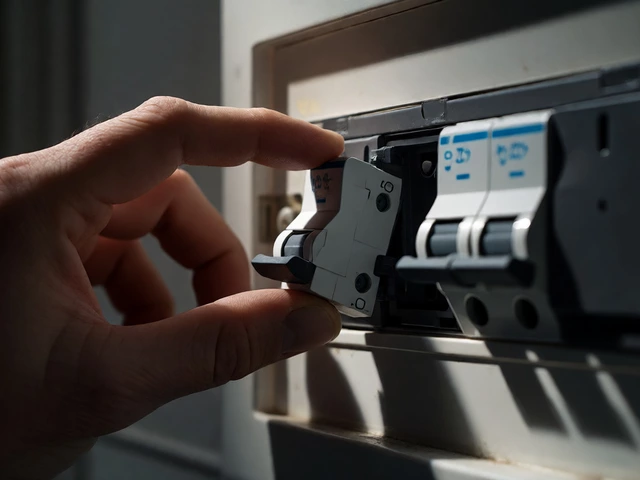
Check your home’s circuit breaker. Look for a double-pole breaker labeled "Oven" or "Range." If it’s tripped, reset it. If it trips again right away, there’s a short circuit somewhere in the system. Don’t keep resetting it-call a professional.
Also, inspect the outlet or hardwired connection. If your oven is plugged in (less common in newer homes), unplug it and plug something else in to test the outlet. If nothing works, the issue is with the wiring, not the oven.
Inspect the Bake and Broil Elements
The bake element (bottom) and broil element (top) are the most common culprits. These are the metal coils inside the oven that glow red when they’re working. If one is burned out, the oven won’t heat properly-or at all.
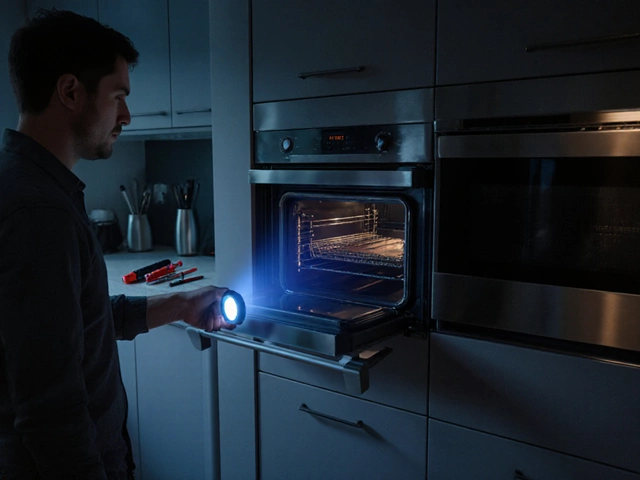
To check them, turn off the power at the breaker. Open the oven door and look at the bottom element. Look for visible damage: blistering, cracks, or sections that are burnt through. If you see any, it’s dead. The same goes for the top broil element-pull it out slightly to inspect the ends.
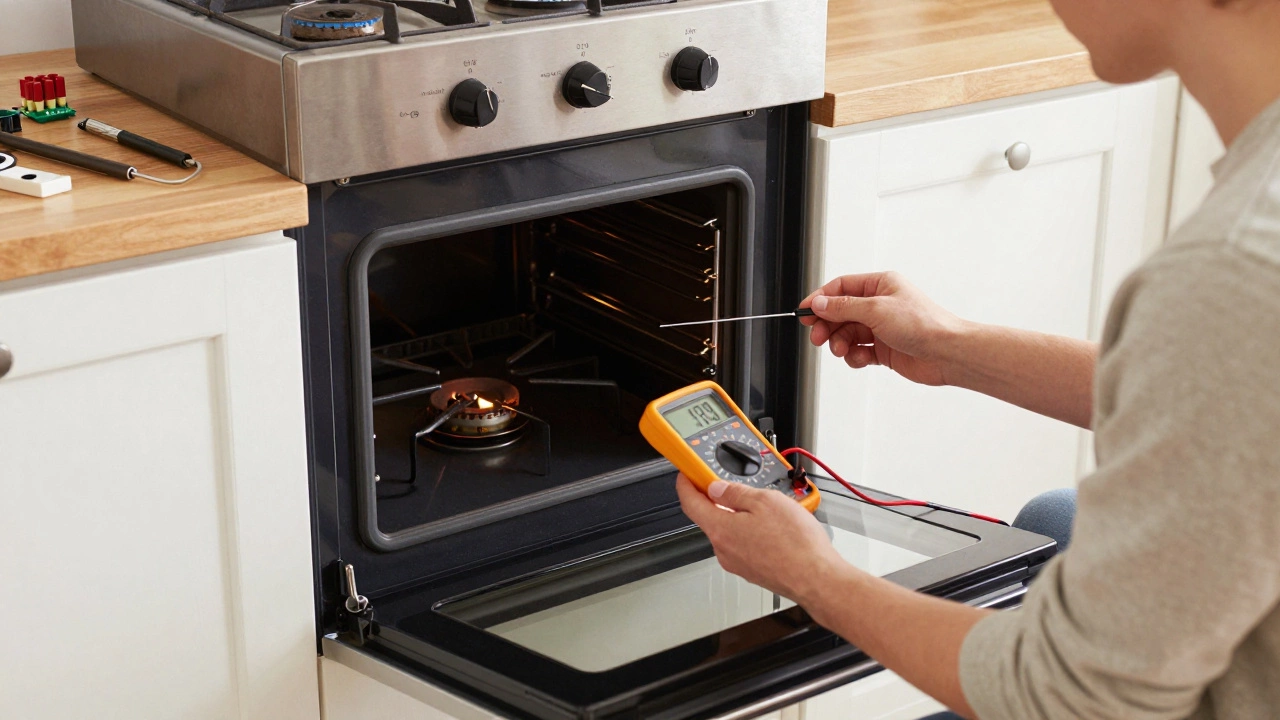
Some people think if the element looks fine, it’s working. That’s not always true. A broken internal wire can still look intact from the outside. Use a multimeter to test for continuity. Set it to ohms (Ω), touch the probes to the element’s terminals, and if you get no reading or infinite resistance, the element is bad and needs replacing.
Test the Oven Thermostat or Temperature Sensor
The thermostat or temperature sensor tells the oven when to turn the heating elements on and off. If it’s faulty, the oven might think it’s already hot-even when it’s not.
Most modern ovens use a temperature sensor, a thin metal probe near the oven wall. If it’s bent, corroded, or has a broken wire, it sends wrong signals. You can test it with a multimeter. Remove the sensor (usually held in by two screws), disconnect it, and measure resistance at room temperature. A working sensor reads between 1,000 and 1,100 ohms. If it reads way higher or lower, replace it.
Older ovens use mechanical thermostats. These are harder to test without tools, but if the oven cycles on and off erratically or doesn’t reach the set temperature, the thermostat could be the issue.
Check the Oven Control Board
The control board is the oven’s brain. It sends power to the heating elements based on what you set on the dial or touchscreen. If it’s damaged, it won’t send the signal-even if everything else is fine.
Signs of a bad control board: no display, unresponsive buttons, error codes like "F1" or "E0," or the oven turns on randomly. These boards are sensitive to power surges, moisture, or grease buildup. If you’ve had recent lightning storms or you cook a lot of greasy foods, the board might have fried.
Replacing the control board is more complex. You’ll need the exact model number to order the right part. If you’re not comfortable with wiring, leave this to a technician. But if you’re handy, you can find step-by-step videos for your oven model online.
Examine the Igniter (Gas Ovens Only)
If you have a gas oven and it won’t heat up, the problem is likely the igniter. Unlike electric ovens, gas ovens don’t have heating elements. Instead, they use a small ceramic igniter that glows and lights the gas.
Turn on the oven and watch the igniter. If it glows brightly and stays on for more than 90 seconds without the gas turning on, it’s weak. A healthy igniter glows bright orange and lights the gas within 30 seconds. If it glows dimly or not at all, it’s failed.
Replace the igniter with the exact part number. It’s usually a simple swap-unplug the old one, unscrew it, plug in the new one. Make sure the power is off before you start.
Look at the Thermal Fuse
The thermal fuse is a safety device that cuts power if the oven overheats. Once it blows, it doesn’t reset. You have to replace it.
It’s usually located near the oven’s vent or on the back wall. To find it, you’ll need to pull the oven out and remove the back panel. Use a multimeter to test for continuity. If there’s no reading, the fuse is blown.
Why did it blow? Often, it’s because the oven’s ventilation is blocked, the fan motor failed, or the thermostat was stuck. Replacing the fuse without fixing the root cause means it’ll blow again. Check the oven’s airflow and clean the vents before installing a new fuse.
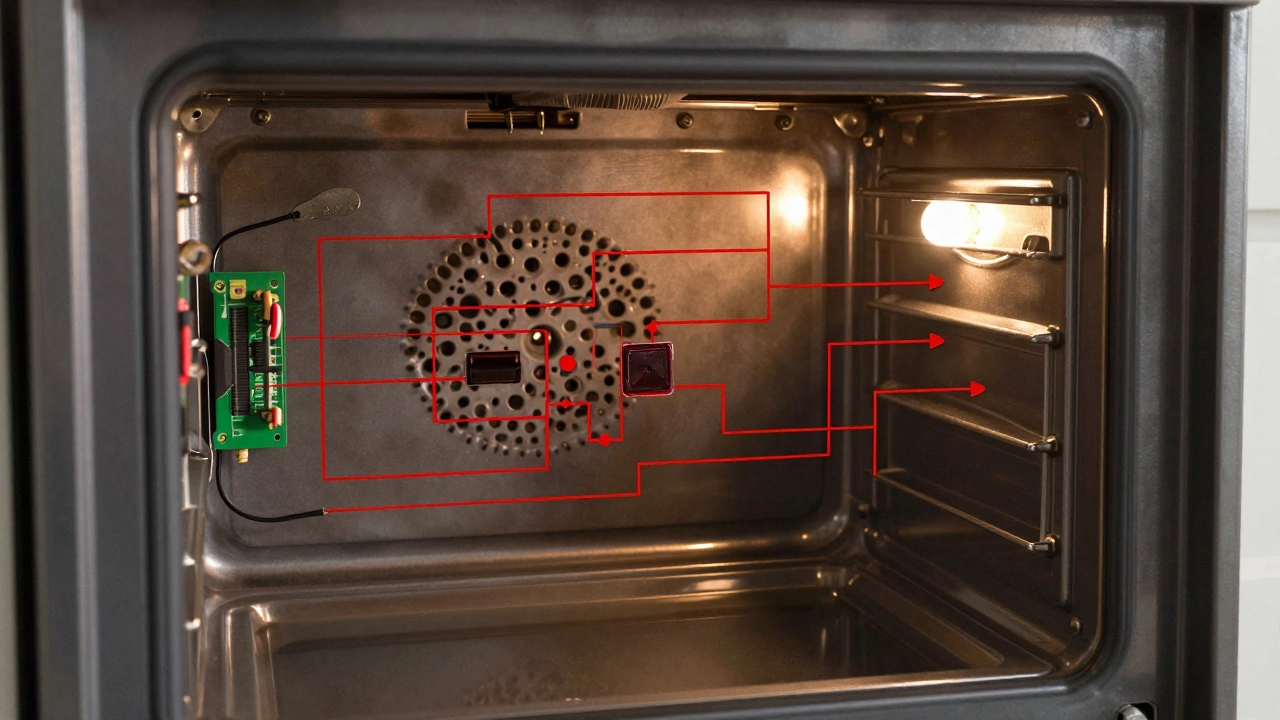
Door Switch Problems
Some ovens have a door switch that stops the heating elements from turning on if the door isn’t fully closed. If the switch is broken or misaligned, the oven thinks the door is open-even when it’s shut.
Test it by gently pressing the switch with a pencil while the oven is on. If the oven starts heating when you press it, the switch is faulty. Replacement is cheap and easy. Just unplug the old one and plug in the new one.
What to Do When Nothing Works
If you’ve checked all the parts above and the oven still won’t heat, there might be a deeper wiring issue. Loose connections, damaged wires inside the wall, or a failed relay on the control board could be hiding.
At this point, it’s time to call a certified appliance technician. They have the tools to trace voltage through the system and identify hidden faults. Don’t keep guessing-electrical problems can be dangerous if you’re not trained.
Prevention Tips to Avoid Future Issues
- Keep your oven clean. Grease and food debris can cause overheating and damage sensors.
- Don’t use harsh cleaners on heating elements. They’re delicate. Use mild soap and water.
- Install a surge protector for your oven if you live in an area with frequent power fluctuations.
- Check the oven door seal annually. A worn gasket lets heat escape, forcing the system to work harder.
- Replace the temperature sensor every 5-7 years if your oven is older than 10 years.
Most oven heating problems are fixable with basic tools and a little patience. You don’t need to buy a new appliance just because one part failed. Take your time, test one thing at a time, and you’ll likely have your oven working again in under an hour.
Why does my oven light turn on but not heat up?
If the oven light works but the oven doesn’t heat, the problem is almost always with the heating elements, thermostat, or control board. The light runs on a separate 120-volt circuit, so it can work even if the 240-volt heating circuit is dead. Check the bake and broil elements first-they’re the most common failure points.
Can a faulty thermostat cause an oven not to heat?
Yes. A faulty thermostat or temperature sensor can send incorrect signals to the control board, making it think the oven is already at the right temperature. This stops the heating elements from turning on. If your oven displays the correct temperature but never gets hot, or if it heats unevenly, test the sensor with a multimeter.
Is it worth repairing an old oven?
If your oven is under 10 years old and the repair cost is less than half the price of a new one, it’s usually worth fixing. Parts like heating elements, sensors, and igniters cost $20-$80. Labor runs $100-$150. A new oven starts around $500. If the control board is bad and costs over $300 to replace, consider upgrading.
Why does my gas oven glow but not ignite?
If the igniter glows but the gas doesn’t light, the igniter is too weak to open the gas valve. This happens when the igniter wears out over time. Even if it glows, it may not draw enough current to trigger the valve. Replace the igniter with the correct part number for your model.
How long do oven heating elements last?
Most oven heating elements last 5 to 10 years, depending on usage. Frequent high-heat cooking, poor ventilation, or frequent power surges can shorten their life. If your oven is over 8 years old and the element fails, it’s a sign the oven is nearing the end of its lifespan.