Fridge Cooling Troubleshooter
This tool helps you diagnose why your fridge isn't cooling even though the light is on. Select all symptoms you're experiencing to get precise troubleshooting steps.
Select Symptoms
Troubleshooting Results
If your fridge is running but the inside isn’t cold-even though the light turns on when you open the door-you’re not alone. This is one of the most common fridge problems we see in Wellington homes. The light working means power is getting to the unit, but something’s broken in the cooling system. It’s not a power outage. It’s not a blown fuse. It’s something deeper, and fixing it doesn’t always mean calling a technician-or spending hundreds on a new fridge.
Check the Condenser Coils First
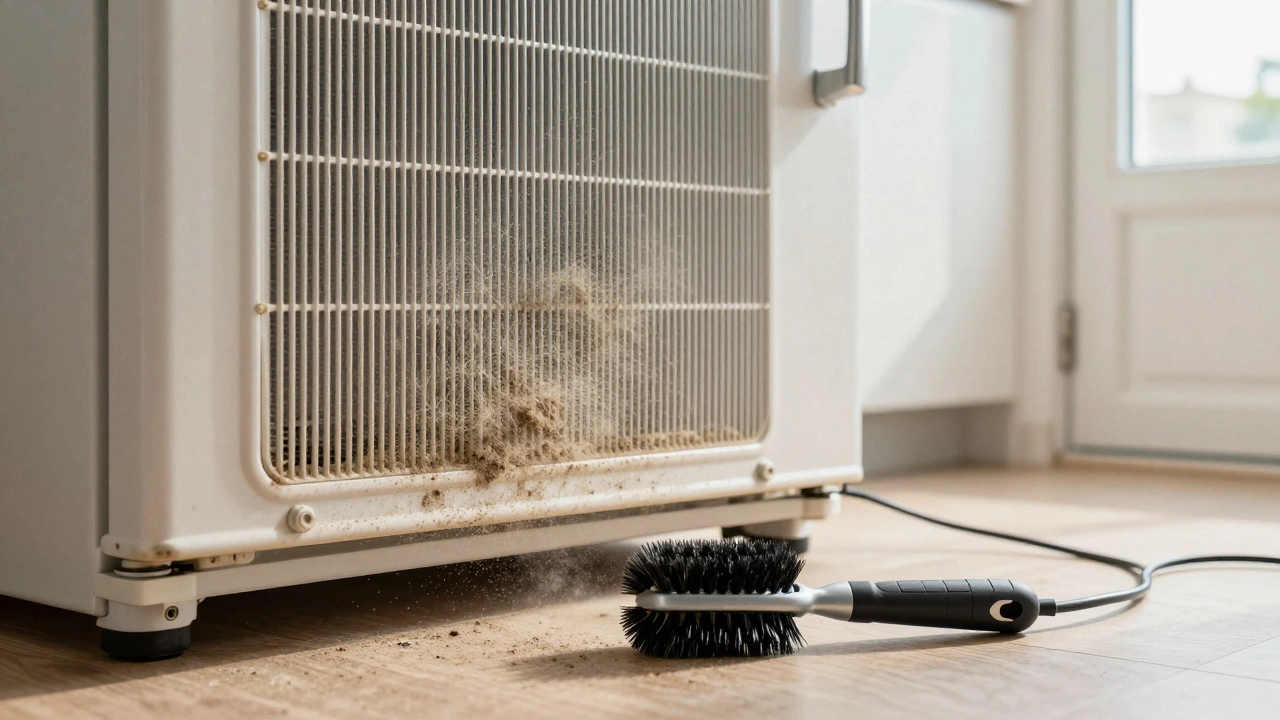
Most fridges have coils at the back or underneath that release heat. Over time, dust, pet hair, and kitchen grease build up on them. When that happens, the fridge can’t dump heat properly. It runs nonstop but never gets cold. This is the #1 reason fridges stop cooling, especially in homes with pets or dusty kitchens.Unplug the fridge. Pull it away from the wall. Look for a grid of metal tubes-those are the condenser coils. If they’re covered in fluff, use a coil brush (under $10 at any hardware store) or a vacuum with a brush attachment. Clean them thoroughly. Plug it back in. Wait 4 hours. If the fridge starts cooling, you just saved yourself a service call.
Test the Evaporator Fan
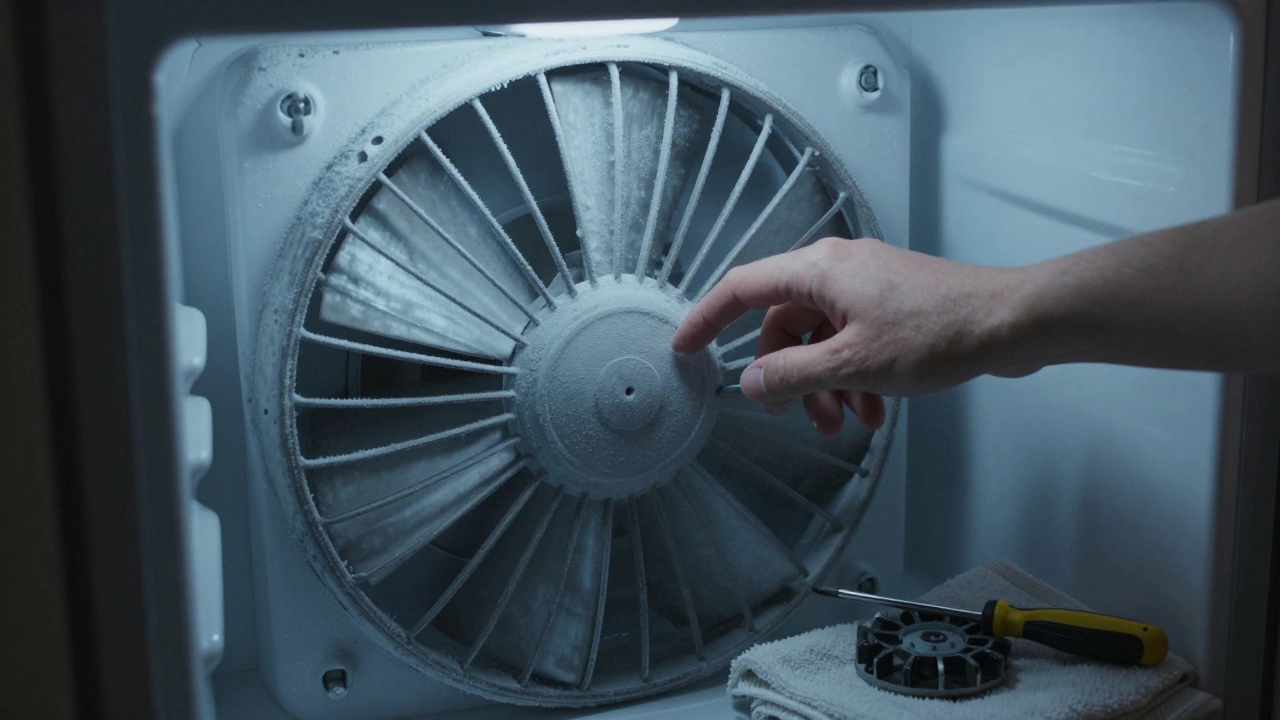
Behind the freezer wall, there’s a small fan that blows cold air into the fridge compartment. If it stops spinning, cold air doesn’t move. The freezer might still be cold, but the fridge stays warm. You’ll hear the compressor running, but no wind inside.To check it, unplug the fridge. Remove the back panel in the freezer (usually held by screws). Look for the fan. Try spinning the blades by hand. If they’re stiff, frozen, or noisy, the motor’s dead. Replace it. Most evaporator fans cost under $50 and take 20 minutes to swap. You don’t need to be an electrician-just follow the wires and unplug the old one.
Inspect the Door Seal
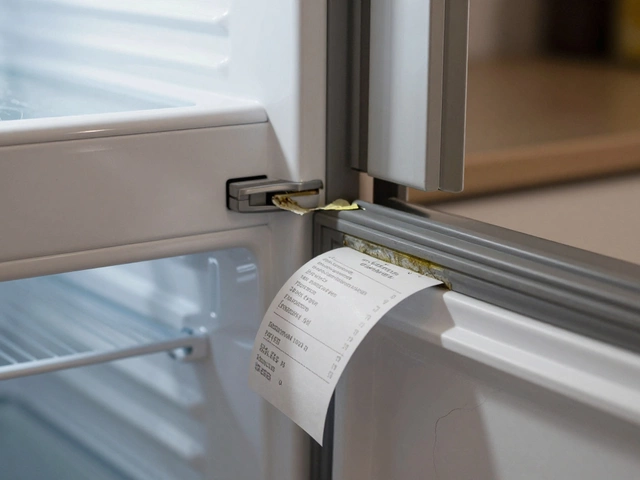
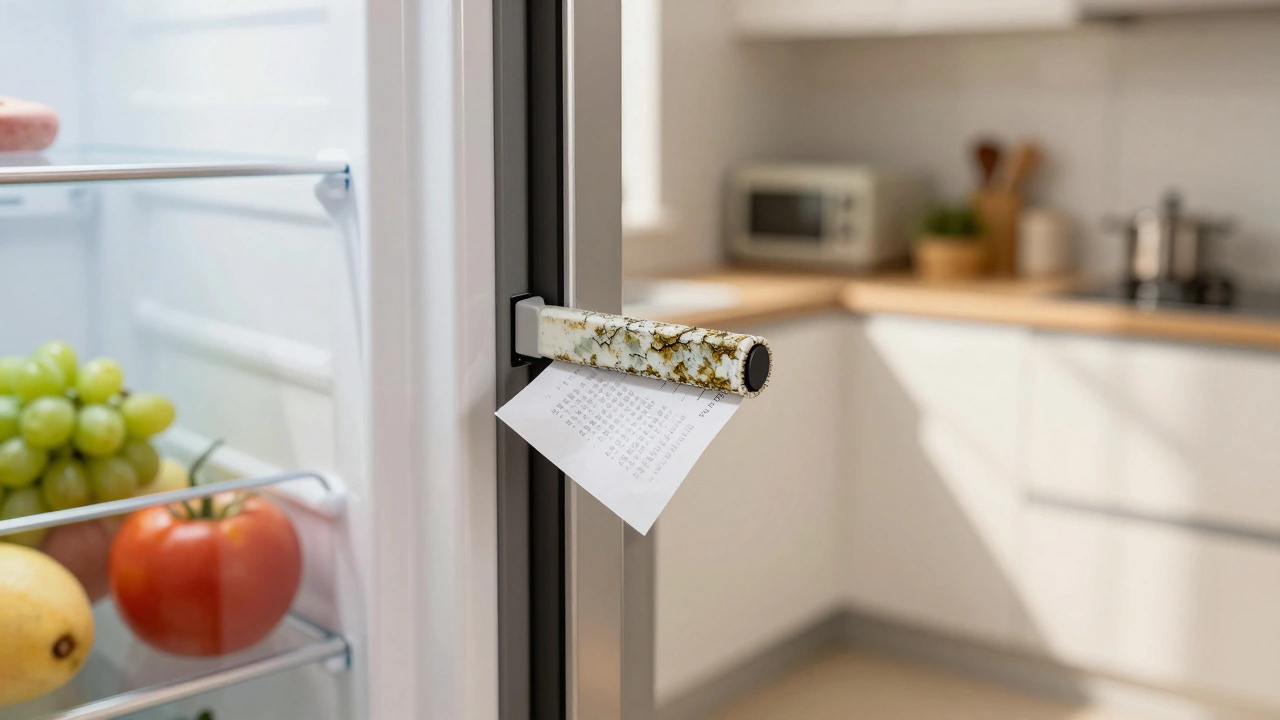
A broken door seal lets cold air escape and warm air in. It’s easy to miss because the fridge still runs. But if the seal is cracked, warped, or covered in mold, it’s not sealing right. You can test it with a simple trick: put a piece of paper between the door and the frame. Close the door. Try to pull the paper out. If it slides out easily, the seal is bad.Replace the gasket. They’re sold by model number. You can find yours on a sticker inside the fridge or on the back. A new seal costs $25-$60. Install it by peeling off the old one and snapping the new one in. Make sure it’s tight all the way around. After replacement, wait 6 hours to test cooling.
Check the Thermostat or Temperature Control
If someone accidentally turned the temperature dial to "Off" or "0," the fridge won’t cool. Even if the light works, the compressor stays off. Some digital fridges have a child lock or a reset button you didn’t know existed.Find the temperature control. On older models, it’s a dial. On newer ones, it’s a digital panel. Set it to the middle setting-usually 3 or 4 out of 5. Wait 24 hours. If it still doesn’t cool, the thermostat itself might be broken. You can test it with a multimeter for continuity. If there’s no reading, replace it. Thermostats cost $30-$80. You can buy them online using your fridge’s model number.
Look for Frost Build-Up
If your fridge has a manual defrost freezer, and you haven’t defrosted it in over 6 months, ice can build up and block airflow. Cold air from the freezer can’t reach the fridge section. The compressor runs hard, but the fridge stays warm.Unplug the fridge. Empty the freezer. Let it thaw completely. Use towels to soak up water. Don’t use a hairdryer or sharp tools-just wait. Once all the ice is gone, plug it back in. If it cools now, you need to defrost it every 4-6 months. Set a reminder on your phone.
Compressor Issues Are Rare-but Possible
If you’ve checked everything above and it still doesn’t cool, the compressor might be failing. This is less common. Signs include loud buzzing, clicking, or the fridge running constantly without cooling. The compressor is the heart of the system. If it’s dead, replacing it costs $500-$800. Most of the time, it’s cheaper to buy a new fridge.But don’t jump to this conclusion yet. Test the start relay first. It’s a small box on the side of the compressor. Unplug the fridge. Pull the relay off. Shake it. If you hear rattling, it’s broken. Replace it for $20-$30. Many fridges that seem to have a bad compressor just need a new relay.
When to Call a Pro
You should call a technician if:- You smell burning plastic or see smoke
- The fridge is over 10 years old and multiple parts have failed
- You’re uncomfortable working with electrical components
- The compressor runs but the fridge still won’t cool after replacing the relay, fan, and coils
In Wellington, fridge repair services usually charge $80-$120 for a diagnostic. If they say you need a new compressor, ask for a written quote. Compare it to the price of a new energy-efficient fridge. Many modern fridges cost less than $800 and use half the electricity.
Prevent This From Happening Again
To avoid another cold fridge surprise:- Clean condenser coils every 6 months
- Check door seals every 3 months with the paper test
- Keep the fridge at least 5 cm away from the wall for airflow
- Don’t overload the freezer-air needs to circulate
- Set the fridge temperature to 4°C and freezer to -18°C
Most fridge cooling problems are simple. They’re not mysterious. They’re not expensive. They’re just ignored until it’s too late. Fixing it yourself saves money, reduces waste, and keeps your food safe.
Why is my fridge light on but not cooling?
The light works because it’s on a separate circuit from the cooling system. If the fridge isn’t cooling, the issue is usually with the condenser coils, evaporator fan, door seal, thermostat, or frost build-up-not the power supply. Check these parts before assuming the compressor is broken.
Can a dirty fridge cause it not to cool?
Yes. Dust and debris on the condenser coils block heat release, forcing the fridge to work harder without cooling properly. This is the most common cause of cooling failure. Cleaning the coils fixes the issue in over 40% of cases.
How long should I wait after cleaning the coils to see results?
After cleaning the coils and plugging the fridge back in, give it 4 to 6 hours to stabilize. Temperature changes don’t happen instantly. Don’t check too early-wait at least half a day before deciding if it worked.
Is it worth repairing a fridge that’s 12 years old?
If the repair cost is more than half the price of a new fridge, it’s usually not worth it. A 12-year-old fridge is past its average lifespan of 10-12 years. New models are 30-50% more energy efficient. Replacing it saves money on electricity and reduces the risk of another breakdown.
What should I do if my fridge is cold in the freezer but not in the fridge?
This usually means the evaporator fan is broken or blocked by frost. Cold air is made in the freezer but can’t reach the fridge compartment. Check the fan first. If it’s not spinning, replace it. If there’s thick ice in the freezer, defrost it completely.