Dishwasher Standing Water Diagnostic Tool
Check for Obvious Blockages
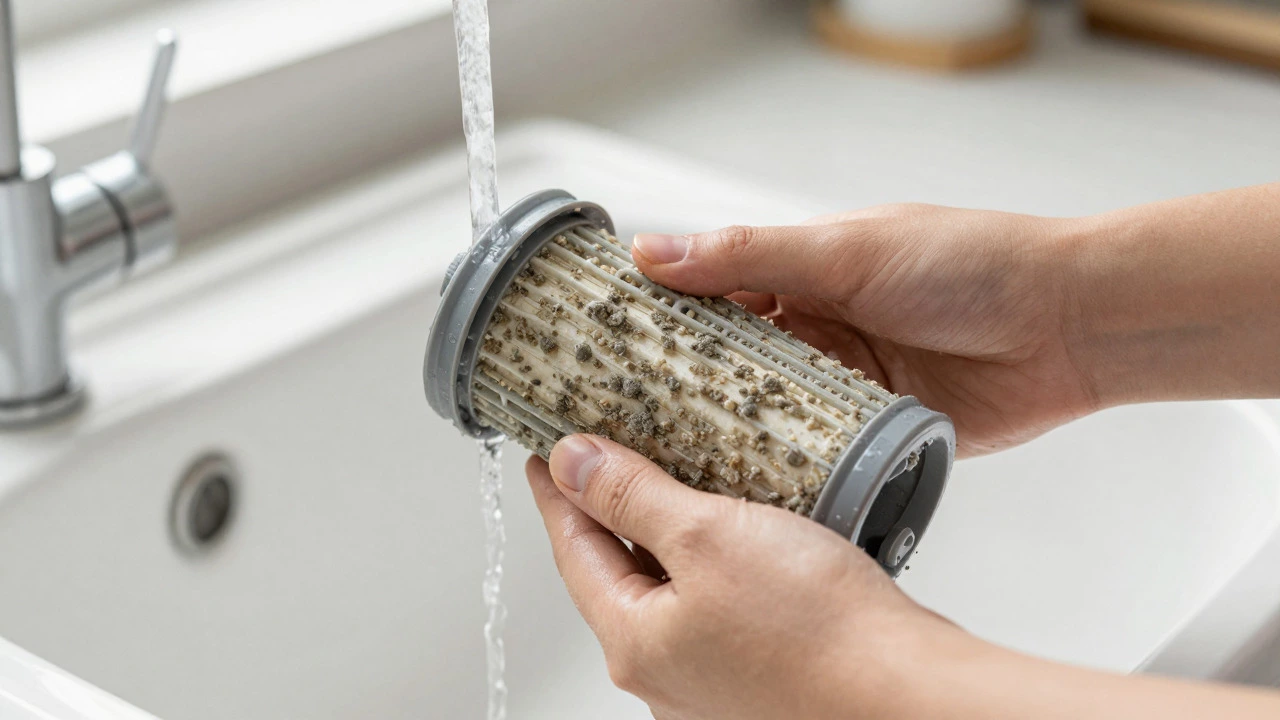
Remove the lower rack. Is the filter assembly at the bottom covered in food debris or grease?
Inspect Drain Hose & Disposal
Is the hose kinked? If you have a garbage disposal, is it running during the drain cycle? Does the knockout plug appear removed?
Listen During Drain Cycle
Start a cycle and listen at the end. Do you hear a loud hum/buzz with no water movement, or complete silence?
Test the Float Switch
Locate the plastic float ball/arm in the sump. Does it move freely up and down, or is it stuck/cracked?
Assess Age & Electronics
Is your dishwasher older than 8-10 years? Have previous steps failed to resolve the issue?
Select a Step
Click on the diagnostic steps on the left to identify the likely cause.
There’s nothing quite as frustrating as opening your dishwasher after a full cycle only to find a puddle of grey water sitting at the bottom. It looks like the machine failed its primary job, but usually, it’s just stuck in one specific phase of the cleaning process. If you’re staring down that pool of water, don’t panic yet. In most cases, this isn’t a catastrophic failure requiring a new unit; it’s a blockage or a sensor glitch that you can likely fix yourself with basic tools.
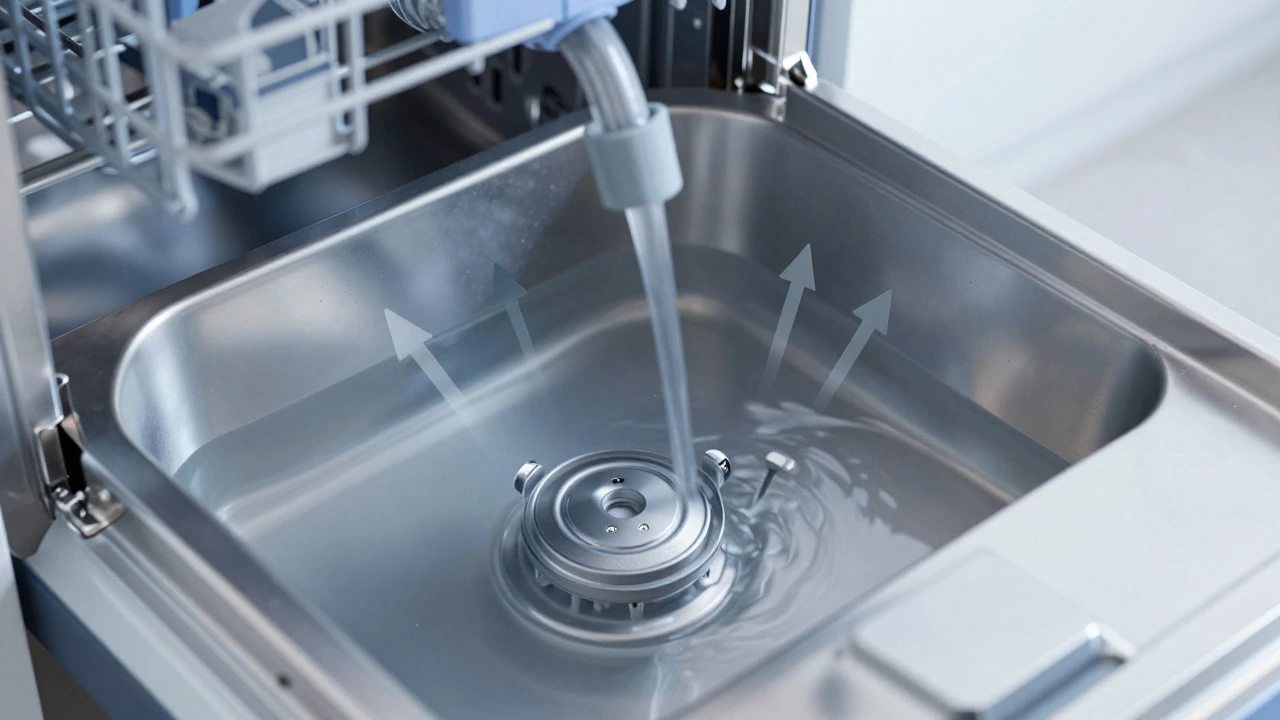
Dishwasher standing water is a common issue where residual liquid remains in the tub after the final rinse cycle, typically caused by drainage obstructions or mechanical failures in the sump area. Understanding how water moves through your machine helps you pinpoint exactly where the flow stopped. Water enters via the inlet valve, gets sprayed by the arms, collects in the sump (the recessed area at the bottom), and then gets pumped out through the drain hose. When that exit path is blocked or the pump stops working, the water stays put.
Quick Summary / Key Takeaways
- The most frequent culprit is a clogged filter or drain line, not a broken part.
- A faulty drain pump often makes a humming noise without moving water.
- Check the float switch mechanism; if it’s stuck, the machine thinks it’s already full.
- Always check the kitchen sink disposal connection first if you have a garbage disposal unit.
- If the water is clear, it’s likely a drainage issue; if it’s soapy or dirty, the wash cycle may have been interrupted.
How Dishwasher Drainage Actually Works
To fix the problem, you need to understand the journey of the water. Most modern dishwashers use a recirculating system. The water isn't just dumped straight into the sewer every time. Instead, the wash motor pulls water from the sump, pushes it up through the spray arms, and then back down into the sump. This happens several times during a cycle. Only at the very end does the control board signal the drain solenoid to open, allowing the drain pump to push all that accumulated water out through the drain hose.
If you see water at the bottom, it means one of two things happened: either the final drain cycle never triggered, or the water couldn't get out because something was blocking the way. Knowing this distinction saves you hours of head-scratching. If the machine ran for its full duration but left water behind, look at the exit paths. If the machine stopped early or made weird noises, look at the internal mechanics.
The Usual Suspects: Clogs and Blockages
Before you reach for a screwdriver, start with the easiest fixes. About 70% of the time, the issue is debris. Food particles, glass shards, or even small plastic bits from packaging can travel down and get stuck in the narrowest parts of the system.
- Inspect the Filter Assembly: Remove the lower rack and look at the bottom center. You’ll see a filter assembly. Twist off the top mesh cap and pull out the cylindrical filter underneath. Rinse these under running water. If they are caked with grease and food, that’s your answer. The filter assembly acts as the last line of defense before the water hits the pump. If it’s blocked, the pump has to work too hard or simply gives up.
- Check the Drain Hose Path: Follow the black rubber hose from the back of the dishwasher to the wall. Make sure it isn’t kinked or crushed against the cabinet. A simple bend can restrict flow enough to leave a few inches of water behind.
- Examine the Garbage Disposal Connection: If your dishwasher drains into a garbage disposal, ensure the knockout plug was removed when the disposal was installed. Also, run the disposal on low while the dishwasher drains. Sometimes, the air pressure from the disposal helps push the water through. If the disposal is clogged, your dishwasher will be too.
Mechanical Failures: Pumps and Solenoids
If the filters are clean and the hose is straight, you’re looking at mechanical components. The heart of the drainage system is the drain pump. It’s a small electric motor located near the sump. Its job is singular: push water out.
How do you know if it’s dead? Listen. Start a drain cycle (or wait for the end of a normal cycle). If you hear a loud hum or buzz but no water movement, the pump motor is likely seized or the impeller is jammed. If you hear nothing at all, the power might not be reaching the pump. This could be due to a tripped thermal fuse or a failed drain solenoid.
The drain solenoid is an electromagnetic switch. When the control board sends a signal, the solenoid clicks open, allowing electricity to flow to the pump. If the solenoid sticks closed, the pump never turns on. You can test this with a multimeter. Disconnect power, remove the wires from the solenoid, and check for continuity. If there’s no beep, the solenoid is bad and needs replacing. These parts are cheap and easy to swap, making them a cost-effective fix compared to hiring a technician.
Sensor Glitches: The Float Switch Mystery
This is the one people often miss. Inside the sump area, there is a small plastic ball called a float switch (or float arm). It rises with the water level. When it reaches a certain height, it triggers a microswitch that tells the control board, "We have enough water." Conversely, some models use it to detect high water levels to prevent overflow.
If this float is stuck in the 'up' position due to grime or a bent tab, the computer thinks the dishwasher is already full. So, it skips the filling stage or, more commonly in this context, it might interfere with the logic for the final drain. More critically, if the float doesn't drop back down after draining, the machine might think there's still water inside and refuse to start the next cycle or complete the current one properly. Check that the float moves freely up and down. Clean any debris around it. If the plastic tab is cracked, the whole assembly needs replacement.
Comparison of Common Causes and Solutions
| Cause | Symptoms | Difficulty Level | Estimated Cost |
|---|---|---|---|
| Clogged Filter | Water at bottom, slow drain, foul smell | Easy | $0 (DIY) |
| Kinked Drain Hose | Partial drain, water pools in corners | Easy | $0 (DIY) |
| Failed Drain Pump | Loud humming, no water movement | Medium | $50 - $100 (Part + Labor) |
| Stuck Float Switch | Machine won't start, or stops mid-cycle | Easy-Medium | $20 - $40 (Part) |
| Bad Solenoid | No sound from pump, water stays | Medium-Hard | $30 - $60 (Part) |
When to Call a Professional
You should call a professional if you’ve cleaned the filters, checked the hose, and verified the float moves freely, but the problem persists. At that point, you’re dealing with electrical diagnostics. Testing solenoids and pumps requires a multimeter and knowledge of circuit diagrams. If your model is older than 8-10 years, also consider the age of the control board. Electronics degrade over time. If the main control board is failing, it might send intermittent signals that confuse the entire sequence. Replacing a control board is significantly more expensive than fixing a pump or filter, so getting a second opinion on the diagnosis is wise before buying parts.
Also, if you hear grinding noises from the sump area, stop immediately. This suggests a foreign object has gotten past the filter and is damaging the pump impeller. Trying to force it can break the impeller shaft, turning a $50 part replacement into a $200+ repair.
Prevention Tips to Avoid Future Issues
Once you’ve fixed the immediate problem, take five minutes to set up habits that keep the system healthy. First, scrape plates before loading. Yes, it takes effort, but it prevents large chunks from falling into the sump. Second, run hot water at the tap for 30 seconds before starting the dishwasher. This ensures the incoming water is hot enough to dissolve grease effectively, preventing buildup in the lines. Third, clean the filter once a month. It takes less than two minutes and saves you from emergency repairs.
Finally, avoid using harsh chemicals that aren't designed for dishwashers. Some abrasive cleaners can corrode the metal components of the pump and solenoid over time. Stick to manufacturer-recommended detergents. Your dishwasher is a precision machine disguised as a box of dirty dishes. Treat it with respect, and it will keep your dinnerware sparkling for years.
Is it safe to run the dishwasher with water at the bottom?
Generally, yes, but not for long. If the water is clear and shallow, you can run another cycle to try to flush it out. However, if the water is deep or dirty, turn the machine off. Running the pump with excessive debris can clog the impeller or trip the thermal fuse, leading to more expensive repairs.
What if the water smells bad when I drain it?
A foul smell indicates stagnant water and bacterial growth. This usually happens when the drain line is partially blocked, allowing water to sit for days. After clearing the blockage, run a hot cycle with a cup of white vinegar placed on the top rack. The vinegar will kill bacteria and neutralize odors in the plumbing lines.
Can a clogged garbage disposal cause dishwasher standing water?
Yes. If your dishwasher drains into the disposal, a clog in the disposal will back up into the dishwasher. Test this by running the disposal while the dishwasher is draining. If the water clears up, the disposal needs to be unclogged. Ensure the air gap (if present) is also clear of debris.
How much does it cost to replace a dishwasher drain pump?
The part itself typically costs between $40 and $80 depending on the brand. If you hire a professional, labor fees usually range from $75 to $150. Total cost for a pro-installed repair is often between $115 and $230. DIY installation is feasible for most homeowners with basic hand tools.
Why does my dishwasher leave water only in one corner?
Uneven pooling usually points to a slight tilt in the dishwasher installation. The sump needs to be the lowest point in the tub. If the dishwasher is tilted backward or to one side, water won't flow into the sump efficiently. Use a level to check the front feet and adjust them until the unit is perfectly level or slightly tilted forward.