Boiler Safety Risk Calculator
Answer these questions honestly. This tool will calculate your risk level based on your boiler maintenance practices. Remember: professional service is essential for safety.
Your Boiler Safety Risk Assessment
Recommended Actions
- High Risk Schedule immediate professional service. Carbon monoxide is odorless and deadly. Consider installing additional CO detectors.
- Medium Risk Professional service recommended within 6 months. Check carbon monoxide detector weekly. Review boiler maintenance practices.
- Low Risk You're following best practices. Continue annual professional service. Verify carbon monoxide detector functionality annually.
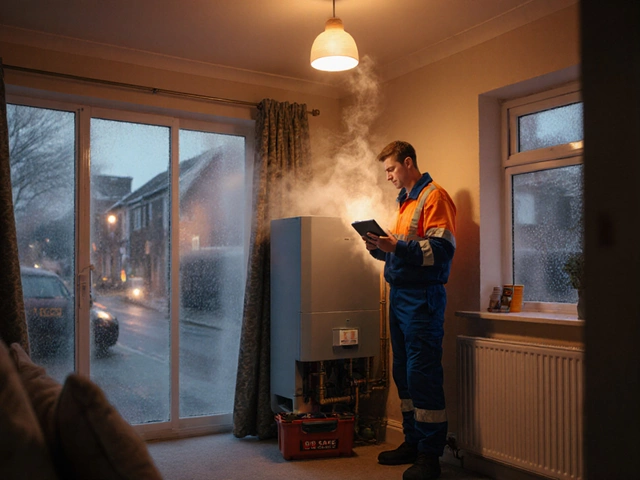
Most homeowners think servicing a boiler is like changing an air filter-simple, safe, and something you can do on a weekend. But here’s the truth: boiler servicing isn’t a DIY project for most people. If you get it wrong, you could end up with no heat, a gas leak, carbon monoxide poisoning, or even an explosion. And yes, that’s not fearmongering-it’s what the data shows.
In the UK alone, over 2,300 boiler-related incidents were reported to the Health and Safety Executive in 2024. Of those, nearly 40% involved homeowners attempting repairs without proper training. Gas boilers operate under high pressure, burn fuel at temperatures over 1,000°F, and rely on precision components that wear out in subtle ways. You can’t see a cracked heat exchanger. You can’t smell a slow gas leak. And if you mess with the pressure valve, you might not realize you’ve created a ticking time bomb until it’s too late.
What Boiler Servicing Actually Includes
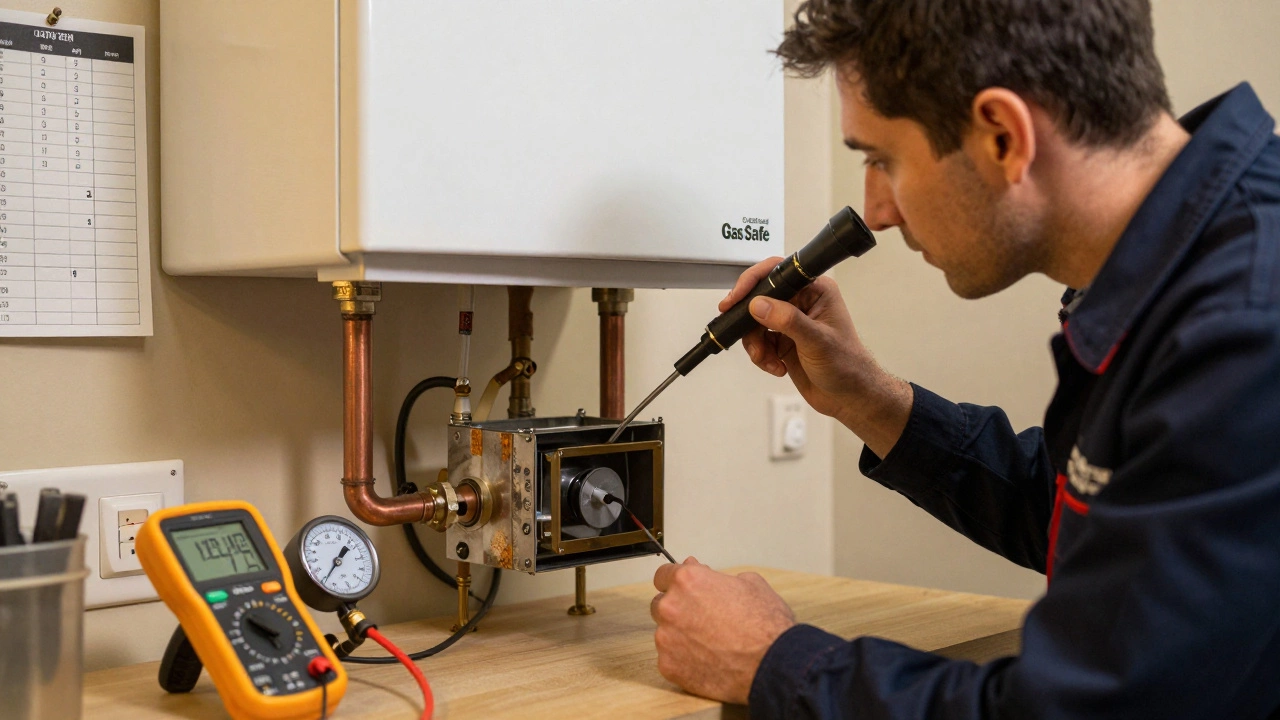
Professional boiler servicing isn’t just cleaning the outside. It’s a 17-step process that takes a certified engineer 60 to 90 minutes. Here’s what’s really done:
- Checking gas pressure and flow rates with calibrated tools
- Inspecting the heat exchanger for micro-cracks using a borescope camera
- Testing the flue for proper ventilation and exhaust flow
- Measuring carbon monoxide levels at multiple points around the unit
- Lubricating moving parts like pumps and valves
- Checking electrical connections for corrosion or loose wiring
- Verifying the safety controls: high-limit switch, flame rollout sensor, pressure stat
- Clearing condensate pipes and drain traps
- Calibrating the thermostat and timer for accurate operation
- Recording performance data and issuing a service certificate
None of this requires fancy tools you can buy at Home Depot. But it does require training, certification, and access to diagnostic equipment that costs over $3,000. A typical homeowner’s multimeter won’t detect a 0.1% drop in gas pressure. A flashlight won’t reveal a hairline crack in the combustion chamber.
The Real Risks of DIY Boiler Work
Let’s say you decide to clean the burner. You turn off the gas, remove the cover, and brush off the soot. Sounds harmless, right? Wrong.
Boiler burners are designed with exact air-to-gas ratios. If you disturb the burner jets-even slightly-you change how the fuel burns. That leads to incomplete combustion. That produces carbon monoxide. That gas is odorless, colorless, and deadly. In 2023, the CDC reported 430 accidental carbon monoxide deaths in the U.S., and nearly 15% were linked to improperly serviced gas appliances.
Another common mistake: tightening or replacing the pressure relief valve. That valve isn’t a plug-it’s a precision-engineered safety device. If you install one that’s even slightly off-spec, it might not open when pressure spikes. Result? The boiler can rupture. There are documented cases where homeowners replaced valves with generic parts from Amazon. One in Ohio caused a boiler to explode, blowing out two walls of a house. The homeowner survived. The house didn’t.
What You CAN Do Yourself
You don’t need to be helpless. There are real, safe, and useful things you can do to keep your boiler running better and extend its life:
- Check the pressure gauge monthly. If it drops below 1 bar, call a technician-don’t top it up yourself.
- Keep the area around the boiler clear. No boxes, curtains, or stored items within 3 feet. Poor airflow causes overheating.
- Listen for unusual noises. Banging, gurgling, or whistling can mean air in the system or limescale buildup. Note the sound and report it to your engineer.
- Flush radiators annually. Bleed them to remove trapped air. This improves efficiency by up to 15%.
- Replace the air filter if your boiler has one (some combi boilers do). A clogged filter strains the fan and reduces heat output.
- Set your thermostat wisely. Dropping the temperature by just 1°C can cut annual gas use by 7-10%.
These are simple, low-risk actions. They don’t involve tools, gas lines, or electrical components. They’re maintenance, not repair.
Why Professionals Are Worth the Cost
A boiler service typically costs between $120 and $200 in the U.S. and Canada. In the UK, it’s £80-£150. That feels steep until you realize:
- A single gas leak repair averages $850.
- Replacing a cracked heat exchanger costs $1,500-$3,000.
- A full boiler replacement runs $4,000-$7,000.
Annual servicing cuts the risk of major failure by 65%, according to a 2025 study by the National Association of Plumbing-Heating-Cooling Contractors. That’s not a luxury-it’s insurance.
Also, most boiler warranties require annual professional servicing. Skip it, and you void your coverage. If your boiler dies next winter, you pay full price. No exceptions.
When to Call a Pro (Even If You Think It’s Fine)
You don’t need to wait for disaster. Here are five signs your boiler needs professional attention:
- The pilot light keeps going out-even after you relight it.
- You smell a faint rotten egg odor near the unit (that’s mercaptan, the added gas odor).
- The boiler makes loud banging or knocking sounds when it turns on.
- Water is pooling under or around the boiler.
- Your heating takes longer than usual to warm up, or rooms stay cold.
If any of these happen, don’t guess. Call a licensed technician immediately. Don’t try to fix it. Don’t Google it. Don’t wait until winter.
How to Find a Qualified Technician
Not all “plumbers” are qualified to work on gas boilers. In the U.S., look for someone with NATE certification. In the UK, they must be Gas Safe registered. In Canada, they need a G1 license. Ask for proof. Check their ID number online.
Ask these three questions before hiring:
- “Are you certified to service gas boilers?”
- “Can you show me your current certification?”
- “Will you provide a written service report after the job?”
Reputable companies give you a signed certificate with details of what was checked, any parts replaced, and recommendations for future issues. If they hand you a receipt with “service completed” and nothing else, walk away.
What Happens If You Ignore Annual Servicing?
Boilers don’t just “wear out.” They fail dangerously. A unit that’s not serviced for five years is 8 times more likely to develop a gas leak. After seven years, the risk of carbon monoxide poisoning jumps 12-fold.
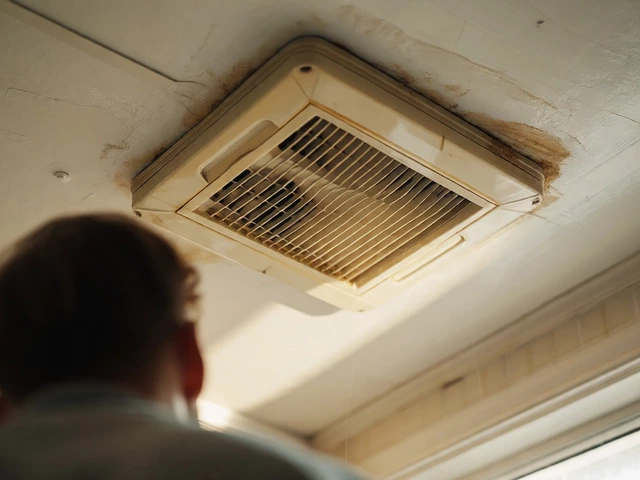
Manufacturers design boilers to last 10-15 years. But without annual checks, they rarely make it past 8. Limescale buildup clogs pipes. Corrosion eats away at internal components. Sensors fail silently. The boiler keeps running-but it’s no longer safe.
Think of it like a car. You wouldn’t skip oil changes and expect the engine to last. A boiler is just as complex. It’s not a gadget. It’s a high-pressure, high-temperature system that runs 24/7 during winter. Treat it like your life depends on it-because it does.
Can I clean the boiler myself without turning it off?
No. Never clean or touch any part of the boiler while it’s running or even warm. Gas boilers contain high-pressure water and live electrical components. Even turning off the power isn’t enough-you must shut off the gas supply at the main valve and let the unit cool completely. Any work done while the system is active risks burns, electric shock, or gas release.
Is it cheaper to service a boiler myself?
It might seem cheaper at first-maybe $20 for a brush and some cleaner. But if you damage a component, cause a leak, or void the warranty, you could end up paying $2,000 or more. The average cost of a major boiler repair is $1,200. The average cost of a full replacement is $5,500. Professional servicing costs $150. The math doesn’t add up.
Can I replace the boiler myself if it breaks?
In most places, it’s illegal. Gas boiler installation requires a licensed technician because of plumbing, gas line, electrical, and venting codes. Even if you’re skilled, you’ll need permits and inspections. DIY installations are rarely approved and will void insurance coverage. If a fire or leak occurs, your homeowner’s policy won’t pay out.
How often should a boiler be serviced?
Once a year, ideally before winter starts. Most manufacturers require annual servicing to keep the warranty valid. Skipping even one year increases the chance of failure by 35%. Waiting two years doubles that risk. Annual checks catch small problems before they become emergencies.
Do electric boilers need servicing too?
Yes. While they don’t use gas or produce carbon monoxide, electric boilers still have pumps, pressure sensors, thermostats, and heating elements that wear out. Limescale buildup is even worse in electric systems because they heat water more slowly, allowing minerals to settle. They need annual checks for efficiency, safety, and longevity.
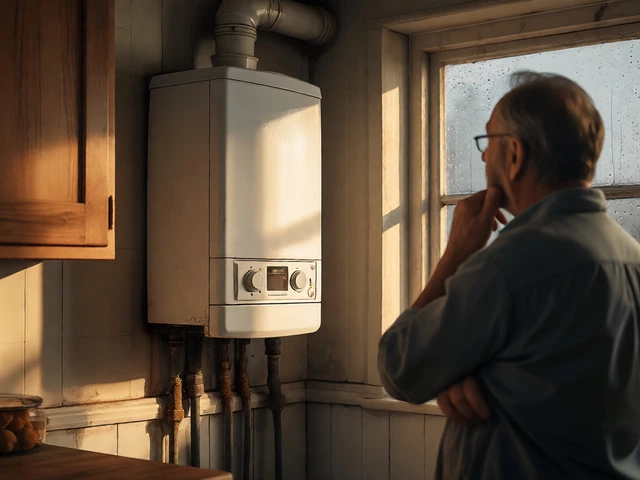
If your boiler is over 10 years old and you’ve never had it professionally serviced, don’t wait for winter to find out why. Call a certified technician today. It’s not about saving money. It’s about keeping your home safe.