Repair vs. Replace Decision Tool
Enter your boiler's details below to get a data-driven recommendation.
There is nothing worse than waking up to a cold house in the middle of winter, only to find your boiler making strange noises or failing to heat water. The immediate question that pops into your head isn't just "why did this happen?" but rather, "should I fix it or buy a new one?" It is a dilemma that costs homeowners thousands of pounds every year because the wrong decision leads to either unnecessary spending on a dying machine or wasted money on repairs for a unit that could have been replaced more efficiently.
The answer depends on a mix of age, efficiency, and repair history. In 2026, with rising energy prices and stricter environmental regulations, keeping an old, inefficient boiler running is often a financial leak. However, if your unit is relatively young and the fault is minor, a quick repair might save you significant upfront costs. This guide breaks down the exact factors you need to weigh to make the right choice for your wallet and your home comfort.
The Age Factor: When Does a Boiler Retire?
The single most important metric in this debate is the age of your gas boiler. Most modern boilers are designed to last between 10 and 15 years. If your unit is older than 15 years, the odds are heavily stacked against repair. Parts become harder to source, and the efficiency drops significantly as components wear out.
- Under 8 years old: Unless the main heat exchanger has cracked, repair is usually the better option. You still have several years of reliable service left.
- 8 to 12 years old: This is the gray area. If the repair cost is less than £300, it might be worth fixing. If it exceeds that, start looking at replacement quotes.
- Over 15 years old: Replacement is almost always the smarter move. Older models lack modern safety features and efficiency ratings, meaning they will continue to drain your energy budget regardless of how many times you fix them.
Think of your boiler like a car. You wouldn't keep putting new tires and brakes on a rusted-out chassis from 2005. Eventually, the cumulative cost of maintenance outweighs the value of the vehicle. The same logic applies to heating systems.
Efficiency Ratings: The Hidden Cost of Old Boilers
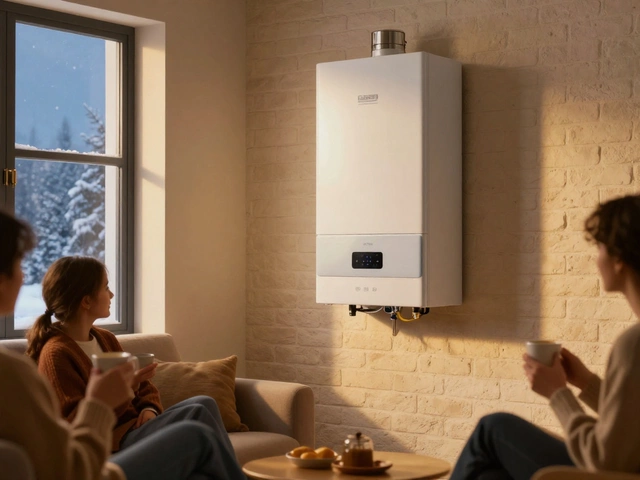
In 2026, energy efficiency is not just about saving the planet; it is about saving your monthly bills. Modern condensing boilers operate at an efficiency rating of 90% or higher. This means that for every pound you spend on gas, 90 pence goes toward heating your home, while only 10 pence is lost up the flue.
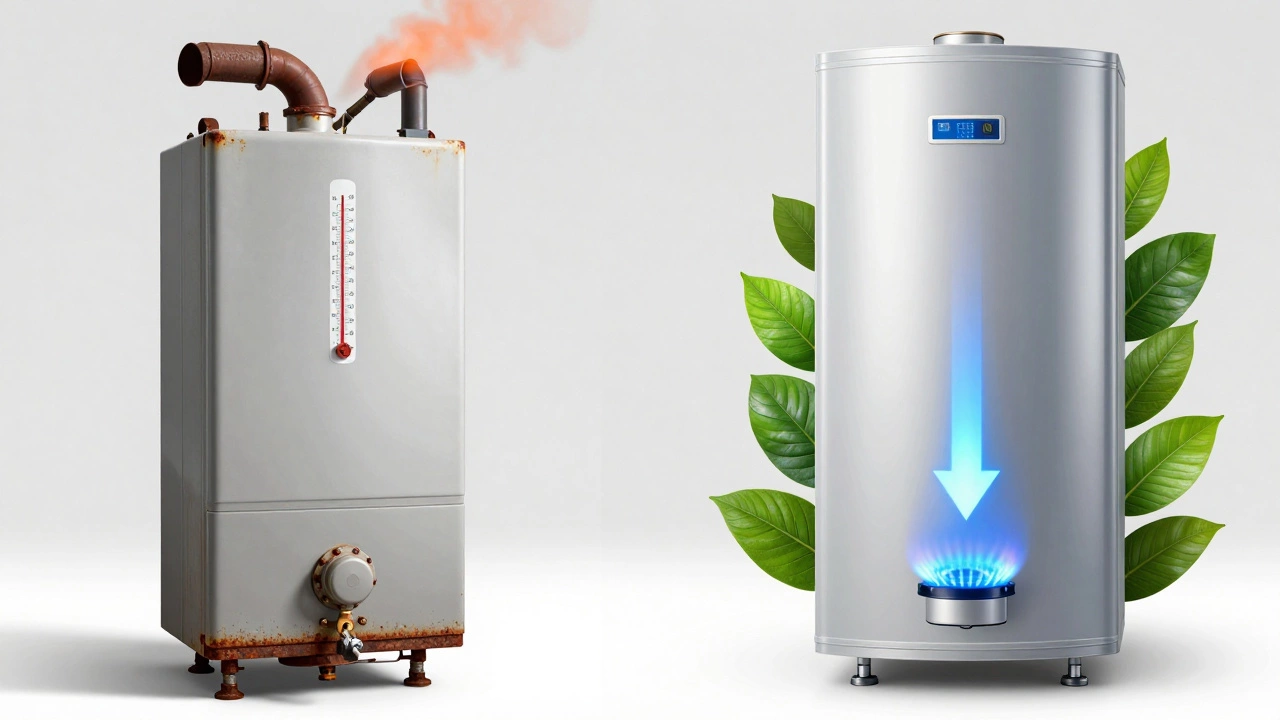
Compare this to a non-condensing boiler from the early 2000s, which typically operates at around 60-70% efficiency. That missing 30% represents pure waste. Over a typical heating season, this inefficiency can add hundreds of pounds to your annual energy bill. By replacing an old G-rated boiler with a new A-rated model, you could potentially save up to £300 per year on energy costs alone.
| Feature | Old Non-Condensing Boiler (Pre-2005) | New Condensing Boiler (2026 Model) |
|---|---|---|
| Efficiency Rating | 60-70% | 90-94% |
| Average Annual Energy Cost | £1,200+ | £850 |
| Warranty Length | Expired / None | 7-12 Years |
| Emissions Level | High CO2 output | Low CO2 output |
If you are repairing an old boiler, you are essentially paying to maintain a high-cost asset. Replacement shifts you to a low-cost, high-performance asset that pays for itself through reduced utility bills over time.
The 50% Rule: A Simple Financial Heuristic
When the math gets complicated, use the 50% rule. This is a straightforward heuristic used by many HVAC professionals. If the cost of the repair is more than 50% of the cost of a new boiler installation, replace the unit.
For example, if a new boiler installation costs £2,500, and the quote for fixing your current boiler is £1,300, you should replace it. Why? Because you are likely to face another major repair within the next few years. Spending half the price of a new unit on a temporary fix is rarely a good investment. Instead, put that money toward a down payment on a new system that comes with a long-term warranty.
However, if the repair is a simple fix-like replacing a faulty thermostat, a broken diverter valve, or a leaking seal-that costs under £200, the 50% rule suggests you should go ahead with the repair. These are routine maintenance issues that do not indicate systemic failure.
Frequency of Breakdowns: Is It Chronic?
How often does your boiler break down? If it is the first time in five years, a repair makes sense. But if you have called a technician twice in the last 12 months, your boiler is signaling that it is at the end of its life.
Frequent breakdowns are frustrating beyond the inconvenience. Each visit requires you to take time off work, arrange childcare, or wait at home for the engineer. There is also the risk of carbon monoxide leaks or water damage if a component fails catastrophically while you are asleep. A new boiler provides peace of mind. Most manufacturers offer warranties ranging from 7 to 12 years, covering parts and labor. This guarantees that if something goes wrong, it won't come out of your pocket.
Environmental Impact and Regulations
In 2026, the UK government continues to push for lower carbon emissions. While gas boilers are still widely used, there is increasing pressure to improve efficiency. Replacing an old boiler reduces your household's carbon footprint significantly. Newer models burn fuel more completely, releasing fewer pollutants into the atmosphere.
Additionally, some local councils and energy providers offer grants or incentives for upgrading to high-efficiency systems. Check if you qualify for any green home improvements schemes. Even without a grant, the environmental benefit of reducing waste heat and emissions is a strong argument for replacement.
When Repair Makes Sense: Specific Scenarios
Despite the push for replacement, there are scenarios where repairing is the logical choice. Here are three specific situations where you should opt for repair:
- The Heat Exchanger is Intact: The heat exchanger is the most expensive part of a boiler to replace. If your diagnostics show that the heat exchanger is fine, and the issue is peripheral (like a pump or sensor), repair is viable.
- You Are Selling Your Home Soon: If you plan to sell your property within the next six months, a new boiler might not provide enough return on investment to justify the cost. A reliable repair keeps the system functional during viewings without the large upfront expense.
- Budget Constraints: If you simply cannot afford a new boiler right now, a repair buys you time. Just be aware that this is a short-term solution. Start saving for a replacement immediately after the repair.
Signs Your Boiler Needs Immediate Replacement
Sometimes, the signs are obvious. If your boiler exhibits any of the following symptoms, skip the repair quote and call a specialist for a replacement assessment:
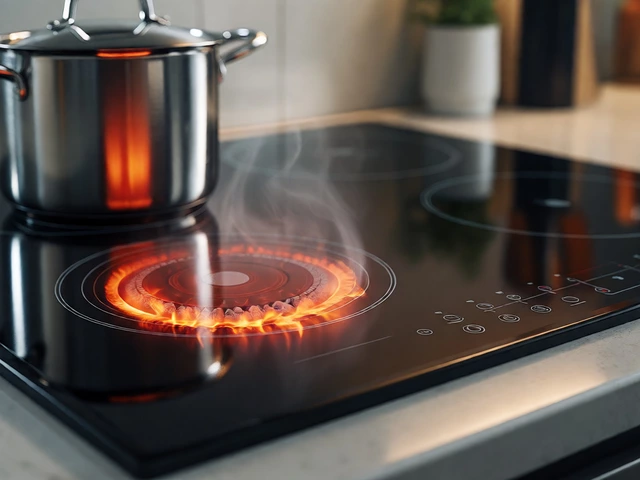
- Yellow Flame: A healthy gas flame should be blue. A yellow or orange flame indicates incomplete combustion, which can produce carbon monoxide. This is a serious safety hazard.
- Rumbling Noises: Loud banging or gurgling sounds often point to limescale buildup or airlocks in the system. While these can sometimes be flushed out, persistent noise suggests internal corrosion.
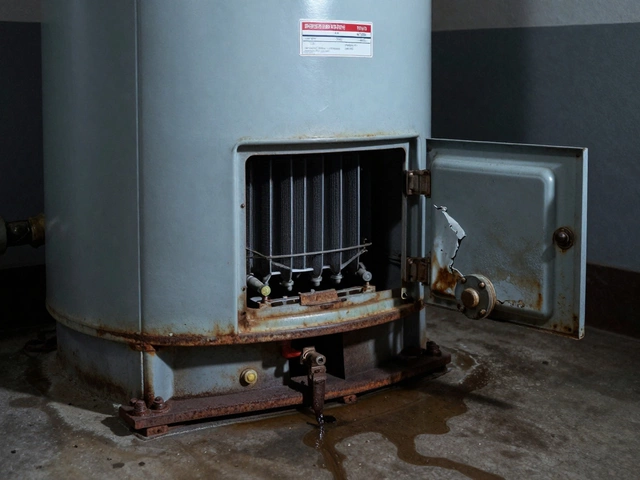
- Leaking Water: Small drips from pipes might be fixable, but leaks from the boiler body itself indicate internal corrosion or a cracked casing. This is not safe to ignore.
- Inconsistent Heating: If some radiators are hot while others are cold, or if the water temperature fluctuates wildly, your control systems are failing. Reprogramming won't fix worn-out hardware.
Next Steps: How to Decide
To make your final decision, follow this simple checklist:
- Check the Age: Look at the serial number or purchase receipt. Is it over 10 years old?
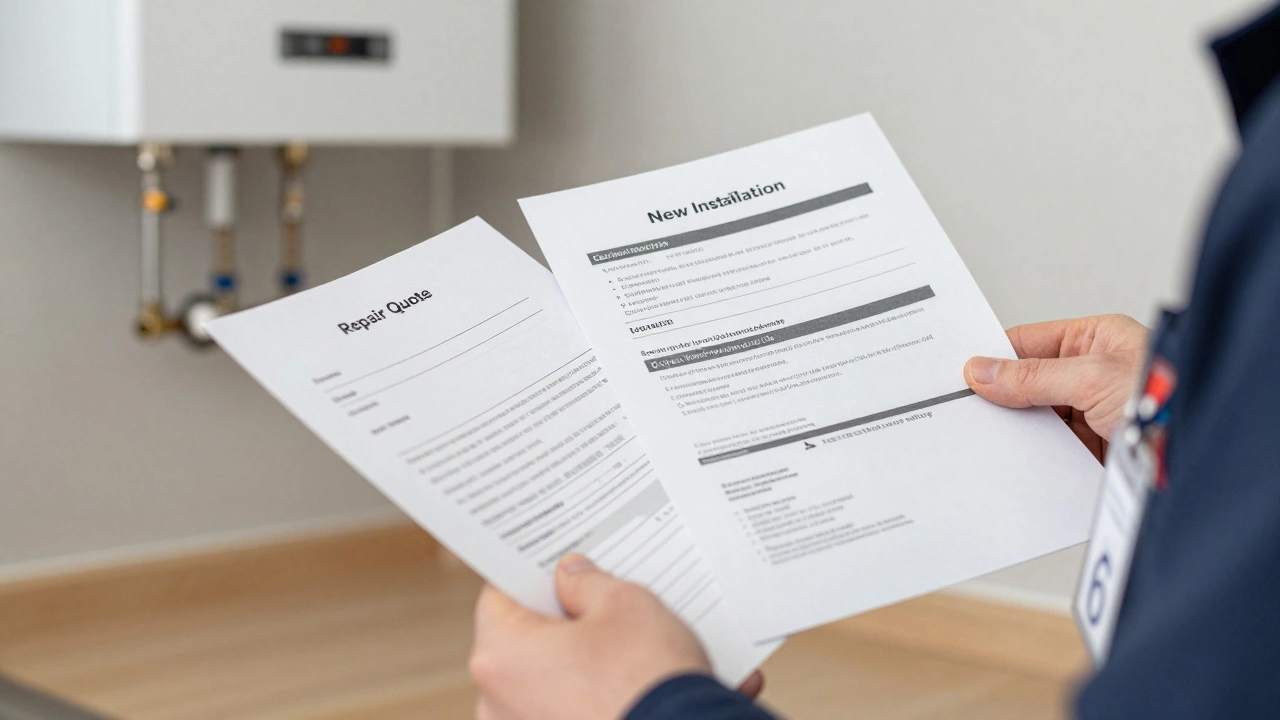
- Get Two Quotes: Call two different Gas Safe registered engineers. Ask for a detailed diagnosis and a repair quote. Then, ask for a separate quote for a full replacement.
- Apply the 50% Rule: Compare the repair cost to the replacement cost. Is the repair more than half the price of a new unit?
- Consider Efficiency: What is your current energy bill? Would a 90% efficient boiler drop that bill significantly?
- Review Warranty: Does your current boiler still have a valid warranty? If yes, repair might be free or cheap. If no, factor in future repair risks.
Making the switch to a new boiler is an investment in comfort, safety, and savings. While the initial cost is higher, the long-term benefits far outweigh the temporary relief of a patch-up job. Don't let a failing boiler dictate your home's comfort level. Take control by choosing the option that aligns with your financial goals and lifestyle needs.
How much does it cost to replace a boiler in 2026?
The average cost to replace a standard combi boiler in the UK ranges from £2,000 to £3,500, including labor and materials. System boilers may cost slightly more due to additional tank requirements. Prices vary based on brand, complexity of installation, and regional labor rates.
Is it worth repairing a 15-year-old boiler?
Generally, no. A 15-year-old boiler is at the end of its expected lifespan. Repairs are likely to be frequent and costly, and the unit is significantly less efficient than modern models. Replacement offers better long-term value through energy savings and reliability.
What are the signs of a failing boiler?
Common signs include unusual noises (banging, gurgling), yellow flames instead of blue, frequent loss of pressure, leaking water, inconsistent heating, and error codes displayed on the control panel. Any of these issues warrant a professional inspection.
Can I install a new boiler myself?
No. In the UK, boiler installation must be performed by a Gas Safe registered engineer. DIY installation is illegal, dangerous, and will void insurance policies. Always hire a certified professional to ensure safety and compliance with building regulations.
How long does a new boiler last?
With regular annual servicing, a modern condensing boiler can last between 12 and 15 years. Proper maintenance, such as flushing the system and checking pressure, extends the lifespan and maintains efficiency throughout its life.