How Long Food Stays Frozen: Real-World Tips and Signs It’s Gone Bad
When you toss food into the freezer, a home appliance used to preserve food at low temperatures, typically below 0°F (-18°C). Also known as cold storage unit, it’s one of the most reliable tools for extending the life of meals, meats, and veggies. But just because it’s frozen doesn’t mean it lasts forever. The real question isn’t just ‘how long’—it’s ‘how well.’ Most frozen foods stay safe indefinitely at 0°F, but quality? That’s a different story. A bag of frozen peas might look fine after 18 months, but if it’s got ice crystals the size of pebbles or smells off when thawed, it’s not worth eating. You’re not saving money—you’re risking taste, texture, and even safety.
What affects how long food stays frozen? It’s not just time—it’s the freezer temperature, the stable low-heat setting required to prevent ice crystal growth and bacterial activity, how well it’s sealed, and how often the door opens. A freezer that’s constantly opened for snacks or ice cubes can spike in temperature, causing partial thawing and refreezing. That’s the #1 reason food gets freezer burn or turns rubbery. And don’t forget packaging. Plastic wrap alone won’t cut it. Use vacuum-sealed bags or heavy-duty freezer containers. Even a simple zip-top bag with the air squeezed out works better than a flimsy supermarket tray.
Then there’s the food itself. Meat lasts longer than bread. Fish doesn’t hold up like potatoes. A frozen roast can stay good for 6–12 months. Frozen chicken? 9–12 months. But frozen cooked pasta? 2–3 months max. Ice cream? It’s not meant to be stored for years—it’s meant to be eaten. And if you’ve got leftovers in a Tupperware that’s been in there since last Christmas, it’s probably not just stale—it’s a risk. Look for dry spots, weird colors, or that sour smell when you open it. If it looks or smells off, toss it. No exceptions.
Freezer burn isn’t mold. It’s dehydration. It doesn’t make food unsafe, but it makes it taste like cardboard. You can trim it off, but why bother if the whole piece is dry and flavorless? The real goal isn’t to stretch food past its prime—it’s to use it while it still tastes like food. Keep a log. Label everything with the date. Rotate older items to the front. These small habits cut waste and keep your freezer working for you, not against you.
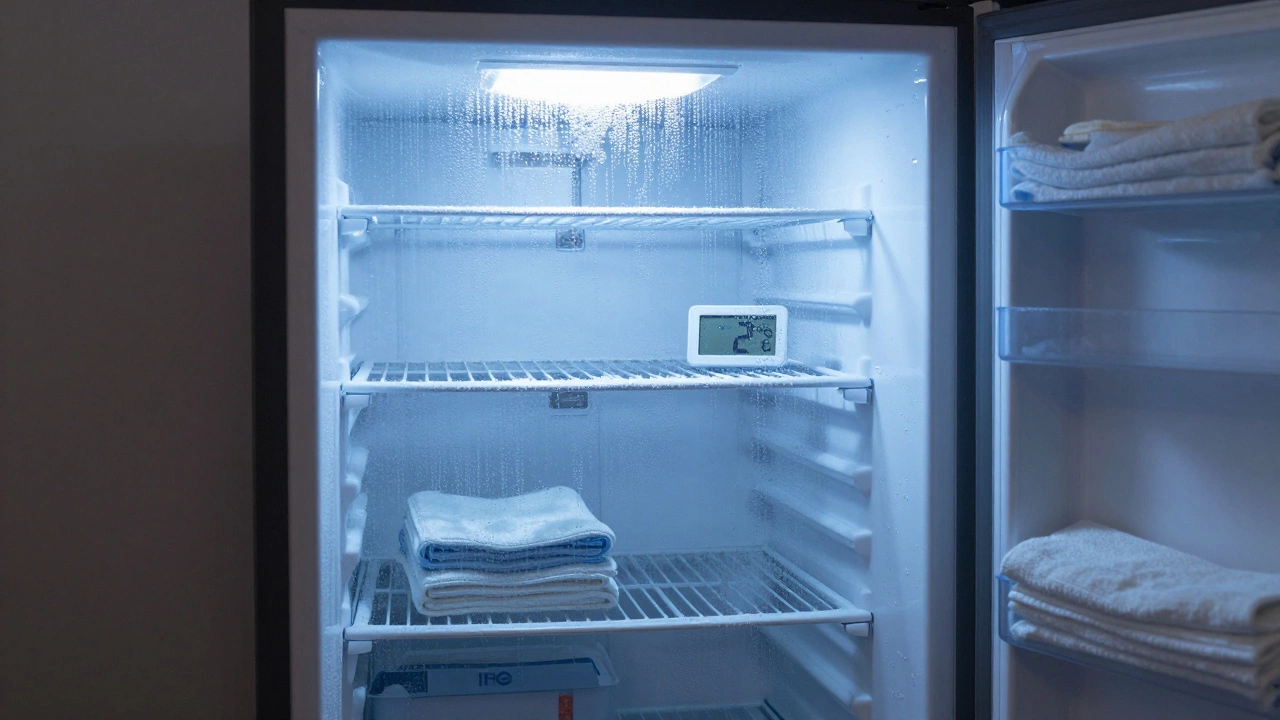
And here’s something most people miss: your freezer’s performance matters. If it’s running constantly, covered in frost, or the door seal is cracked, your food isn’t getting the cold it needs. A faulty freezer can ruin months of stored food in days. That’s why checking your freezer’s temperature with a simple thermometer—just once a month—is one of the smartest things you can do. It’s not about being perfect. It’s about being aware.
Below, you’ll find real repair stories and practical guides from people who’ve dealt with frozen food gone wrong—not because they forgot the date, but because their appliance failed. Learn how to tell if your freezer’s on its last legs, what to do when the power goes out, and how to avoid throwing away good food just because you didn’t know the signs.
1 December 2025
·
0 Comments
When your freezer stops working, not all food is ruined. Learn how long frozen items stay safe, what to save or toss, and how to prevent future failures.
Read more