Water Heater Health & Repair Decision Tool
Unit Information
Analysis Complete
...
Your shower goes from scalding to ice-cold in seconds. You check the thermostat, flip the switch, and wait. Nothing changes. This is the moment most homeowners realize their water heater has failed. It’s frustrating, inconvenient, and often expensive. But before you call a technician for a full replacement, it helps to know what actually breaks these machines. The answer isn’t usually a catastrophic explosion or a mysterious electrical ghost. It’s something far more mundane: neglect.
The single most common cause of water heater failure is sediment buildup. While this accounts for the majority of premature deaths in tank-style units, other culprits like a corroded anode rod, a faulty thermocouple, or a leaking pressure relief valve play significant roles. Understanding these failure points allows you to extend the life of your unit by several years and avoid unnecessary replacement costs.
The Silent Killer: Sediment Buildup
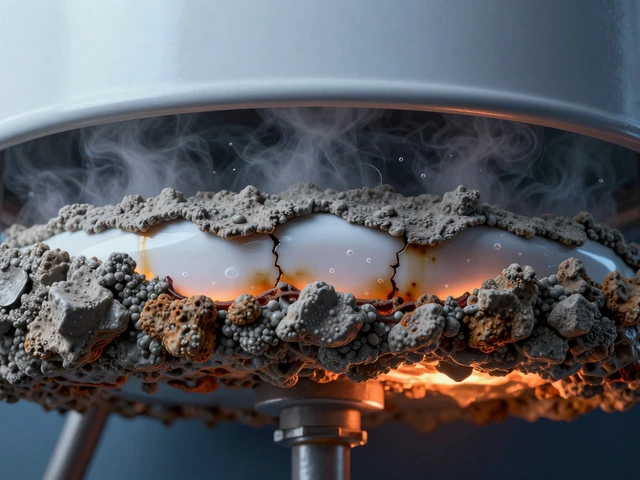
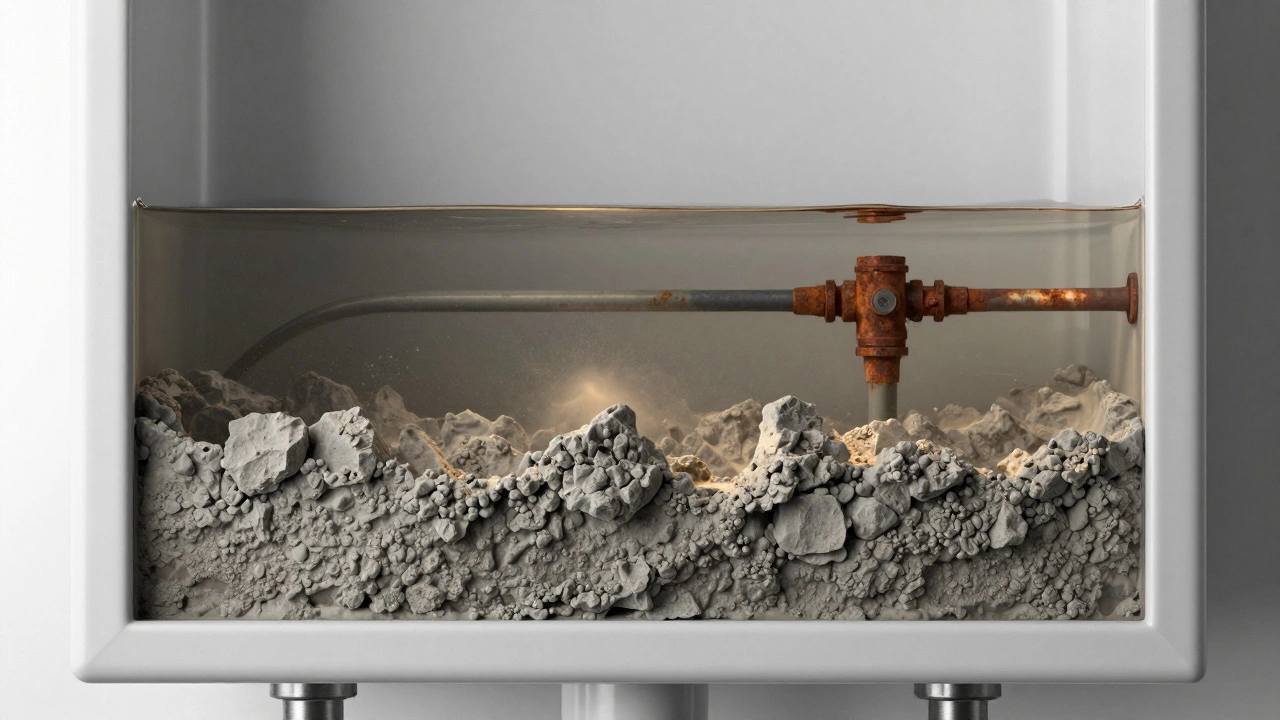
If you live in an area with "hard water"-water high in calcium and magnesium minerals-you are fighting a losing battle against physics. When water heats up, these minerals precipitate out of the solution and settle at the bottom of the tank. Over time, this creates a layer of rock-hard scale between the heating element (or burner) and the water.
This insulation effect causes two major problems. First, the heating element has to work harder to transfer heat through the sediment. This leads to overheating. In electric heaters, the element can burn out or crack the glass lining of the tank. In gas heaters, the burner flames reflect off the sediment back onto the metal, causing hot spots that warp the steel. Second, the sediment reduces the actual volume of usable hot water. You might have a 50-gallon tank, but if 10 gallons are occupied by rocks, you’re effectively running a 40-gallon system with poor efficiency.
- Symptoms: Popping or rumbling noises during heating cycles, longer recovery times, and inconsistent water temperature.
- Prevention: Flush the tank annually. Drain a few gallons from the bottom until the water runs clear.
The Sacrificial Hero: The Anode Rod
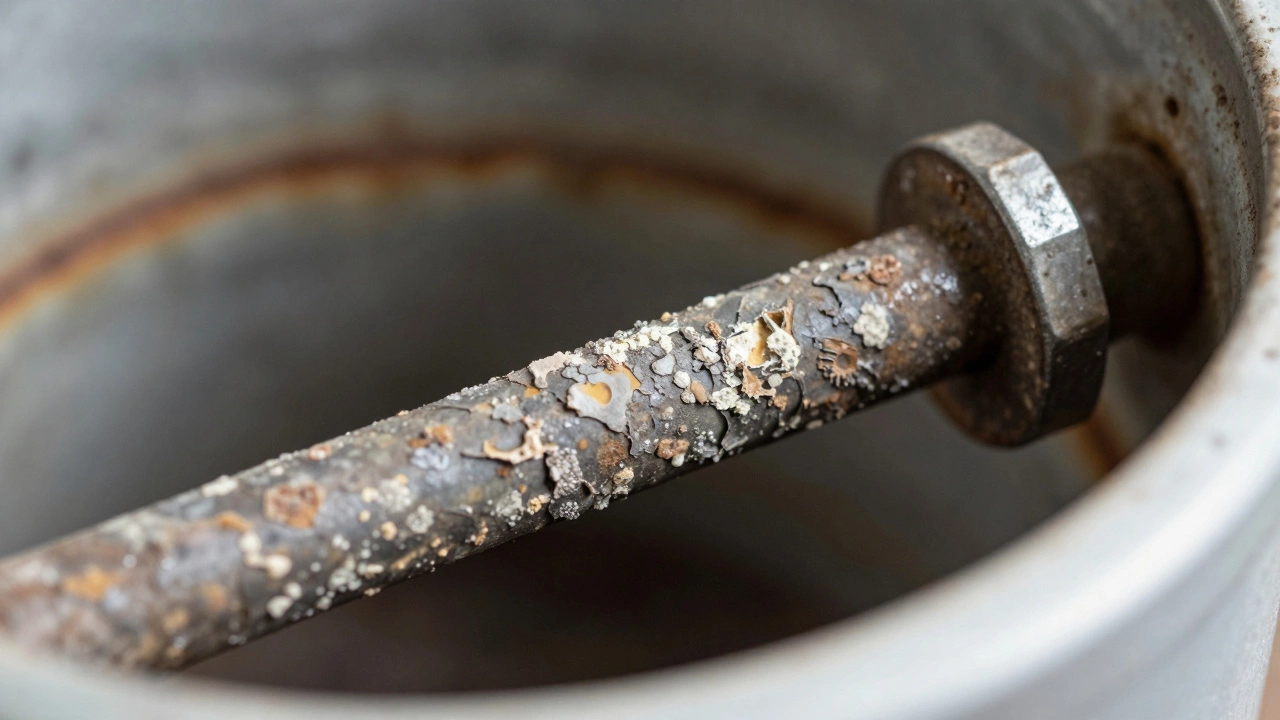
Inside every standard tank water heater is a metal rod called the anode rod is a sacrificial component designed to prevent corrosion. It is typically made of magnesium or aluminum. Its job is simple but critical: it attracts corrosive elements in the water so they don’t attack the steel tank itself. It sacrifices itself to save the tank.
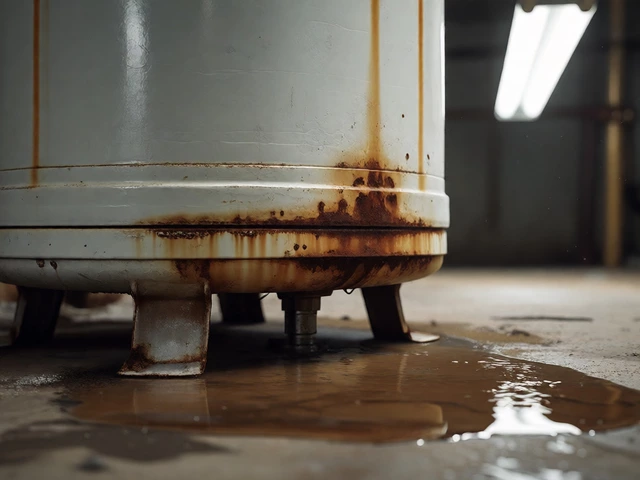
Most homeowners never see this rod. It’s buried deep inside the tank. However, once the anode rod is completely consumed, the water begins to eat away at the steel tank. This process is invisible until it’s too late. A pinhole leak appears on the side or bottom of the tank. At this point, the repair is not possible; the tank must be replaced.
- Lifespan: Anode rods typically last 3-5 years in hard water areas and up to 10 years in soft water areas.
- Maintenance: Inspect the rod every two years. If more than 50% of the rod is gone, replace it immediately. This is one of the cheapest ways to double the life of your water heater.
Gas-Specific Failures: Thermocouples and Pilot Lights
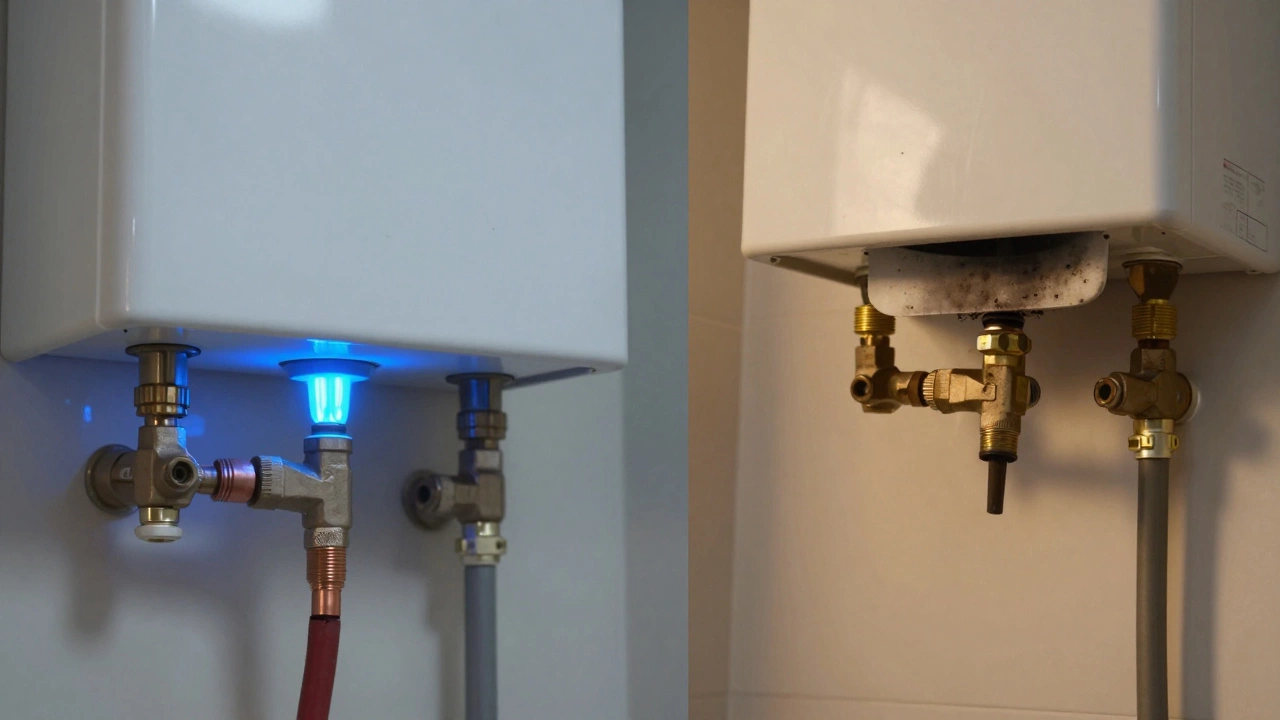
If you have a gas water heater, the ignition system is a frequent point of failure. Older models use a standing pilot light, which relies on a small copper tube called a thermocouple is a safety device that generates a small electrical current when heated. This current keeps the gas valve open. If the thermocouple gets dirty, misaligned, or simply wears out, it stops generating current. The gas valve closes, and you lose hot water.
Newer gas heaters use electronic ignition systems, which eliminate the standing pilot light. These are more efficient but introduce different failure modes. Ignition control boards can fail due to power surges or moisture intrusion. Unlike a thermocouple, which costs about $20 to replace, an ignition board can cost over $100.
- Symptoms: No hot water, but cold water still flows. You may smell gas if the pilot fails to relight properly (though modern valves should shut off gas).
- DIY Check: For older units, try cleaning the thermocouple tip with fine sandpaper. Ensure it is positioned directly in the pilot flame.
Safety Valve Leaks and Pressure Issues
Every water heater has a Temperature and Pressure Relief (T&P) valve. This is a safety mechanism designed to release water if the pressure inside the tank gets too high or the temperature exceeds safe limits. Sometimes, this valve leaks. Many people mistake this for a failing tank and schedule a replacement. Often, the valve itself is just old or clogged with sediment.
However, a leaking T&P valve can also indicate a serious underlying issue: thermal expansion. When water heats up, it expands. In a closed plumbing system (common in modern homes with check valves), this expanded water has nowhere to go. The pressure spikes, forcing the T&P valve to open. This constant stress can weaken the tank over time.
- Solution: Replace the T&P valve if it’s old. If the problem persists, install an expansion tank to absorb the pressure surge.
- Warning: Never cap or plug a leaking T&P valve. This turns your water heater into a potential bomb.
Comparison of Common Water Heater Failures
| Failure Point | Primary Cause | Symptoms | Fix Difficulty |
|---|---|---|---|
| Sediment Buildup | Hard water minerals | Noises, slow heating | Easy (Annual flush) |
| Anode Rod Corrosion | Neglect/Lack of inspection | Tank leaks, rust in water | Medium (Professional recommended) |
| Thermocouple Failure | Dirt, wear, misalignment | No hot water (gas units) | Easy (DIY friendly) |
| T&P Valve Leak | Aging parts, high pressure | Dripping near top of tank | Medium (Valve replacement) |
| Heating Element Burnout | Sediment overheating | No hot water (electric units) | Medium (Electrical skill needed) |
When to Repair vs. When to Replace
Not all failures require a new unit. If your water heater is less than 8 years old and the issue is a thermocouple, a T&P valve, or even a heating element, repair is usually cost-effective. However, if the tank itself is leaking, the game is over. Steel tanks cannot be patched permanently. Once the integrity of the vessel is compromised, replacement is the only safe option.
Consider the age of the unit. The average lifespan of a traditional tank water heater is 8-12 years. If your unit is approaching this age and experiencing multiple failures, investing in a new, more efficient model (such as a tankless or heat pump water heater) may save money in the long run through lower energy bills.
How long does a water heater usually last?
A traditional tank-style water heater typically lasts between 8 and 12 years. Tankless water heaters can last 20 years or more with proper maintenance. Factors like water hardness and maintenance frequency significantly impact lifespan.
Can I fix a leaking water heater myself?
If the leak is coming from the pipes or fittings at the top of the tank, you can often tighten them or replace a washer. However, if the leak is coming from the tank itself (especially the bottom), do not attempt to fix it. The tank is compromised and needs immediate replacement to prevent flooding.
Why is my water heater making popping noises?
Popping or rumbling sounds are almost always caused by sediment buildup. As water gets trapped under the layer of sediment and boils, it creates steam bubbles that pop when they escape. Flushing the tank usually resolves this issue.
Is it worth replacing the anode rod?
Yes, absolutely. Replacing an anode rod costs relatively little compared to a new water heater. Since the rod prevents the tank from rusting, replacing it can extend the life of your water heater by several years, saving you hundreds of dollars.
What are the signs of a failing heating element?
In electric water heaters, a failing element often results in no hot water or lukewarm water. You might also notice a burning smell or tripped circuit breakers. Testing the element with a multimeter can confirm if it has burned out.